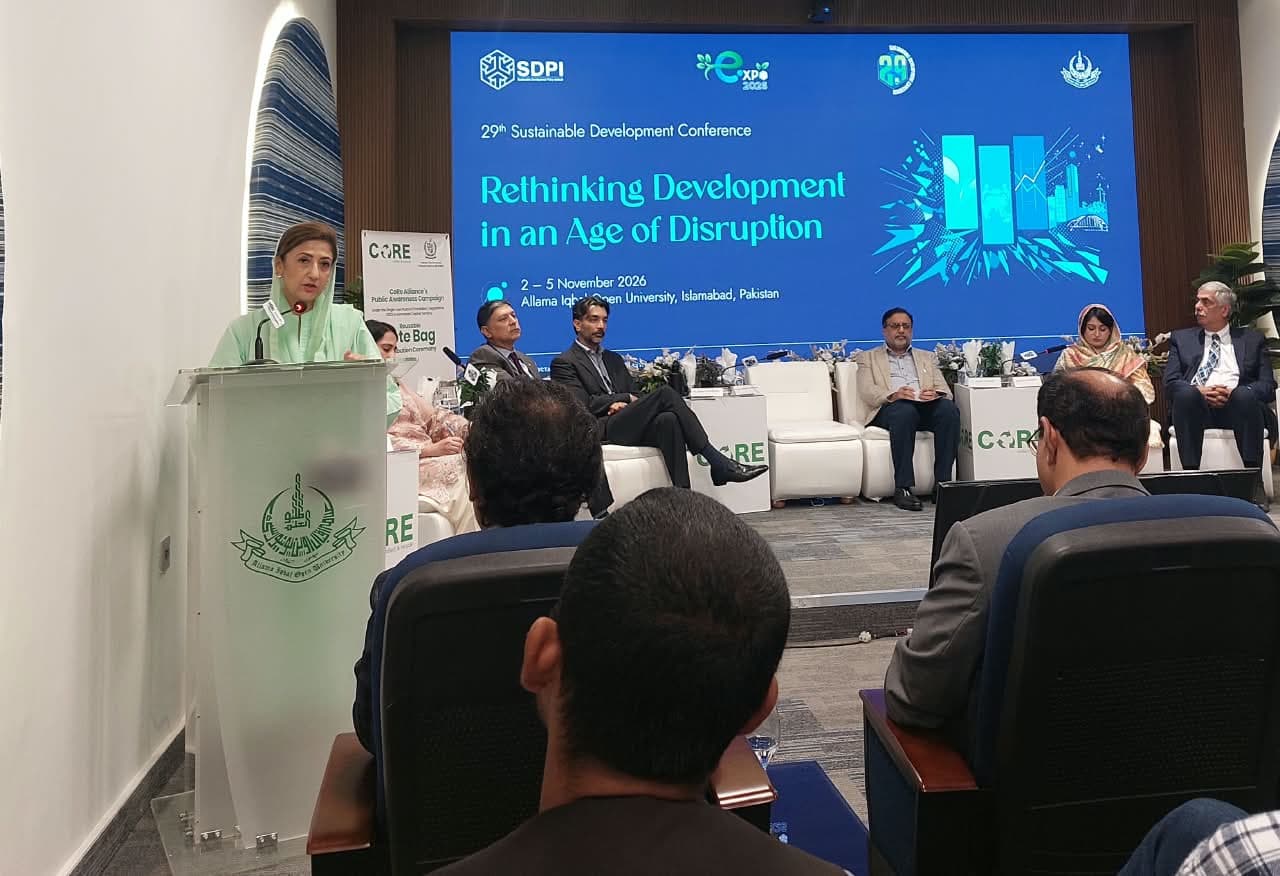
Minister of State for Climate Change Dr Shezra Mansab Ali Khan Kharal stated on Thursday that Pakistan recycles less than 10 per cent of its plastic waste. Speaking at a panel discussion during the 29th Sustainable Development Conference (SDC) at Allama Iqbal Open University (AIOU), she called for a comprehensive and harmonised Extended Producer Responsibility (EPR) framework, better waste segregation, and increased investment in recycling infrastructure to tackle the nation's plastic pollution.
Dr Shezra noted that while plastic is affordable and useful for protecting medicines and preserving food, its durability and the country's inadequate disposal and recycling systems have made it a major environmental challenge. She attributed the accumulation of plastic along roads, riverbanks, and drainage systems—which pollutes air and water—to fragmented waste collection, a lack of household-level segregation, and limited recycling capacity.
The minister highlighted that Pakistan relies heavily on informal waste workers who perform a significant role in collection but often lack training, recognition, protection, and integration into the formal system. She stated that these workers must be integrated into the EPR system and provided with fair recognition and safer working conditions.
Regarding existing regulations, Dr Shezra recalled that the federal cabinet approved the Single-Use Plastics Prohibition Regulations for Islamabad in 2023, following a 2019 ban on polyethylene bags. These regulations, enforced by the Pak-EPA and the ICT Administration, restrict the manufacture, import, sale, and use of specified single-use plastic products in the capital. She argued that companies involved in PET packaging should have responsibilities for managing post-consumer waste and that these initiatives need to be more effective and expanded nationwide.
To address the crisis, the minister identified several priorities: stronger federal-provincial coordination, realistic waste management targets, and clearly defined responsibilities for governments, industries, municipalities, retailers, recyclers, and consumers. She urged industries to use Producer Responsibility Organisations (PROs) to manage and finance waste collection, recycling, and reporting. She also stressed the need for green financing, targeted fiscal incentives, and investments in sorting and recycling facilities.
Dr Shezra pointed to local examples, such as a PET recycling pilot in Islamabad supported by UNOPS and the ILO, and an eco-brick facility in Lahore that turns plastic into construction material. She called for scaling these initiatives through technology transfer and training, while also advocating for regional cooperation.
Other speakers at the conference provided additional perspectives on the waste crisis. CoRe Alliance Chief Executive Officer Sheikh Waqar Ahmad called for a harmonised EPR framework to avoid different regulatory systems across provinces. He advocated for phased implementation and financial incentives, such as tax relief and concessional financing, to encourage private investment.
Environmental scientist Zainab stated that a comprehensive waste management policy and effective segregation should happen before further restrictions on plastic products are placed. She noted that organic waste makes up about 60 per cent of Pakistan’s waste stream, while plastic accounts for approximately four per cent.
Babar Aziz, Managing Director of Green Earth Recycling, stated that the recycling industry has the capacity to process large quantities of material if waste is properly collected and segregated. He noted that mixing recyclables with contaminated waste increases costs and lowers product quality. He also observed that segregated household waste is frequently mixed again during municipal collection.