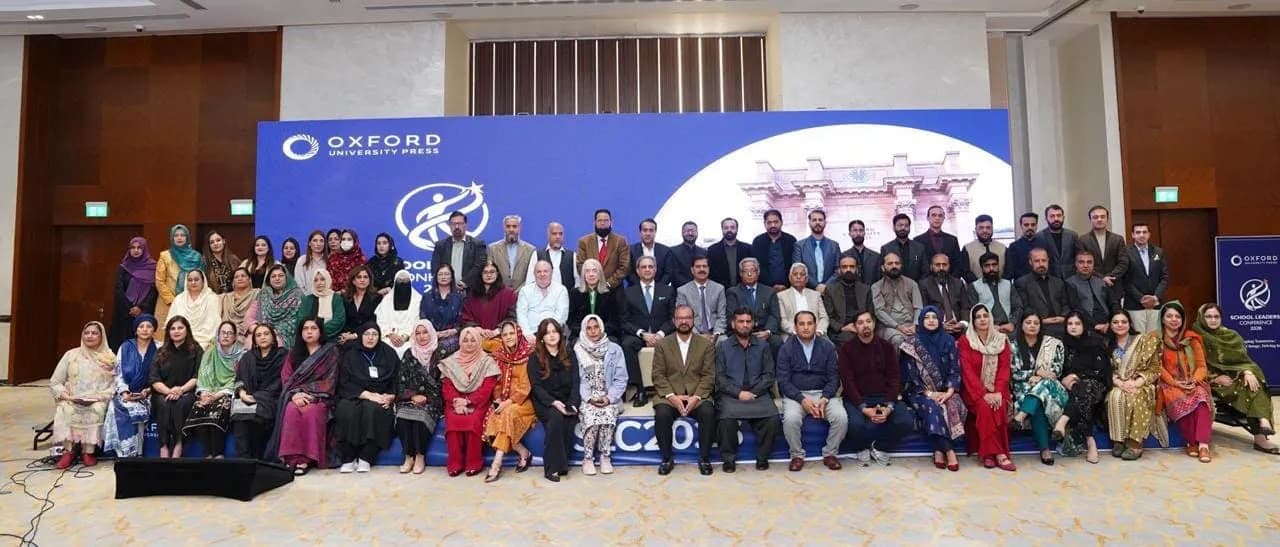
Oxford University Press (OUP) Pakistan hosted the School Leaders’ Conference 2026 in Islamabad to bring together practitioners, educationists, and school leaders. The two-day event, held under the theme “Shaping Tomorrow: Navigating Change, Driving Impact,” provided separate platforms for educators from schools under both local and international examination boards.
The conferences focused on the changing educational landscape and priorities for the future. Participants explored the evolving responsibilities of school leadership, the integration of technology in education, and the development of future-focused skills. Discussions also centered on strengthening teaching and learning through effective pedagogical approaches while balancing innovation with sound educational practices to prepare students for a rapidly changing world.
Arshad Saeed Husain, Managing Director of Oxford University Press Pakistan, welcomed the participants and stated that educational transformation requires a collective commitment from the wider education community, teachers, and school leaders. “The challenges facing education cannot be addressed through incremental changes alone. We need school leaders who can recognise emerging needs, support teachers in adapting their practices and place meaningful learning at the centre of every decision. The future depends on how effectively we prepare our schools and students for change,” Husain said.
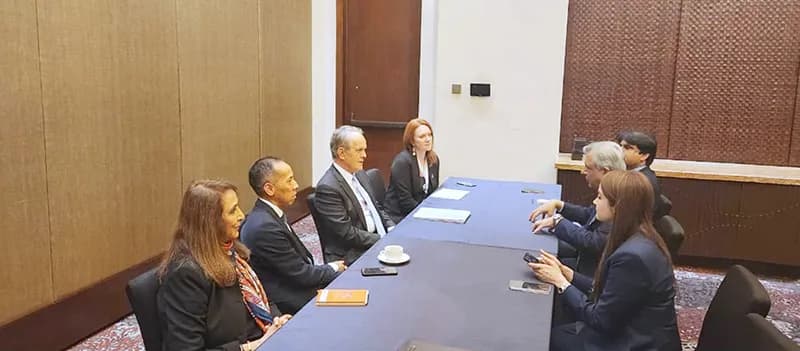
Elizabeth Munn, Managing Director, Education, Oxford University Press UK, participated in the first day’s programme for an interactive conversation regarding changing priorities in education. She stressed that schools must combine innovation with a focus on learning outcomes. “As education continues to evolve, schools must remain focused on what matters most: enabling every learner to develop the knowledge, skills and confidence to navigate an uncertain future. Technology and new approaches can create valuable opportunities, but their impact ultimately depends on how thoughtfully they are integrated into teaching and learning,” Munn said.
The programme included several keynote sessions and presentations. Dr Nadeem ul Haque, former Vice-Chancellor of the Pakistan Institute of Development Economics and Chairperson, RAC, addressed “Transformative School Leadership in Changing Times” for educators from local boards.
Oxford University Press specialists also presented on classroom learning priorities. Shazia Asad, Senior Product Manager Mathematics, Oxford University Press Pakistan, spoke on “Mathematics in the Age of AI: New Imperatives and the Way Forward.” Emma Baxter, Product Manager, Oxford University Press UK, discussed skills development, quality resources, and pedagogical expertise. Additionally, international author and educator Dr Nicolas Brasch examined student-centred and inquiry-based approaches to science education in a session titled “The Science Learning Ecosystem.”
The conference concluded with interactive audience polls and panel discussions on “Shaping Tomorrow: Challenges and Opportunities.” These sessions allowed participants to share perspectives on the practical implications of educational change. The Islamabad conferences are part of a wider engagement by Oxford University Press Pakistan with school communities across the country.