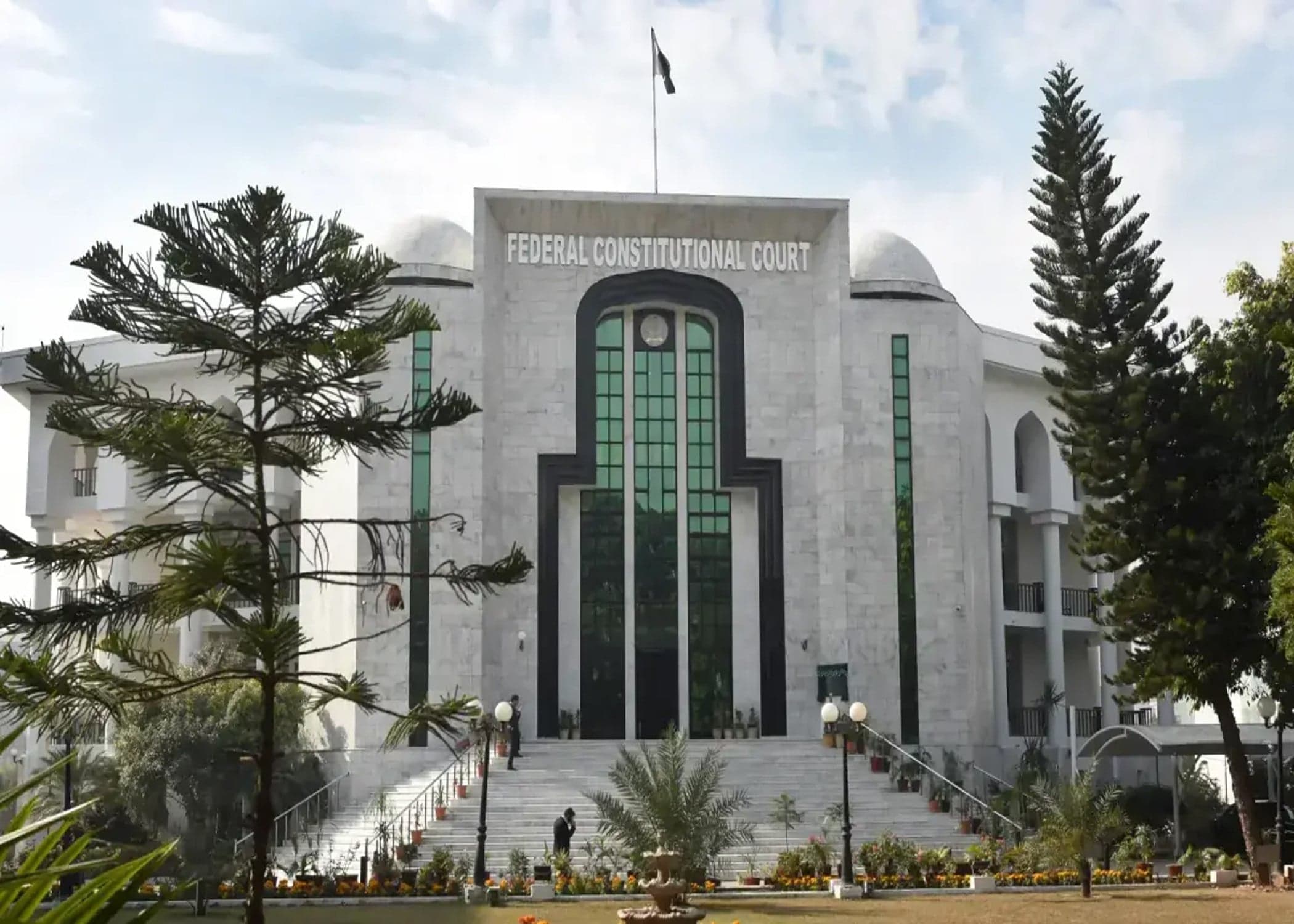
The Federal Constitutional Court (FCC) has ruled that any observation it makes in a judgment or order regarding a question of law or a legal principle is binding on all other courts, specifically including the Supreme Court. This decision was made under Article 189 of the Constitution.
In a 16-page judgment authored by Justice Aamer Farooq, a three-member FCC bench led by Chief Justice Amin-ud-Din Khan stated, "When any observation made by this Court in any judgment or order has the effect of deciding a question of law or is based upon or enunciates a principle of law, it shall be binding on all courts, including the Supreme Court."
The court noted that Article 189(1), as modified by the 27th Constitutional Amendment, stipulates that these judgments are binding on all other courts in Pakistan. The judgment further clarified that this binding effect applies not only to the ratio decidendi but also obiter dicta.
The ruling addresses a period of uncertainty regarding the relationship between the Supreme Court and the FCC following the 27th Constitutional Amendment. The FCC earlier summoned the record of a case concerning the transfer of former prime minister Imran Khan to Shifa International Hospital for medical treatment while hearing the three-prisoners case. A three-member Supreme Court bench subsequently raised questions over the FCC's decision and adjourned the proceedings for three weeks; neither court has since resumed hearing the matter.
A senior law officer believes that the Supreme Court has yet to transfer the relevant case record to the FCC in compliance with its judicial order. The FCC has repeatedly asserted that its judgments are binding on the Supreme Court. It has also recently maintained that Supreme Court judgments are not binding on it, although they may carry persuasive value.
The specific case involved the legal status of appointments made under the Islamabad Capital Territory Private Educational Institutions Ordinance, 2009. This ordinance was repealed and replaced by the Islamabad Capital Territory Private Educational Institutions (Registration and Regulation) Act, 2013, which did not expressly save previous actions.