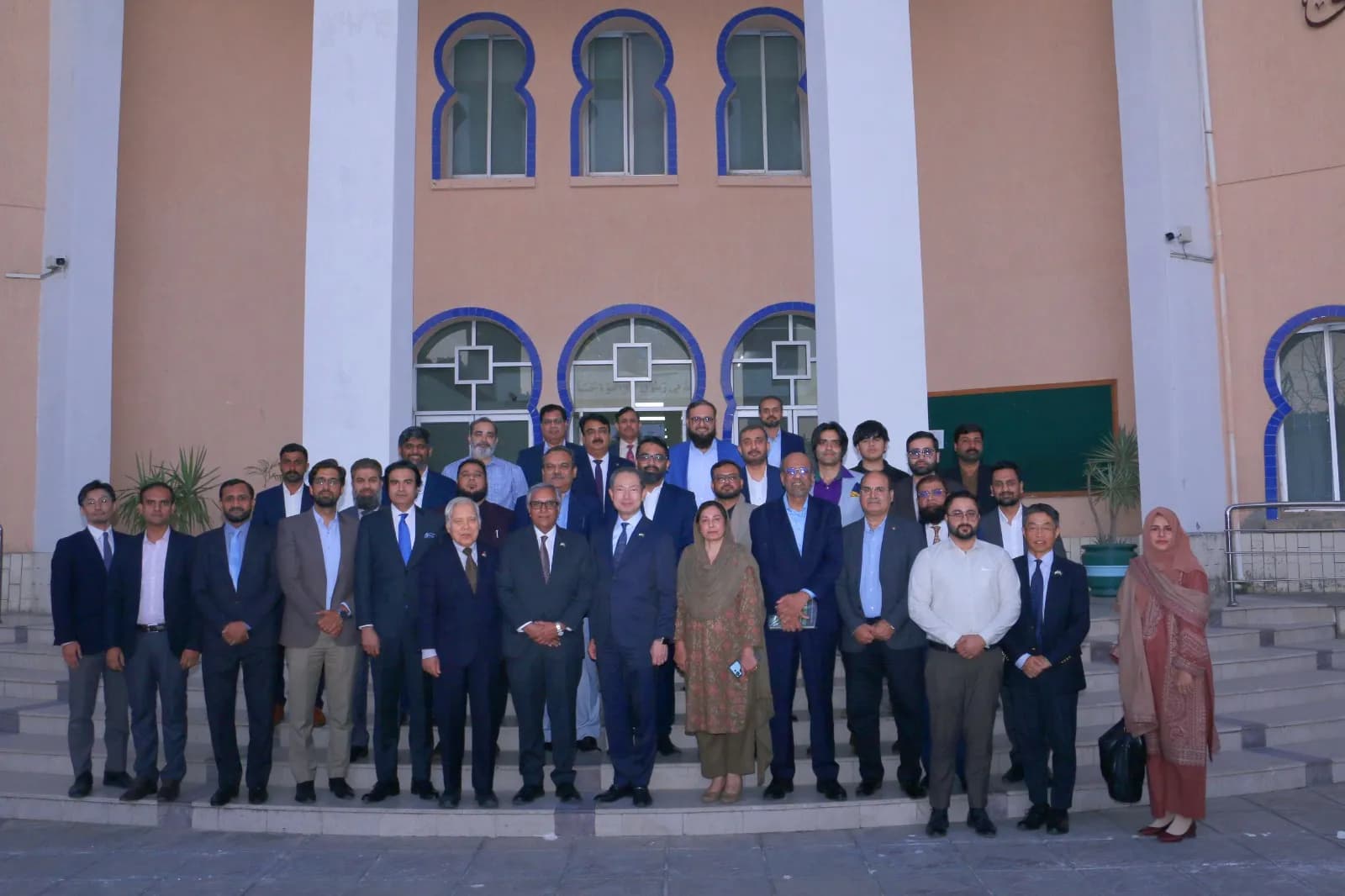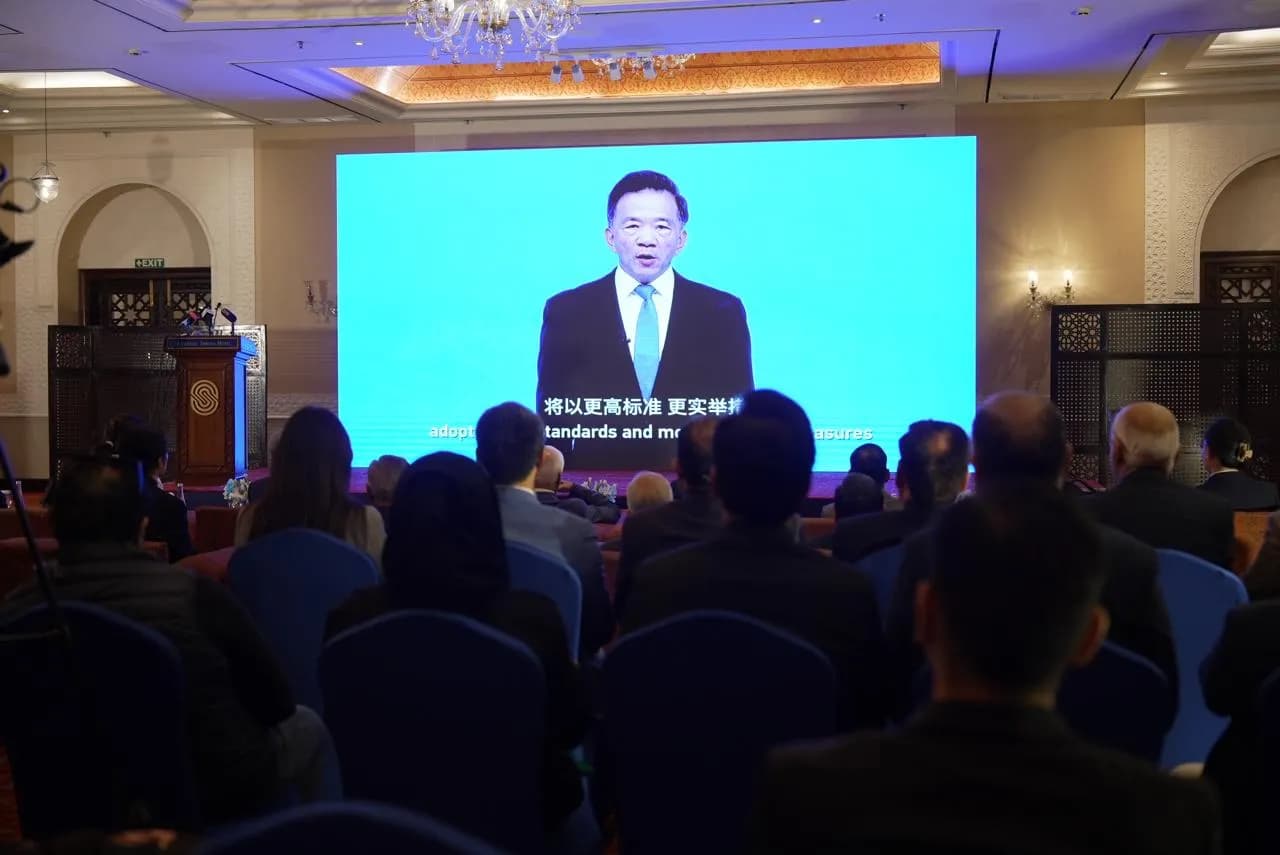
China Media Group (CMG), the Chinese Embassy in Pakistan, and the Pakistan-China Institute hosted the Pakistan session of the Global Dialogue on “China’s Governance and Global Development” in Islamabad on Tuesday. Approximately 100 representatives from the business communities, media, academia, and government institutions of both nations attended the event.
Chinese Ambassador to Pakistan Jiang Zaidong told the gathering that many Pakistani friends view China’s sustained social stability and rapid economic growth as remarkable achievements resulting from its governance approach. He stated that understanding China’s governance begins with understanding how the Communist Party of China (CPC) governs itself, noting that rigorous Party self-governance is fundamental to the country's success.
Ambassador Jiang Zaidong said that an important decision was adopted during the Fifth Plenary Session regarding the continuous advancement of full and rigorous Party self-governance. He claimed this decision provides strategic guidance for implementing President Xi Jinping’s thoughts on Party building and suggested these thoughts could offer valuable insights to political parties worldwide.
The Ambassador also reaffirmed China’s commitment to accelerating the implementation of the second phase of the China-Pakistan Economic Corridor (CPEC 2.0) and building a closer China-Pakistan community with a shared future. He noted that Liu Haixing, head of the International Department of the CPC Central Committee, recently visited Pakistan with a delegation to exchange views on national governance.
In a video address, Shen Haixiong, Vice Minister of the Publicity Department of the CPC Central Committee and President of China Media Group, said that understanding contemporary China requires understanding the CPC. He stated that the Fifth Plenary Session laid out a plan for Party self-governance and reiterated two approaches to breaking the historical cycle of rise and decline: “oversight by the people” and “self-governance.”
Shen Haixiong cited a CGTN global public opinion survey to claim that the CPC’s experience offers a governance model that differs from Western approaches. He announced that China Media Group would use its multilingual platforms to produce high-quality programmes on the subject to help international audiences understand the CPC’s experience.
Qaiser Ahmed Sheikh told the audience that he has visited China dozens of times since 1972 and witnessed the transformations achieved under CPC leadership. He noted that the Party has consistently prioritised public welfare, specifically in education, science, and technological development. Sheikh highlighted that China has lifted nearly 800 million people out of poverty through the successive implementation of five-year plans.
Sheikh described Pakistan and China as time-tested friends and all-weather strategic cooperative partners. He suggested that Pakistan could benefit from the CPC’s experience while pursuing its own institutional and educational reforms. He also invited more Chinese companies to explore investment opportunities in Pakistan to expand bilateral trade and identify new areas of cooperation in agriculture.
Hu Pingping, a representative of China Media Group, provided examples of urban planning and environmental protection to illustrate China’s long-term development planning.
During the discussions, Pakistani participants explored what countries of the Global South could learn from China’s experience while considering their own social, media, industrial, and development needs. The participants agreed that no single model of governance is universally applicable to all countries and that each nation should pursue a path suited to its own national conditions.