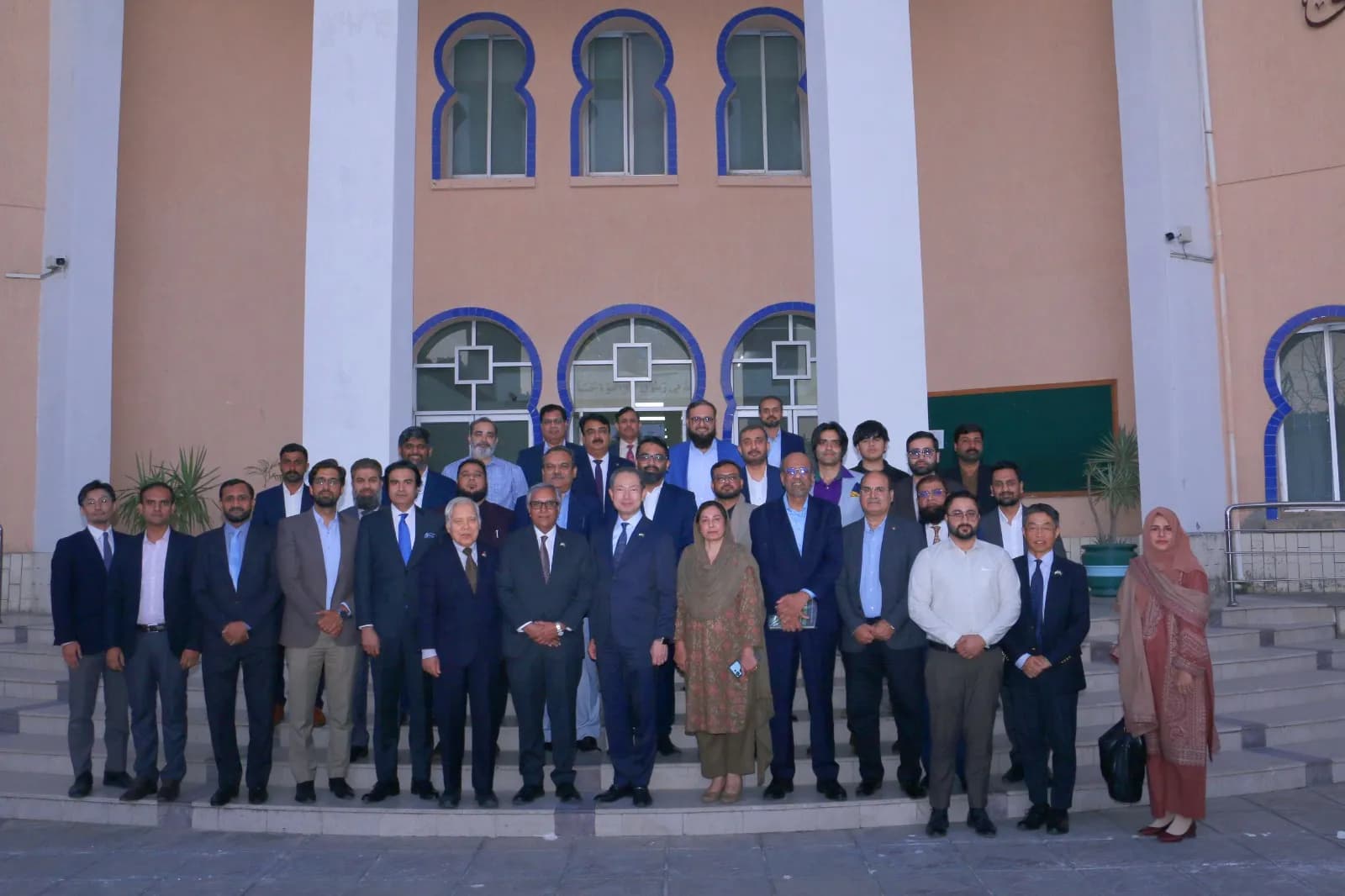
Japanese Ambassador to Pakistan, H.E. Shuichi Akamatsu, has emphasized the need to explore new opportunities for professional training, skills development and the exchange of experiences to further strengthen friendly relations between Pakistan and Japan. Akamatsu stated that Japan attaches great importance to sharing its successful work culture, discipline, quality standards and professional expertise with Pakistan.
The Ambassador suggested that such initiatives can broaden cooperation between the two countries while enhancing the institutional capacity and professional competencies of Pakistani organizations. He made these remarks during the closing ceremony of the Japanese Workplace Excellence Programme on November 17. The event was jointly organized by the Japan Pakistan Advancement Centre (JPAC), Pakistan Japan Business Forum (PJBF) and Allama Iqbal Open University’s (AIOU) Quality Enhancement Cell (QEC).
Chairman of the Pakistan Japan Business Forum, Mr. Murtaza Y. Mandviwalla, and Vice Chairman, Mr Syed Feroz Alam Shah, also spoke at the ceremony. They highlighted the importance of strengthening Pakistan-Japan relations through professional collaboration, knowledge sharing and the promotion of Japanese workplace practices in Pakistani organizations.
The training programme was designed to familiarize participants with Japanese work culture and modern management principles while providing insights into ways to improve quality, productivity and professional performance within organizations. Dr Kamran Musa from the Pakistan Institute of Quality Control (PIQC) served as the resource person, briefing participants on various aspects of Japanese workplace management, quality improvement, effective planning, discipline and systematic work practices. Through practical examples, Dr Musa highlighted that continuous improvement, collective responsibility, effective strategies and professional attitudes are essential for achieving excellence in organizations.
On the occasion, a book on Japanese work culture and professional skills was launched. Director of AIOU’s Directorate of Quality Enhancement, Dr Saima Nasir, said that making quality an integral part of institutional culture has become essential for organizational growth and success. She observed that Japanese work culture, with its emphasis on discipline, punctuality, teamwork and continuous improvement, serves as a model worthy of emulation across the world.
Dr Nasir further stated that such training programmes not only enhance employees’ professional capabilities but also play a significant role in improving quality, transparency and overall institutional performance. She thanked the Japan Pakistan Advancement Centre, Pakistan Japan Business Forum and all those who contributed to the successful organization of the programme.