Key Takeaways
- Auction of four international Markhor permits generated $1.21 million.
- Highest-ever revenue for trophy hunting in Pakistan’s history.
- 80% of revenue will benefit local communities.
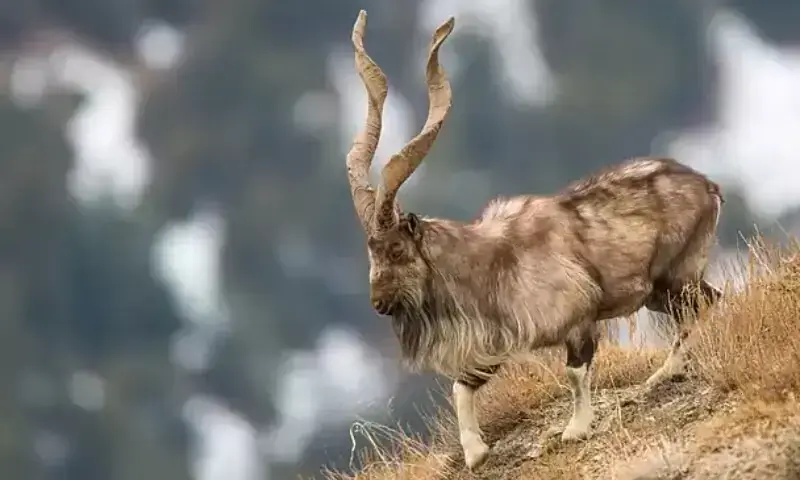
The Wildlife Department of Khyber Pakhtunkhwa has achieved a significant milestone by auctioning four international Markhor trophy hunting permits, generating a record $1.21 million, equivalent to approximately Rs335.7m. This marks the highest-ever revenue generated through a trophy hunting programme in Pakistan’s history.
The permits were auctioned for Toshi-I, Chitral at $320,600; Toshi-II, Chitral at $335,600; Gahirat Gol, Chitral at $260,000; and Kigah Khwar, Kohistan at $295,600, collectively generating $1,211,800.
Latifur Rehman, the spokesperson for the KP Wildlife Department, stated that only a limited number of permits had been issued under the trophy hunting programme for the hunting of mature and old male Markhor. He highlighted the programme’s objectives to support wildlife conservation, ensure sustainable management of natural populations, and enable local communities to benefit economically from conservation.
Rehman emphasized, 'This is more than an auction. It is a success story of a conservation philosophy: when forests are protected, wildlife thrives; when wildlife thrives, communities prosper; and when communities prosper through conservation, the future of nature becomes more secure.'
The government is committed to effective and result-oriented measures to conserve wildlife, promote the sustainable use of natural resources, and make local communities meaningful partners in the protection of nature. According to Rehman, 80 per cent of the revenue generated through trophy hunting will be directly allocated to the welfare and development of the relevant local communities, while the remaining 20 per cent will be deposited into the government treasury.
Rehman also noted that the communities living in the mountains, valleys, and remote areas of the province have maintained a close relationship with nature for generations. He stated, 'The government’s policy of linking wildlife conservation with livelihoods, development, and community prosperity is transforming this longstanding relationship into a stronger and more sustainable partnership.'
Markhor is a distinctive symbol of Khyber Pakhtunkhwa’s natural heritage and biodiversity, and the government is continuing integrated conservation measures in partnership with local communities. The spokesperson highlighted the importance of this partnership in ensuring the future of nature in the region.
Despite global controversy surrounding trophy hunting, supporters argue that such programmes help prevent poaching, empower local communities, and contribute to wildlife conservation. The success of the auction underscores the potential for such initiatives to benefit both wildlife and local communities.
This is more than an auction. It is a success story of a conservation philosophy: when forests are protected, wildlife thrives; when wildlife thrives, communities prosper; and when communities prosper through conservation, the future of nature becomes more secure.
Latifur Rehman, Spokesperson for the KP Wildlife Department