Key Takeaways
- The United States imposed sanctions on the International Criminal Court (ICC) on Friday.
- The move came hours after the Nobel Peace Prize was awarded to South Africa’s Navi Pillay, a former ICC judge.
- US Secretary of State Marco Rubio said the sanctions were needed to protect American sovereignty.
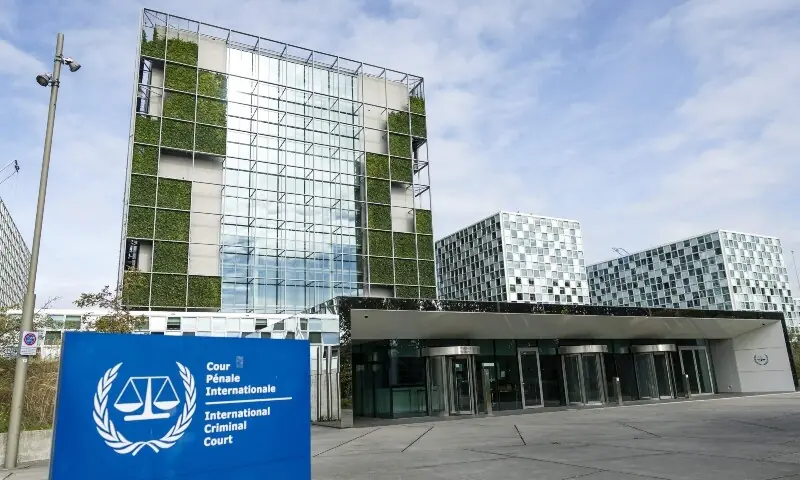
The United States on Friday imposed sanctions on the International Criminal Court (ICC), vowing to cripple the tribunal’s operations just hours after the Nobel Peace Prize went to a former ICC judge who warned of mounting political attacks on the court.
The Norwegian Nobel Committee awarded the peace prize to South Africa’s Navi Pillay, an 85-year-old jurist who headed the Rwanda genocide tribunal, served on the ICC and later led a UN commission that accused Israel of genocide in Gaza.
US Secretary of State Marco Rubio said Washington would ban transactions with what he called a 'rogue court,' escalating a long-running campaign by President Donald Trump’s administration against the Hague-based tribunal.
Rubio’s statement did not mention Pillay or the Nobel award. Instead, he said the sanctions were needed to protect security personnel and elected officials from prosecution by a court the United States has never joined.
Rubio said, 'President Trump will never allow the International Criminal Court to prosecute Americans,' adding that the measures would cut off the court’s resources and cripple 'its ability to operate.'
The top US diplomat said Washington had, for more than a year, spelled out 'basic gestures of good faith' it expected from the court and had held off on the designation in hopes that the ICC or its member states would change course.
He said no 'meaningful steps' were taken to address US concerns. Rubio also called on US allies that belong to the court and 'rely on American service members for their defence' to rein it in, warning that otherwise Washington would keep working to dismantle the ICC 'brick by brick.'
The Trump administration had previously sanctioned individual ICC officials, including its prosecutor and several judges, over the court’s investigations involving the United States and Israel, which is also not a member.
Trump last month called on all ICC member states to quit the body, denouncing it as 'out of control' and a 'rogue institution.'
The court, however, rejected the US sanctions as an attack on international law and warned in a statement that 'history will judge this moment.'
In a statement, the court called the sanctions 'an assault on the rule of law and on the very foundations of the international legal order which strikes at the simple principle that no one stands above the law.'
President Trump will never allow the International Criminal Court to prosecute Americans.
Marco Rubio, US Secretary of State