Key Takeaways
- Iran and the US hinted at the possibility of reviving negotiations at the UN.
- US Secretary of State Marco Rubio said the US is open to speaking with Iran.
- Iran stated it would reopen the Strait of Hormuz if the US fulfills its demands.
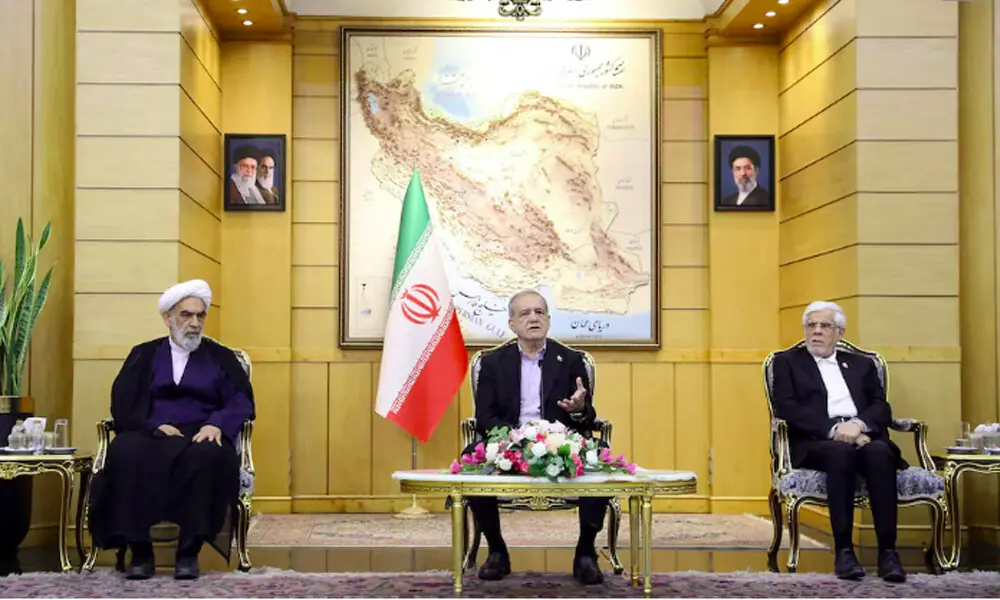
Iran and the United States have hinted at the possibility of reviving negotiations to end their conflict, as both countries prepare to attend the UN General Assembly in New York. This development comes after Donald Trump and Masoud Pezeshkian, the US and Iranian presidents respectively, have not met face-to-face since July.
In a statement, a senior Iranian official said there were no plans for direct meetings between the two leaders, but Iran’s delegation had the authority to revive talks. The official also stated that Iran could reopen the Strait of Hormuz to Gulf shipping within seven days if the US fulfilled Tehran’s demands to ease military pressure and lift an American blockade on Iranian ports.
US Secretary of State Marco Rubio told NBC’s ‘Today’ show that the US was open to speaking with the Iranians, particularly if it could lead to positive outcomes. Rubio emphasized that the UN General Assembly provided a golden opportunity for the US to return to diplomacy.
Pezeshkian, who is subordinate to Iran’s Supreme Leader Ayatollah Mojtaba Khamenei, is set to attend the UN alongside Trump. Rubio noted that Khamenei is a radical Shia cleric, highlighting the potential for tension during the meeting.
During a press conference, Rubio reminded that Iran is run by ‘lunatic clerics’ and that the US cannot allow Iran to have nuclear weapons. He stated, ‘The central issue here is Iran is run by lunatic clerics, and these people can never have nuclear weapons.’
Despite the hints of renewed talks, Zelenskiy is set to meet Trump at the UN in a push for an energy truce with Russia. This meeting underscores the complex geopolitical landscape surrounding Iran and the US.
Trump is also scheduled to meet with leaders of the six Gulf Arab states: Bahrain, Kuwait, Qatar, Oman, Saudi Arabia, and the United Arab Emirates. These countries are keen to restore shipping through the Strait of Hormuz but are wary of giving their longstanding rival Iran too much support.
Parliament Speaker Mohammed Baqer Qalibaf, who headed Iran’s negotiating team at previous talks, stated that Iran would never surrender. He said, ‘Trump must understand that he cannot impose his power on the Iranian people and its armed forces.’
The US needs to announce that it wants to resolve the issue diplomatically, make that official, and then agree on a timeline for how the process will move forward.
A senior Iranian official, Unnamed
He’s a businessman who comes from the world of practicality and common sense. And common sense tells you there’s no harm in engaging and talking to someone.
Marco Rubio, US Secretary of State
Trump must understand that he cannot impose his power on the Iranian people and its armed forces.
Mohammed Baqer Qalibaf, Parliament Speaker of Iran