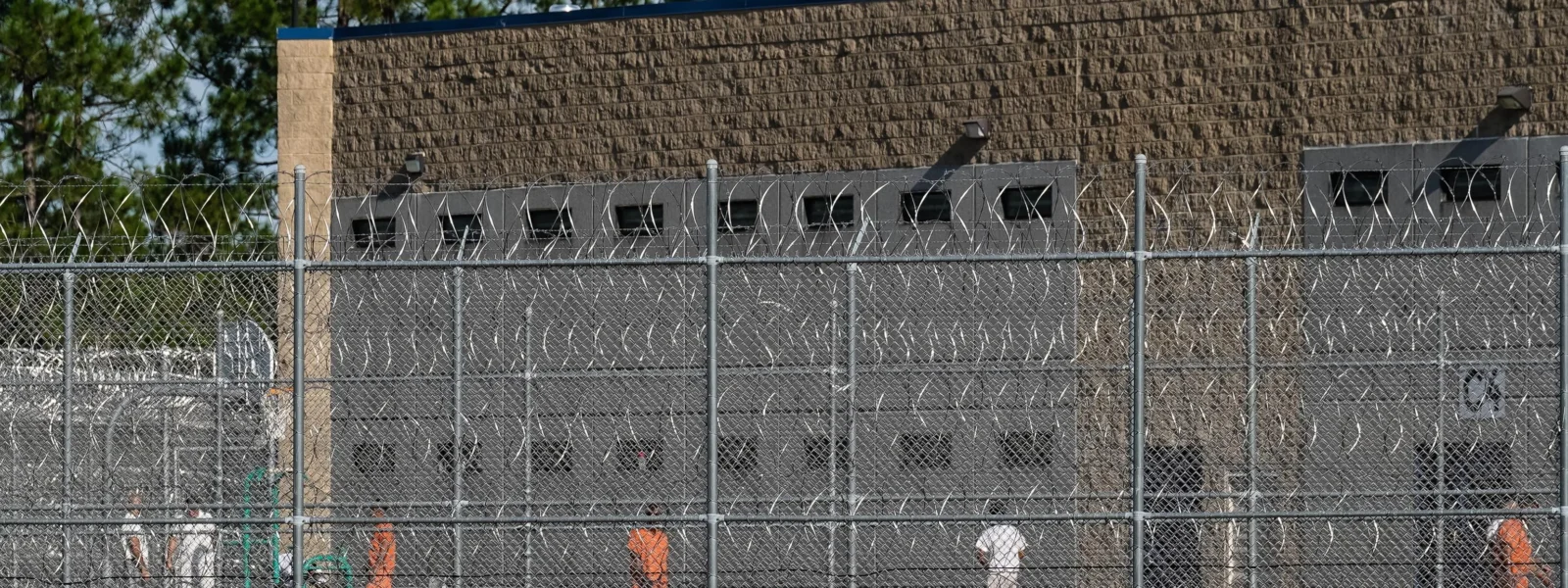
Key Takeaways
- Four men detained at the Folkston ICE Processing Center in Georgia used video conferencing to expose poor conditions.
- They described a dysfunctional legal system designed to keep them in federal custody for years.
- The video highlights the work program where detainees are paid minimal wages for menial tasks.
Four men detained at the Folkston ICE Processing Center in Georgia have used the facility’s video conferencing software to expose the harsh conditions and systemic issues within the detention center, according to a report by The Verge.
The video, which was recorded on September 9, 2025, and shared publicly, details the detainees' experiences, highlighting a legal system that is intentionally designed to keep them in federal custody for extended periods.
The men describe a system where they are forced to work in a work program that offers minimal compensation for tasks such as cooking, doing laundry, and cleaning. The wages are so low that they barely cover the cost of basic necessities.
The video also reveals the facility's profit-driven nature, with privately owned detention centers profiting from the confinement of detainees. This practice is seen as a means to keep the detainees trapped in federal custody for months or even years.
The men’s decision to use video conferencing to expose these conditions is a significant step in bringing attention to the systemic issues within the immigration detention system. Their actions have drawn attention to the plight of detainees and the need for reform.
The video has sparked discussions about the fairness and efficiency of the immigration court system, as well as the ethical considerations of profit-driven detention centers.
Detainees at the Folkston ICE Processing Center are paid a pittance for their work, which is intended to keep them occupied and maintain a semblance of normalcy. However, the low wages and the overall conditions have been criticized as inhumane and exploitative.
The use of video conferencing by the detainees to document and share their experiences is a powerful tool in highlighting the systemic issues within the immigration detention system. It has brought the harsh realities of detention to the forefront of public discourse.