WHAT IS URDU? AND WHY URDU IS LOVED BY THE COMMON MAN IN INDIA
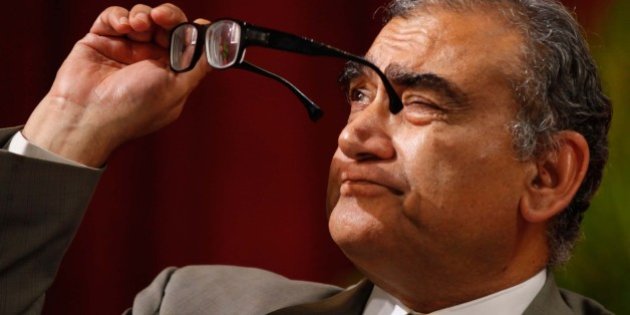
MUMBAI, INDIA - MARCH 30: Retired Supreme Court Judge Markandey Katju, Chairman Press Council of India at Mumbai university to deliver lecture on ' Ancient Indian Jurisprudence and Modern Jurisprudence on March 30, 2013 in Mumbai, India. After actor sanjay Dutt Justice Katju has said that he will take up the case for pardon of another convict in the 1993 blasts case Zaibunisa Kazi. (Photo by Kunal Patil/Hindustan Times via Getty Images)
There have been a lot of misconceptions about Urdu e.g. that it is a foreign language or it is a language of Muslims alone.
INDIA IS BROADLY A COUNTRY OF IMMIGRANTS
I have mentioned in a judgment given by me in Kailas & Others vs. State of Maharashtra2011(1) JT 19 that India is broadly a country of immigrants, and this explains its tremendous diversity. As I mentioned in that judgment, while North America is a country of new immigrants where people came mainly from Europe over the last four or five Centuries, India is a country of old immigrants where people have been coming in for ten thousand years or so. Probably about 92% people living in India today are descendants of immigrants, who came mainly from the North-West, and to a lesser extent from the North-East. Since this is a point of great importance for the understanding of our country, it is necessary to go into it in some detail. People migrate from uncomfortable areas to comfortable areas. This is natural because everyone wants to live in comfort. Before the coming of modern industry there were agricultural societies everywhere, and India was a paradise for these because agriculture requires level land, fertile soil, plenty of water for irrigation etc. which was in abundance in India. Why should anybody living in India migrate to, say, Afghanistan which has a harsh terrain, rocky and mountainous and covered with snow for several months in a year when one cannot grow any crop? Hence, almost all immigrations and invasions came from outside into India (except those Indians who were sent out during British rule as indentured labour, and the recent migration of a few million Indians to the developed countries for job opportunities). There is perhaps not a single instance of an invasion from India to outside India. India was a veritable paradise for pastoral and agricultural societies because it has level & fertile land, hundreds of rivers, forests etc. and is rich in natural resources. Hence for thousands of years people kept pouring into India because they found a comfortable life here in a country which was gifted by nature. As the great Urdu poet Firaq Gorakhpuri wrote:
“Sar zamin-e—hind par aqwaam-e-alam ke firaq
Kafile guzarte gae Hindustan banta gaya”
Which means –“In the land of Hind, the Caravans of the peoples of The world kept coming in and India kept getting formed”. Who were the original inhabitants of India ? At one time it was believed that the Dravidians were the original inhabitants. However, this view has been considerably modified subsequently, and now the generally accepted belief is that the original inhabitants of India were the pre-Dravidian aborigines i.e. the ancestors of the present tribals or adivasis (Scheduled Tribes). It is for this reason that there is such tremendous diversity in India. This diversity is a significant feature of our country, and the only way to explain it is to accept that India is largely a country of immigrants. There are a large number of religions, castes, languages, ethnic groups, cultures etc. in our country, which is due to the fact that India is broadly a country of immigrants. Somebody is tall, somebody is short, some are dark, some are fair complexioned, with all kinds of shades in between, someone has Caucasian features, someone has Mongoloid features, someone has Negroid features, etc. There are differences in dress, food habits and various other matters. We may compare India with China which is larger both in population and in land area than India. China has a population of about 1.3 billion whereas our population is roughly 1.15 billion. Also, China has more than twice our land area. However, all Chinese have Mongoloid features; they have a common written script (Mandarin Chinese) and 95% of them belong to one ethnic group, called the Han Chinese. Hence there is a broad (though not absolute) homogeneity in China. On the other hand, as stated above, India has tremendous diversity and this is due to the large scale migrations and invasions into India over thousands of years. The various immigrants/invaders who came into India brought with them their different cultures, languages, religions, etc. which accounts for our tremendous diversity. My friend Mr. Salman Khurshid, Hon’ble Union Minister, has written a play ‘Babur Ki Aulad’ which was produced recently. Now I request him to write another play which should be called ‘Baahar ki aulad’, to depict India.
INDIAN CULTURE – CAN BROADLY BE CALLED THE SANSKRIT-URDU CULTURE
As I have already mentioned, India is broadly a country of immigrants, which explains its tremendous diversity. The question now arises is whether these immigrants who came into India have all preserved their original different identities, or a common culture has emerged by their intermingling? In my opinion, despite all our diversities, a common culture has emerged in India which may broadly be called the Sanskrit-Urdu culture, which is the common culture of India. This culture revolves around great two languages which our country has produced, namely Sanskrit and Urdu.
I do not mean to denigrate or disparage the other languages of India. Great literature has been written in several of our languages. For example, in my opinion, the best prose in modern India is in Bengali (particularly the works of the great Bengali writer Sharat Chandra Chattopadhyaya). There has been also great literature in Tamil (the ‘Tiruppavai’ of Andal is reminiscent of the poetry of Surdas and Mirabai), Marathi, Gujarati, Oriya, Assamese, Punjabi, Telugu, Malayalam, Kashmiri (see the verses of Habba Khatoon), etc. All languages in our country deserve equal respect. However, having said that, we must understand that Sanskrit and Urdu stand on a different footing from these other languages. Sanskrit and Urdu are our two great national cultural languages (while other languages are regional).
There is a great misunderstanding about both Sanskrit and Urdu. Sanskrit is often regarded as a language of rituals and Pooja Paath among Hindus, although I have shown in my speech entitled ‘Sanskrit as a Language of Science’ delivered in the Indian Institute of Science, Bangalore as well as in Banaras Hindu University (which you can see on Google under that caption) that 95% of Sanskrit literature has nothing to do with religion or religious rituals, and instead deals with philosophy, science, mathematics, medicine, literature, grammar, interpretation, etc.
Similarly, there have been a lot of misconceptions about Urdu e.g. that it is a foreign language or it is a language of Muslims alone.
I will speak on Sanskrit on some other day which Professor Akhtarul Warsey may fix for that purpose. Today I will be speaking on Urdu. As I have already mentioned, our country’s culture is the Sanskrit-Urdu Culture. We have, therefore, to understand Urdu in order to understand our country.
TWO FALSE NOTIONS ABOUT URDU
Two false notions were propagated, particularly after 1947 about Urdu by certain vested interests (1) that Urdu is a foreign language, and (2) that Urdu is a language of Muslims alone. The first idea is palpably false. Arabic and Persian are no doubt foreign languages (though I have great respect for them also, as I have great respect for all languages). But Urdu is a language which is totally indigenous. It was born here in India as the language of the Lashkar (camp) and of the market. In its simplified form (as Khariboli or Hindustani) it is the language of the common man in large parts of urban India. Its prominent figures all lived in India, and they have made an outstanding contribution to our culture, dealing with the problems of the people, sympathizing in their sorrows, and touching the human heart. Only ignorant people can call Urdu a foreign language. The second notion, that Urdu is a language of Muslims alone, is also false. In fact upto the last generation in our country Urdu was the language of all educated people, whether Hindu, Muslim, Sikh or Christian, in large parts of urban India. In my own family upto my father everyone was highly proficient in Urdu. It is only from my generation that Urdu has disappeared, which I regard as unfortunate.
The notion that Urdu is a language of Muslims alone can only be attributed to the policy of `divide and rule’. Certain vested interest