Key Takeaways
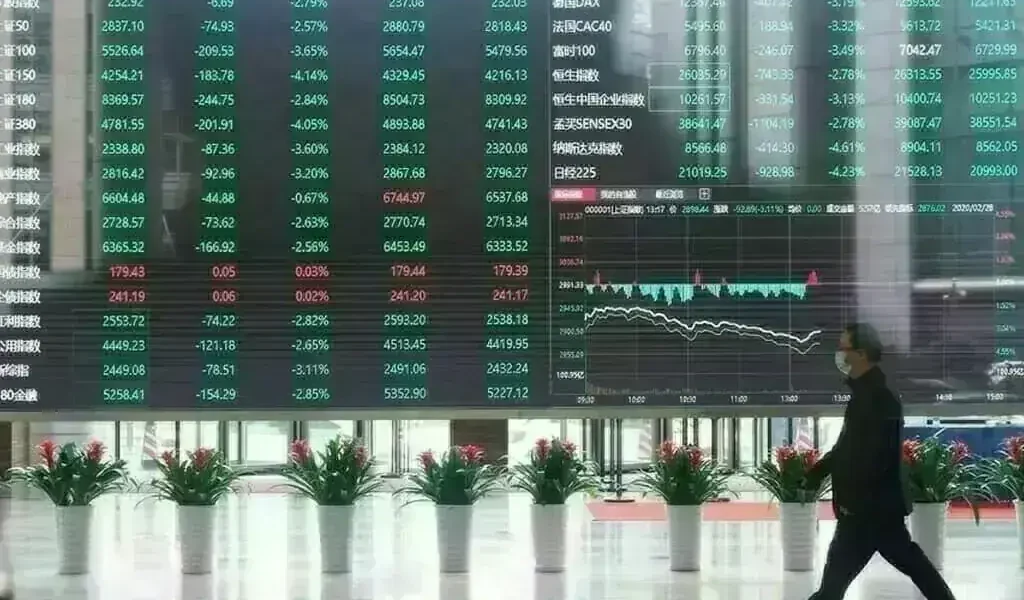
- China and Hong Kong stock benchmarks fell on Thursday.
- Gold and non-ferrous metal shares experienced significant declines.
- Analysts prefer China A-shares over Hong Kong shares for the rest of the year.
China and Hong Kong stock benchmarks declined on Thursday, with rate-sensitive sectors, including gold and non-ferrous metals, experiencing a notable drop. The US Federal Reserve raised interest rates for the first time in three years, setting a more hawkish tone than expected.
China’s blue-chip CSI300 Index and the Shanghai Composite Index dipped 0.4% each by the lunch break, while the Hong Kong benchmark Hang Seng fell 0.8%. In China, the CSI gold equities slumped 5%, and non-ferrous metal shares dropped 3%. Hong Kong’s property firms declined 1.9%.
The Federal Reserve raised its interest rates by 25 basis points to 4.25% on Thursday, tracking the US hike. Analysts noted that biotech and semiconductor shares outperformed in both markets, but the overall sentiment was bearish.
In Hong Kong, the smaller Shenzhen index was down 0.24%, the start-up board ChiNext Composite index was weaker by 0.12%, and Shanghai’s tech-focused STAR50 index was down 0.39%. The city raised its base interest rate by 25 basis points to 4.25% on Thursday, in line with the US move.
Analysts prefer China A-shares over Hong Kong shares for the rest of the year, given their greater exposure to AI hardware and related supply chains. However, the city’s stocks are more susceptible to weak domestic consumption, as they are consumer-facing.
Kevin Liu, chief offshore China and overseas strategist at CICC, stated that a sustained and meaningful rebound in Hong Kong stocks requires catalysts such as fiscal stimulus or a “DeepSeek moment.”
The decline in gold and non-ferrous metal shares is a clear indication of the impact of the US rate hike on sensitive sectors. Analysts are closely monitoring the market to gauge the extent of the impact and potential recovery.
Despite the overall decline, biotech and semiconductor shares outperformed, suggesting that some sectors remain resilient in the face of interest rate hikes.