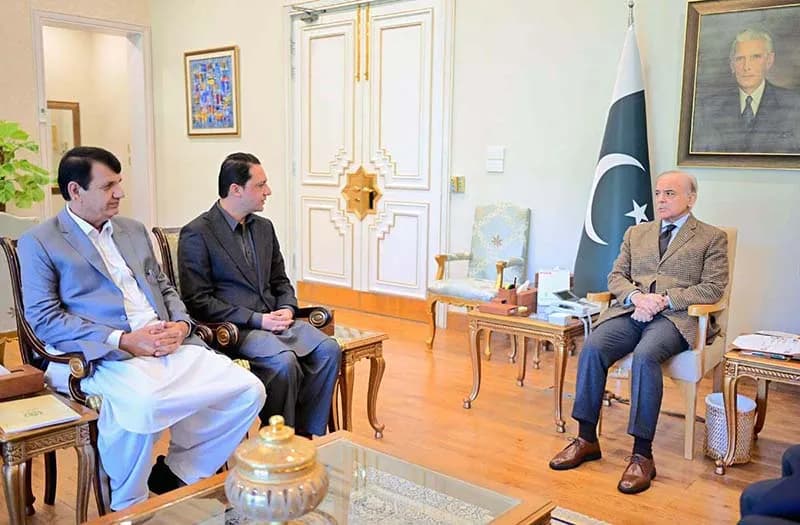
Prime Minister Muhammad Shehbaz Sharif on Thursday directed authorities to accelerate reforms in Pakistan’s gemstone sector to boost exports and develop a complete value chain. During a high-level review meeting in Islamabad, Sharif emphasized the need to establish international-standard laboratories and introduce modern mining techniques.
The Prime Minister stated that Pakistan was blessed with vast reserves of precious gemstones, but noted that outdated mining practices and limited processing facilities were causing significant losses to the national economy. “Pakistan has enormous potential in gemstone mining, value addition and exports,” Sharif said, adding that the government is taking comprehensive measures on priority to develop the sector.
To improve the quality, credibility, and international competitiveness of Pakistani gemstones, the Prime Minister directed the establishment of international-standard laboratories for identification and certification. He also instructed authorities to send Pakistani master trainers to Sri Lanka and Thailand for specialized training in gemstone processing. The Foreign Secretary was directed to ensure that Pakistani ambassadors in those countries provide full support for the training programme.
During the meeting, officials reported that Pakistan has an estimated 300 million carats of gemstone reserves. Currently, more than 9,000 miners are extracting over 30 varieties of precious stones, and the sector is linked to more than 5,500 businesses across the country. However, the industry faces major challenges, including the export of raw gemstones, a wastage of more than 50 percent during mining operations, a shortage of modern technical expertise, and limited value-addition facilities.
To address these issues, the government has prepared a comprehensive reform strategy to transform the sector from raw material extraction to finished gemstone products. A Rs 4.10 billion project is being implemented to establish facilitation centres in Gilgit-Baltistan, Azad Jammu and Kashmir, and Islamabad. Other initiatives include the establishment of 80 banking facilitation desks, geological mapping, the revival of training centres, and enhanced international cooperation.
The government has also begun implementing the National Gemstone Policy 2026–2030. Proposed reforms include establishing an independent regulatory framework, a national certification and warranty system, restricting the export of raw gemstones, and granting tax and customs duty exemptions on imported machinery. The strategy also seeks to encourage private-sector investment and partnerships to establish an integrated value chain covering mining, processing, certification, manufacturing, and exports.
Sharif said the government would provide a conducive business environment to encourage private-sector participation in gemstone mining and processing. He welcomed progress toward establishing a comprehensive value chain and stressed that Pakistan must move beyond exporting unprocessed stones to producing high-value finished products.
The Prime Minister appreciated the contributions of Special Assistant to the Prime Minister on Energy, Lieutenant General (retd.) Muhammad Zafar Iqbal and his team, Finance Minister Muhammad Aurangzeb, Petroleum Minister Ali Pervaiz Malik, Adviser on Industries and Production Haroon Akhtar, and relevant officials in advancing reforms and establishing Centres of Excellence. Federal ministers Azam Nazeer Tarar, Dr Musadik Masood Malik, Jam Kamal Khan, Ahad Khan Cheema, Muhammad Aurangzeb, Attaullah Tarar, and Ali Pervaiz Malik, along with Adviser Haroon Akhtar, Special Assistant Lieutenant General (retd.) Muhammad Zafar Iqbal, and senior government officials attended the meeting.