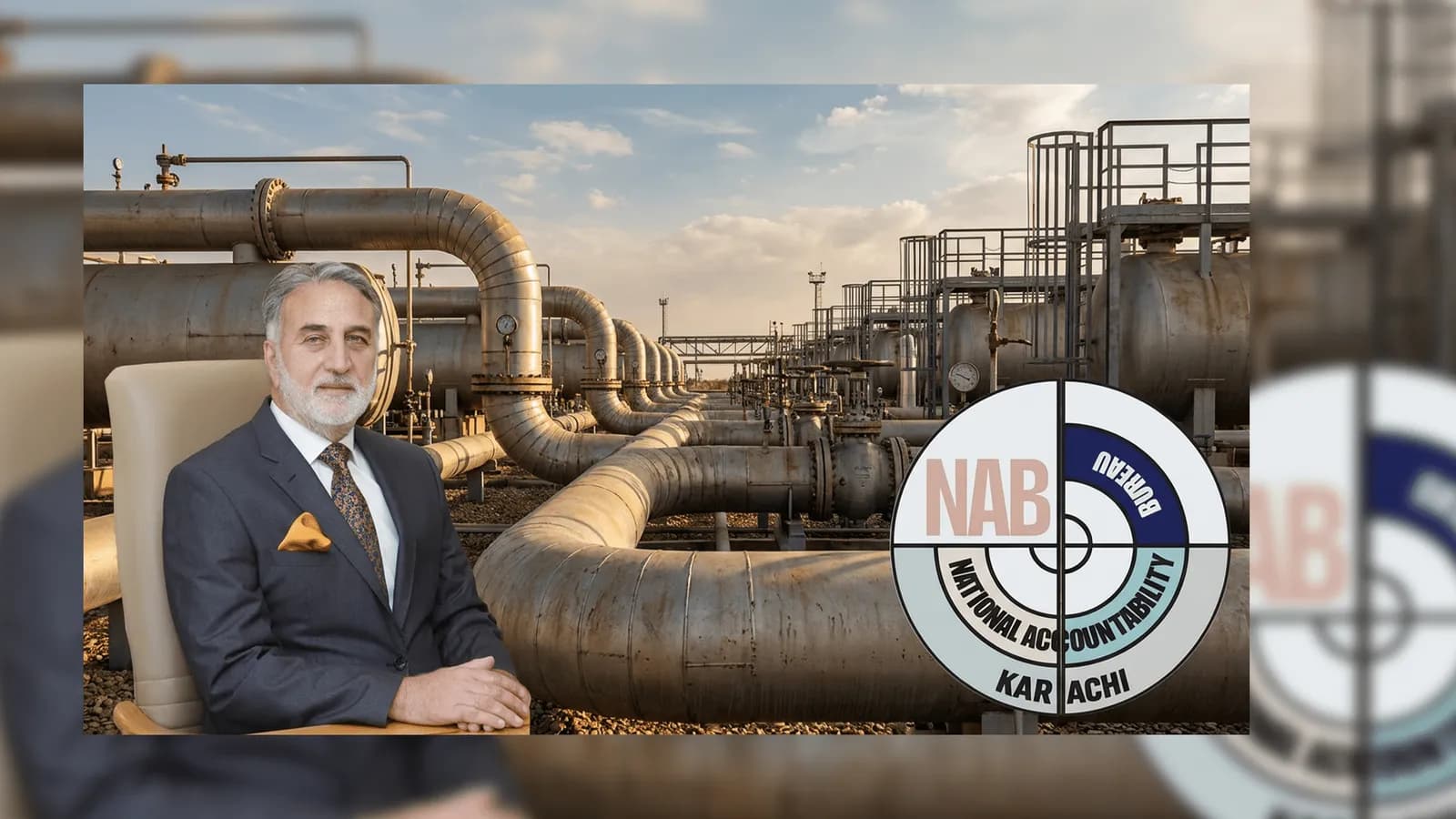
The National Accountability Bureau (NAB) has launched an inquiry into the policy that permits exploration and production (E&P) companies to sell 35 percent of additional gas from new discoveries to the private sector. The Special Investigation Division (SID) of NAB issued notices on November 17 regarding alleged corruption and corrupt practices involving this allocation.
The bureau has issued notices to the Petroleum Division, Sui Northern Gas Pipelines Limited (SNGPL), Universal Gas Distribution Company (UGDC), the Oil and Gas Regulatory Authority (OGRA), and other relevant entities. This latest action follows a previous round of questioning where NAB sought a detailed explanation from the managing director of SNGPL regarding the "alleged illegal and nontransparent allocation of gas and pipeline transmission capacity to UGDC."
In a letter, NAB’s Special Investigation Division requested certified records and explanations concerning the allocation of 50 million cubic feet per day (MMcfd) of pipeline transmission capacity to UGDC. The bureau specifically requested the "complete, unredacted minutes and proceedings" of SNGPL board meetings held on August 15 and September 11, 2025. During these meetings, the allocation was reportedly approved, then deferred or reversed, and eventually reauthorized.
NAB is seeking the names of the management officials and board members involved in these decisions, as well as the technical, financial, and legal justifications for the changes. The bureau also questioned the legal and financial reasons for moving high-end industrial consumers from SNGPL’s billing system to UGDC’s private billing portfolio. Furthermore, NAB requested a detailed assessment of the potential monthly revenue losses and commercial margins SNGPL may have lost as a result.
The inquiry also covers the allocation of 25 MMcfd of gas transmission capacity on a firm basis until 2033, plus additional interruptible capacity, to a private entity. NAB requested the complete financial breakdown, signed access agreements, and execution details for the second addendum to the access agreement with UGDC. The bureau also sought confirmation that an upfront payment of Rs. 800 million was fully received before commercial gas flows from the Razgir field began. Additionally, it requested monthly billing and payment records for approximately Rs. 1 billion, along with details on outstanding dues from industrial consumers transferred to UGDC and the recovery mechanisms used.
The policy allowing E&P companies to sell 35 percent of additional gas to the private sector was approved during the caretaker government’s tenure. This move was prompted by financial difficulties faced by E&P companies, including liquidity constraints, a shortage of foreign exchange, and payment delays. At that time, the gas sector’s circular debt was approximately Rs. 2 trillion, later rising to around Rs. 2.4 trillion, excluding the power sector's debt.
E&P companies had reportedly requested permission to sell up to 50 percent of their gas production directly to private buyers. Under current pricing, the government pays approximately $6 to $6.50 per million British thermal units (MMBtu) for gas from new discoveries. The 35 percent policy allows E&P companies to sell the additional gas to third parties at a price linked to crude oil, featuring a 12 percent discount against a crude oil benchmark capped at $112 per barrel. This arrangement was expected to generate roughly $1 per MMBtu in additional revenue for the government compared to previous mechanisms.
The policy was introduced as the government struggled to meet liquefied natural gas (LNG) import obligations. As imported LNG became more expensive and difficult to manage, the government prioritized it to meet contractual payments to Qatar and other suppliers. This led to restrictions on domestic production and a shift of industrial and commercial consumers toward imported LNG. During this period, the government discontinued several arrangements for the supply of system gas, which was cheaper than imported LNG.