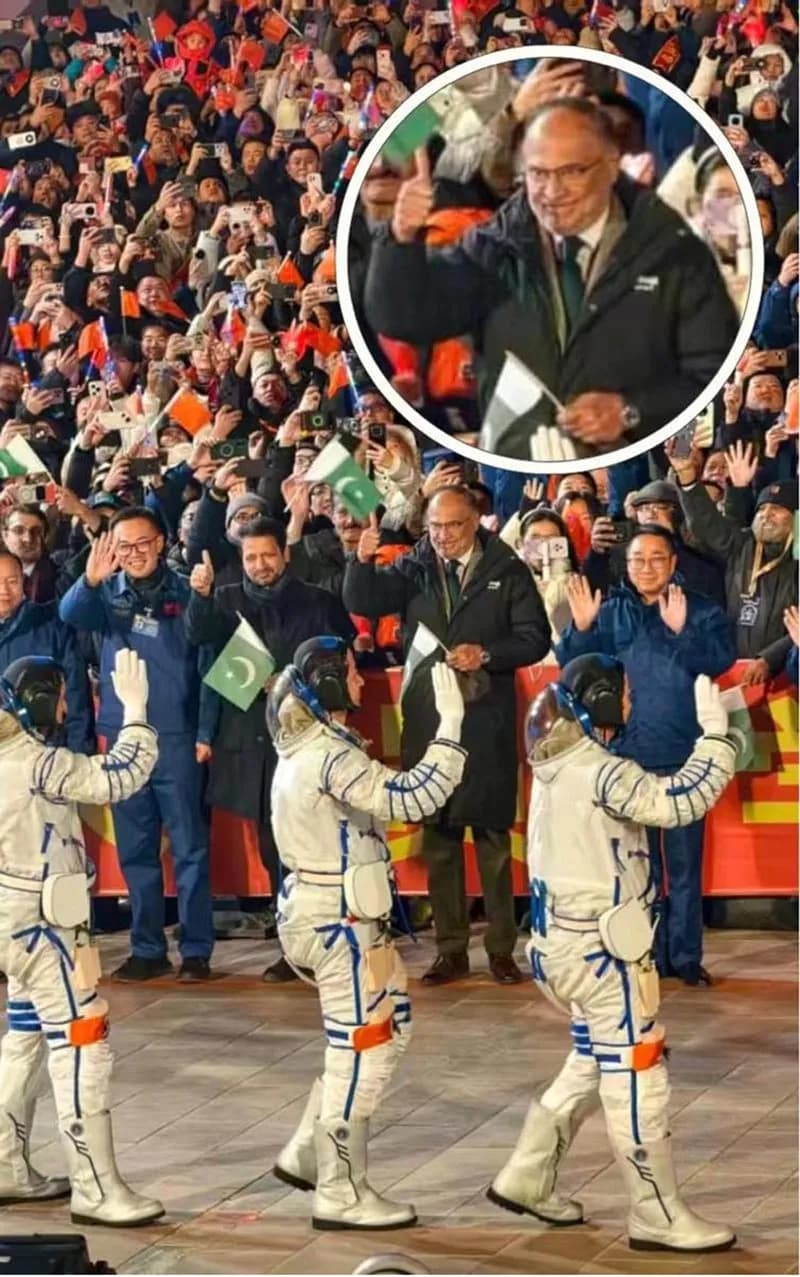
Federal Minister for Planning, Development and Special Initiatives Professor Ahsan Iqbal met with the Vice Chairman of China’s National Development and Reform Commission (NDRC) Zhou Haibing in Beijing on Friday, November 27. During the meeting, Iqbal discussed a broad agenda involving infrastructure, energy, industrial, and trade cooperation, specifically seeking early progress on projects under the China-Pakistan Economic Corridor (CPEC).
Iqbal proposed that Pakistan be granted duty-free access for all its goods to the Chinese market through a non-reciprocal arrangement. He noted this would be separate from the current bilateral free trade agreement and modeled on the zero-tariff access China provides to African countries. To justify the request, Iqbal highlighted a trade imbalance, stating that Pakistan’s imports from China reached $22.34 billion in 2025-26, while exports were only $2.71 billion. He suggested bilateral technical talks to establish an implementation timetable, rules of origin, and product coverage.
Regarding infrastructure, Iqbal called for the early completion of the financing agreement for the 102-kilometre Thor Nullah–Raikot section of the Karakoram Highway (KKH). This is the first priority of the wider Rs576 billion Thakot–Raikot realignment project, which aims to keep the highway operational in areas impacted by hydropower projects on the Indus River. He also discussed Chinese participation in upgrading the ML-1 railway beyond the Karachi–Rohri section, a project for which Pakistan is looking into Asian Development Bank financing. Additionally, Iqbal requested progress on four joint road feasibility studies, including the Babusar Tunnel project.
On the maritime and industrial front, Iqbal sought Chinese support to restore regular shipping services to Gwadar, including engagement with COSCO. He proposed a joint study on strategic petroleum storage at the port and discussed the Gwadar Free Zone, the second phase of the Eastbay Expressway, and a proposed corridor linking Chagai’s mining areas with Gwadar for mineral processing and exports.
Under the second phase of CPEC, the minister sought progress on the Kohala and Azad Pattan hydropower projects. He proposed joint work to assess the feasibility of converting selected power plants from imported coal to locally available Thar coal. Iqbal also requested Chinese approval for the Siah Diq copper project and suggested jointly developing two to three model special economic zones (SEZs). Furthermore, Pakistan proposed adding three private-sector projects to the CPEC industrial agenda: an aluminium complex at Port Qasim, a fertiliser plant in Thar, and a refinery and fuel storage complex at Dhabeji.
The meeting also addressed the implementation of two existing agreements on artificial intelligence, a proposed 1,500-kilometre fibre-optic link from Rawalpindi to Karachi, and a jointly financed programme to provide 10,000 doctoral scholarships over 10 years. In terms of agriculture, Iqbal explored Chinese partnerships in farm modernisation and proposed establishing food processing zones to support exports and reduce post-harvest losses.
Zhou Haibing described CPEC as a pillar of China-Pakistan economic cooperation and noted its tangible gains. He stated that the commission was ready to work with Pakistan’s Ministry of Planning, Development and Special Initiatives on the next phase of CPEC, calling for closer alignment with Pakistan’s development priorities. Zhou welcomed the proposals shared by Iqbal and expressed a desire to move bilateral cooperation forward.