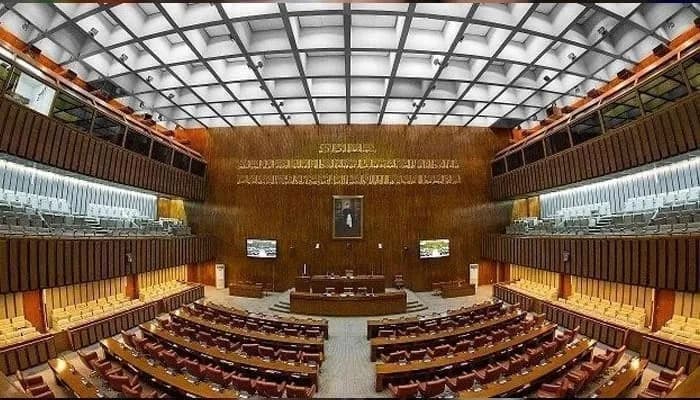
The Sub-Committee of the Senate Standing Committee on Petroleum has sought a forensic audit of oil and gas royalty figures in Sindh. The move follows concerns regarding discrepancies in how funds are allocated, released, and utilised across different districts.
During a meeting in Karachi on Monday, the Sub-Committee, led by Convener Senator Jam Saifullah Khan Dharejo, reviewed compliance with recommendations from a November 6, 2026, meeting held at the Sui Southern Gas Company (SSGC). The committee examined the distribution mechanisms for royalties in oil and gas-producing districts, specifically in Sindh. It requested comprehensive details from federal and provincial authorities regarding received royalties, district-wise allocations, actual expenditures, and unspent balances.
Senator Qurat-ul-Ain Marri expressed serious concern that producing districts are not receiving development benefits commensurate with the natural resources extracted from their areas. She stressed that a substantial portion of funds attributable to these districts should be used for their own development rather than being diverted to unrelated schemes in non-producing areas.
The Secretary of the Energy Department, Government of Sindh, raised concerns over the lack of proper reconciliation between the Directorate General of Petroleum Concessions (DGPC), Oil and Gas Development Company Limited (OGDCL), and the provincial Energy Department. He noted that the provincial government receives aggregate figures without adequate district-wise, field-wise, company-wise, or year-wise details. While he reported that approximately Rs690 billion was received over the last ten years with approximately Rs689 billion reported as expenditure, he stated that the figures and their allocations require detailed reconciliation.
In response, the Convener directed the development of a transparent and verifiable mechanism to establish a clear relationship between production, royalties, and actual utilisation. The committee ordered the DGPC to provide complete production and royalty details for each company, district, field, and year. It further directed the Sindh Energy Department and DGPC to reconcile their records and called for an independent or forensic audit to identify discrepancies.
The committee also addressed the Badr Gas Field scheme. The Additional Secretary, Ministry of Energy (Petroleum Division), informed the committee that the Cabinet had ratified the Economic Coordination Committee (ECC) approval for the scheme, and the Finance Division would process the case within 15 days to release funds. The Managing Director of OGDCL assured the committee that OGDCL, as a 50 per cent partner in the Badr Gas Field, would provide the necessary resources for early implementation.
Regarding gas connections, Senator Hidayatullah Khan noted that while 95,000 connections were provided in Dir, Batkhela, and adjoining areas, some localities still await connections due to federal restrictions. Senator Syed Kazim Ali Shah highlighted that connections remain pending in Gambat despite the installation of pipelines. MNA Zulfiqar Sattar Bachani also reported that residents in his constituency had deposited charges for new meters, but gas supply had not commenced. The committee took serious note of these hardships and emphasised that infrastructure should be translated into actual supply.
The committee also reviewed petroleum exploration and production licences, expressing concern over companies operating under licences dating back as far as 1995. It stressed that licence extensions must not become a substitute for effective regulatory oversight. Additionally, the committee noted that Pakistan Exploration Limited (PEL) has not been providing complete production information to the DGPC and has outstanding liabilities of approximately Rs3 billion. The committee directed the DGPC to ensure PEL provides the required information and addresses its liabilities, noting that enforcement provisions, including those relating to suspension or cancellation of licences, should be examined and invoked where warranted.