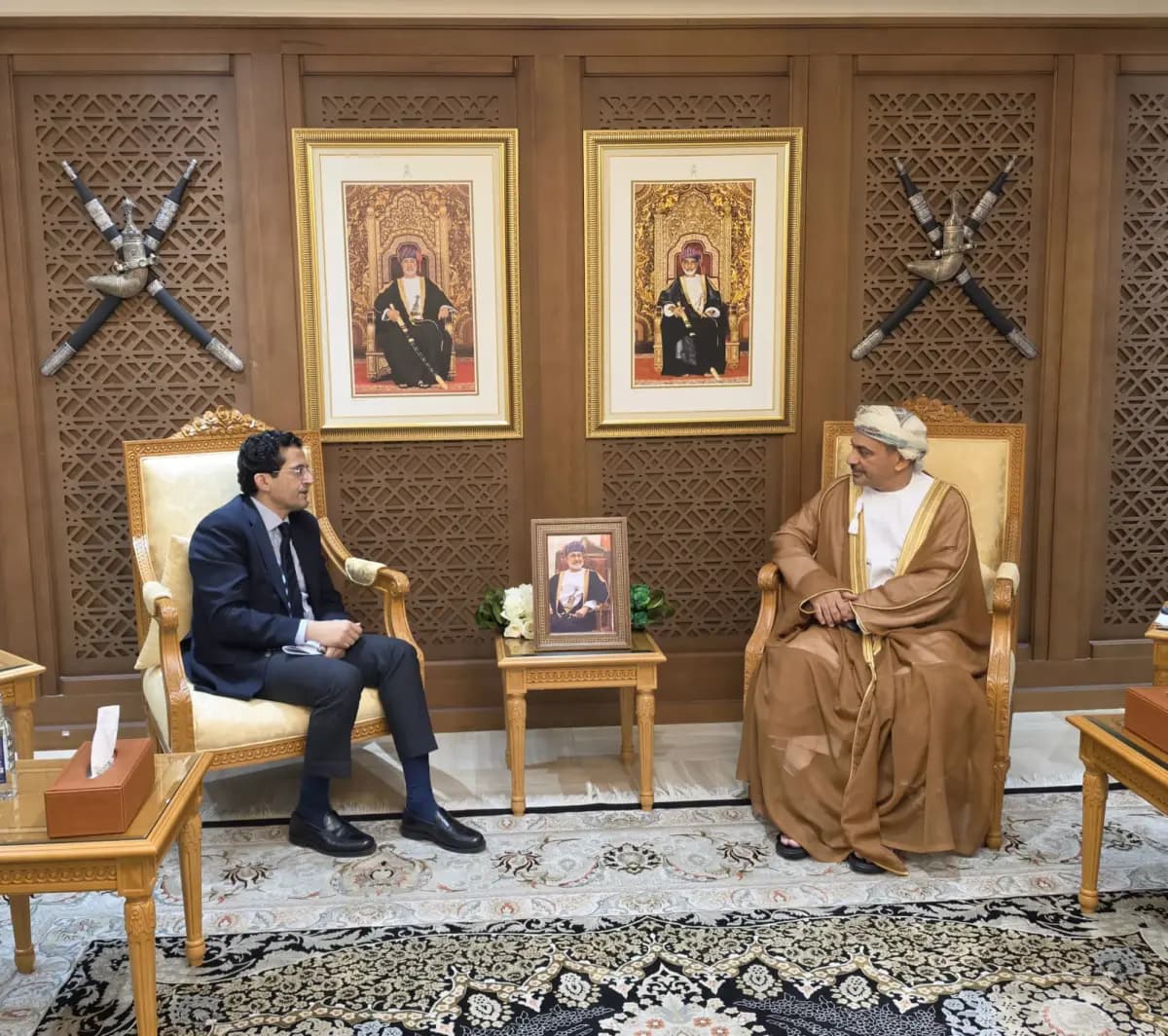
The US Consulate General Lahore’s Political and Economic Chief, Dillon Clancy, met with the All Pakistan Textile Mills Association (APTMA) on Monday to discuss methods for fostering economic relations and bilateral trade between Pakistan and the United States.
Dillon Clancy was accompanied by Economic Specialist Amna Anis. He was welcomed by APTMA Chairman Asad Shafi, Senior Vice Chairman (North) Habib Anwar Sheikh, Vice Chairman (North) Muhammad Ali Chaudhry, Energy Advisor Tahir Basharat Cheema, Secretary General Raza Baqir, along with senior executives and members.
During the meeting, both sides discussed the potential for collaboration in the cotton and textile sectors. They also looked at expanding investment relations in specific areas and diversifying the major commodities traded between the two nations.
Clancy stated that his visit was intended to understand Pakistan’s textile industry and explore the "substantial potential to expand economic and trade relations between Pakistan and the US." He praised the Pakistani textile industry for following global compliance standards. Clancy noted that while Pakistan has strong potential in textile apparel and other sectors, there is a need for continued dialogue to increase trade volume and maximize the benefits of the economic partnership.
APTMA Chairman Asad Shafi provided a detailed presentation on the state of the industry. Shafi noted that domestic cotton production has declined over recent years, meaning a large amount of cotton must be imported again this year because of a weak domestic crop. He identified the US as a major supplier, noting that Pakistan is among the largest global importers of US cotton, which helps compensate for local production shortfalls.
Shafi emphasized that textiles make up 62 per cent of Pakistan’s total exports, making the availability of cotton and other inputs essential for the national economy. He highlighted that the US is Pakistan’s largest single-country export destination, with bilateral trade exceeding $7 billion in 2024. Specifically, Pakistan’s exports to the US reached $5.9 billion, with 77 per cent consisting of textiles and apparel. In 2025, Pakistan imported $2.7 billion worth of goods from the US, with raw cotton being a primary item.
Shafi urged the US textile industry to promote cotton linkages and textile toll manufacturing in Pakistan. He called for technology transfers regarding high-yielding cotton seeds and sought synergies with US cotton research institutes to improve quality. He also requested capacity building for Pakistan's agricultural research institutions and technology transfer for cotton traceability.
Regarding industry standards, Shafi stated that member mills are compliant with international conventions to improve sustainability and market access. He explained that APTMA’s research team monitors emerging trade compliance requirements and works with stakeholders to draft a legal framework for the National Compliance Entity (NCE). Shafi added that the industry is moving away from fossil fuels toward preferred fibers like organic cotton and recycled polyester, while also establishing water and effluent treatment plants.