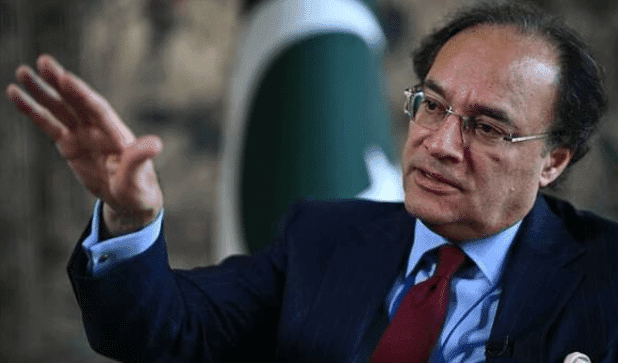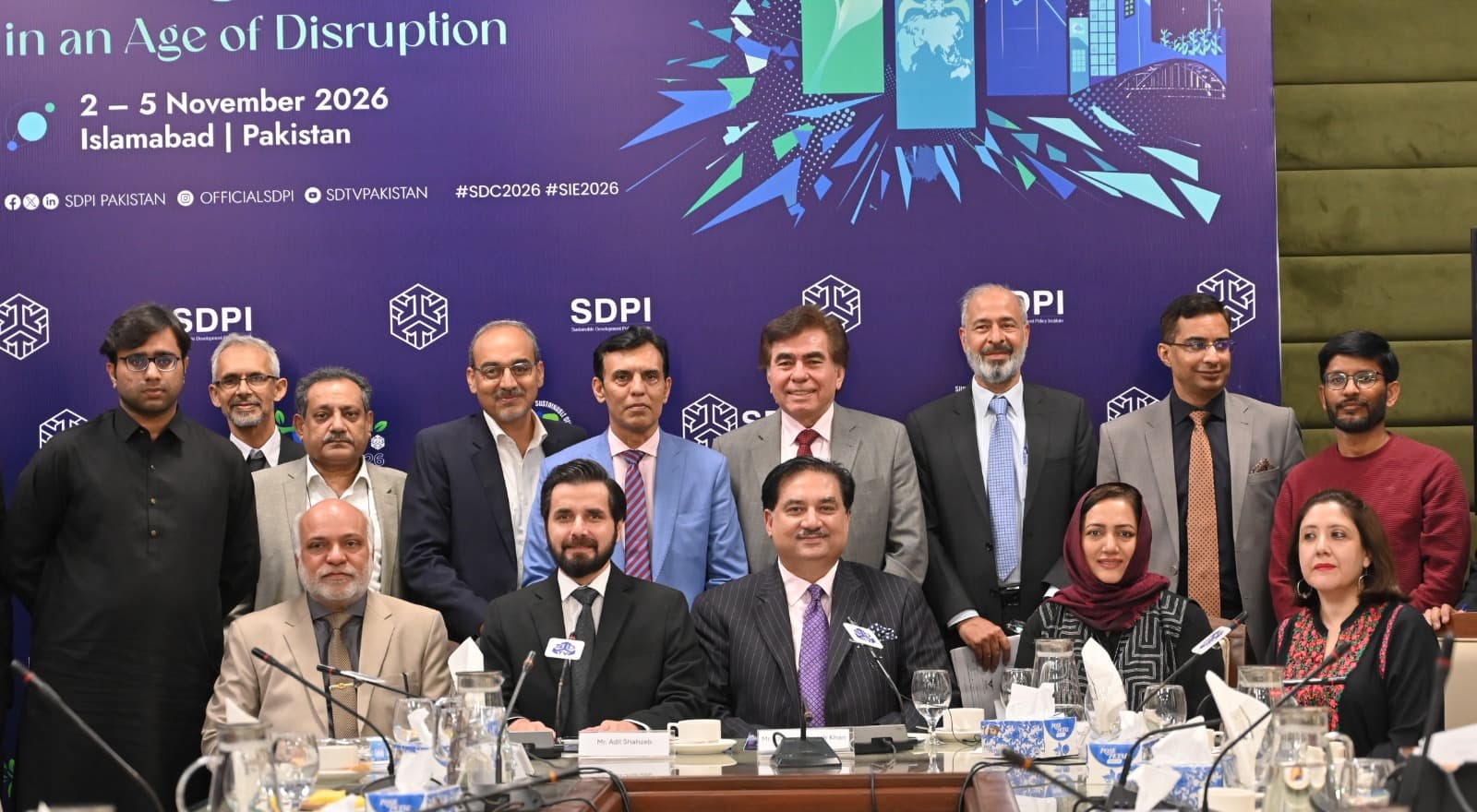
Former Federal Minister Khurram Dastgir Khan stated that the United States’ withdrawal from its traditional global role represents one of the most significant shifts in the international order. Speaking on Wednesday at a session titled “Shifting Geopolitics: Risks, Resilience and Prosperity” during the 29th Sustainable Development Conference, Dastgir warned that the longstanding assurance of freedom of navigation, which is vital to global maritime trade, is under threat. “Today it is the Strait of Hormuz; tomorrow it could be the Bab el-Mandeb, followed by the Suez or even the Panama Canal,” Dastgir said. He echoed the need for Pakistan to prioritize energy diversification and strengthen its engagement along its western borders.
SDPI Executive Director Dr Abid Qaiyum Suleri discussed the evolving geopolitical landscape following the US-Israel-Iran war. He accentuated Pakistan’s precarious position amid the conflict and noted an urgent need to navigate emerging challenges with strategic foresight and resilience.
Mr. Haroon Sharif, Chairman of the Pakistan Regional Economic Forum (PREF), noted that the ability of one country to use violence to control other nations has changed. He added that persistent global economic uncertainty and escalating macroeconomic risk have changed the investment climate worldwide. Sharif stated that a major intervention in the ongoing US-Iran conflict would lead to even higher risk premiums for trade, specifically for Pakistan's exports.
Riffat Masood, former Pakistan Ambassador to Iran, said the region has developed its own capacity to navigate conflicts over generations, citing Iran as a case in point. Regarding Pakistan’s regional outlook, she said the country had neglected its borders, particularly along its western frontiers with Iran and Afghanistan.
Maj-Gen. (Retd) Dr. Ehsan Mehmood Khan stated that the global order has always been in transition. He noted that war generates a war economy, which has long been a foundation for the politics and political economy of major powers around the world.
During a plenary session on “Utility-Scale Renewable Energy: Federal Policy, Provincial Priorities and Implementation Gaps,” participants emphasized the need to involve provincial governments in energy planning and decision-making. They called for equitable resource distribution and an environment that encourages investment in renewable energy. The participants stressed that centralized policymaking alone cannot address energy challenges, calling for stronger provincial institutions, greater parliamentary oversight, and effective implementation of existing policies to harness solar, wind, hydro power, and other renewable sources.
MNA Dr Nafisa Shah identified the disconnect between federal policymakers, provincial governments, and elected representatives as a major reason for the country’s energy problems. She said, “These are two stories of Pakistan: one is of energy crisis, and one is of renewable energy success,” and noted that dollar indexation, take-or-pay contracts, and expensive power purchase agreements contributed to the crisis.
MNA Riaz Fatyana reported that Pakistan has an installed electricity generation capacity of around 50,000 megawatts, with renewable energy making up approximately 20 per cent. He stated that the country could increase this share to 30 per cent by 2030 if the 2019 renewable energy policy remains in place. He called for the restoration of the solar net-metering system, stating its discontinuation created unrest among consumers who invested in solar installations.
MNA Barrister Danyal Chaudhry emphasized that Pakistan’s energy transition is an “economic necessity, a strategic imperative, and an opportunity to redefine our national future.” He highlighted that citizens have embraced rooftop solar out of resilience, pushing net metering capacity significantly higher. He urged policymakers to prioritize utility-scale solar projects and reform legislative frameworks, stating, “we cannot build this energy future of 250 million people without having a policy and without working on it.”