A comprehensive victory for the Democrats in the US midterms has jolted various asset classes across Asia, including stocks, bonds, and commodities. Investors are reacting to expectations that the US Congress will increase scrutiny regarding government spending and the AI industry.
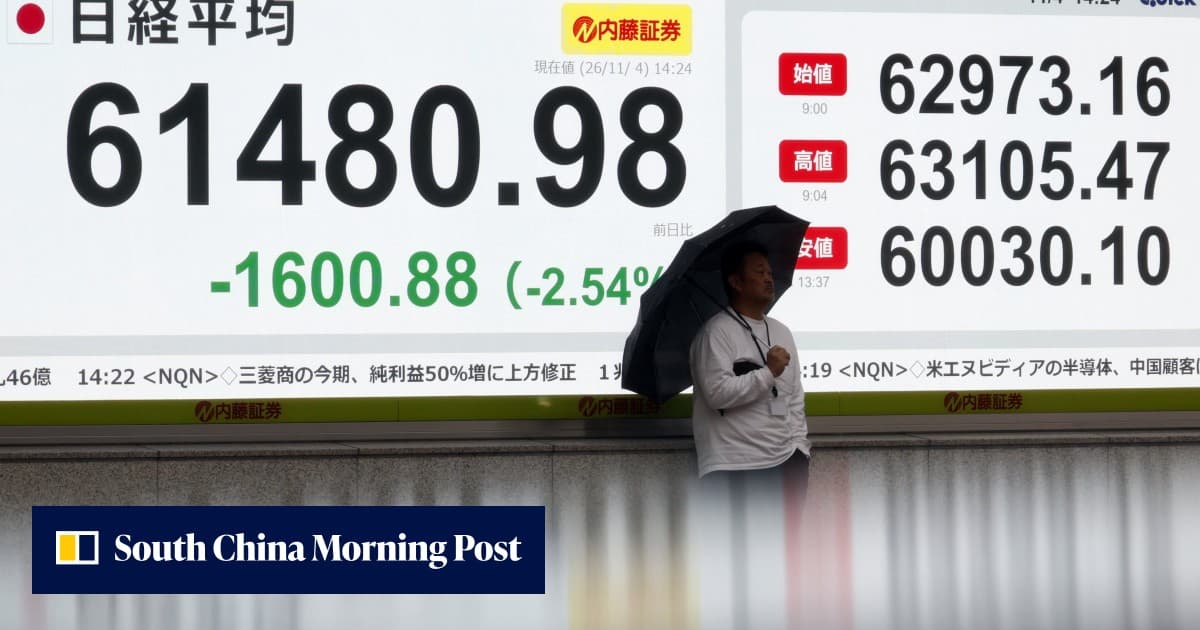
On Wednesday, regional stocks closed with mixed results. Hong Kong’s Hang Seng Index rose 1.7 per cent and South Korea’s Kospi added 0.6 per cent, while Japan’s Nikkei 225 gauge slid 1.4 per cent.
US Treasury yields fell as investors expressed optimism that a Democratic-controlled Congress might restrict debt issuance by the Donald Trump administration. Simultaneously, gold prices bounced back to US$4,000 per ounce, as lower bond yields boosted the appeal of the non-yielding metal. The US dollar index dropped 0.5 per cent on expectations that heightened AI scrutiny could slow economic growth.
Analysts suggested the US election would probably be bad news for regional stocks because Asian hardware manufacturers have deep exposure to global AI supply chains. Gary Dugan, CEO of The Global CIO Office, stated that the more lasting issue is whether congressional oversight adds a political risk premium to an AI investment cycle that is already being questioned on financial grounds.
Charu Chanana, chief investment strategist at Saxo, noted that AI companies may face more congressional investigations regarding competition, consumer protection, data privacy, and model safety going forward. She stated that a tighter regulatory environment could make investors more demanding about the funding and profitability of AI infrastructure. While this trend might pressure struggling AI stocks, Chanana said it would accelerate an investor pivot toward companies capable of generating decent revenue from the massive spending on data-centre construction.
However, Chanana cautioned that a disciplined fiscal approach does not automatically translate into lower inflation, and the US Federal Reserve might still raise borrowing costs if price pressures remain; therefore, a durable rally in bonds is not guaranteed.
David Chao, a strategist at Invesco, told investors that the midterm results have not fundamentally changed the Asia-Pacific investment regime. He stated that for regional investors, the key variables remain US rates and the dollar, China’s growth outlook, trade and technology policy, and corporate earnings, noting that "the votes are in" and it is now back to the fundamentals.