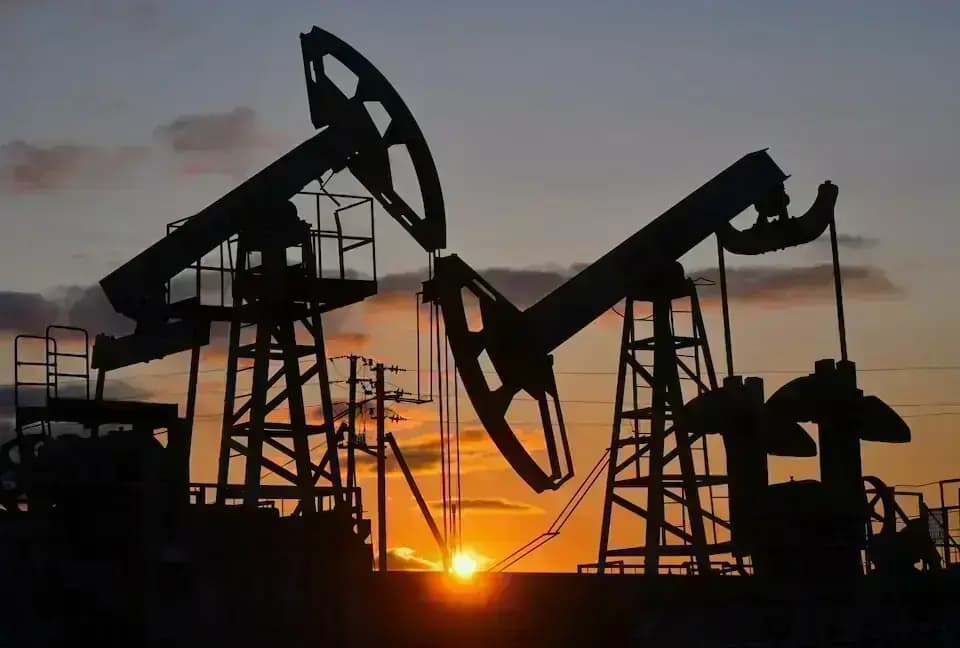
Crude oil prices continued to climb on Thursday as reports of attacks on Saudi Arabian infrastructure and Iranian mines in the Strait of Hormuz revived fears of supply disruptions. Brent crude futures rose USD1.53, or 1.62 percent, to USD96.14 a barrel as of 10:39 a.m. ET. US West Texas Intermediate (WTI) crude futures increased by USD1.20, or 1.43 percent, to USD84.88. Because of the US Thanksgiving holiday, there will be no settlement for WTI on Thursday.
Phil Flynn, senior analyst at Price Futures Group, stated, "We’re rebounding a little bit on concerns about geopolitical factors going into the weekend. This is keeping the market on edge into the (Thanksgiving) holiday."
The price increase follows a previous session where Brent settled up 3.5 percent and WTI climbed 2 percent. These movements occurred after Yemen’s Iran-aligned Houthis claimed to have attacked Riyadh’s financial district and Saudi Arabia’s Ras Tanura oil refinery. Ras Tanura is Saudi Arabia’s largest refinery and part of a complex that serves as a major export terminal for Saudi crude. Analysts expect these reported attacks to increase oil’s geopolitical risk premium. Neither the Saudi government nor the state oil company Aramco responded immediately to requests for comment.
Simultaneously, shipping in the Strait of Hormuz—where oil supply had been recovering toward pre-US-Israeli war levels—was disrupted. Iran’s Revolutionary Guards reported on Thursday that two tankers exploded and caught fire after hitting sea mines north of Oman’s Khasab port while attempting to cross the strait. The Guards stated one of the vessels was a supertanker carrying more than 2 million barrels of crude oil.
Daniel Hynes, an analyst at ANZ, stated, "The broadening of the Middle East conflict threatens to halt the recovery in oil flows."
Regarding export figures, Morgan Stanley analysts noted in a report that an initial estimate of last week’s Middle East crude exports, including non-Hormuz routes, was 15.3 million barrels per day.
OPEC+ ministers are scheduled to meet on November 29 to determine their 2027 output policy. The group faces the challenge of balancing output now that the United Arab Emirates is no longer in the group, while Iraq and Kazakhstan are pressing OPEC+ to increase their production capacity estimates. Oil Minister Basim Mohammed told the state news agency INA on Thursday that Baghdad is in talks with OPEC to raise its production ceiling. Two people with knowledge of the matter suggested OPEC+ may roll over current oil output targets for at least the first quarter of 2027 at the upcoming meeting.
In the United States, the Energy Information Administration reported that crude stocks rose by 1.1 million barrels to 418.9 million barrels for the week ended November 20. This rise supported prices as analysts had anticipated a larger increase of 1.5 million barrels.
Refinery capacity also faced setbacks. In Asia, Thailand’s Bangchak Corp reported shutting all production units at its Phra Khanong oil refinery in Bangkok following a fire. Additionally, a drone attack at the Slavyansk ECO oil refinery in Russia’s southern Krasnodar region caused a fire and inflicted serious damage.