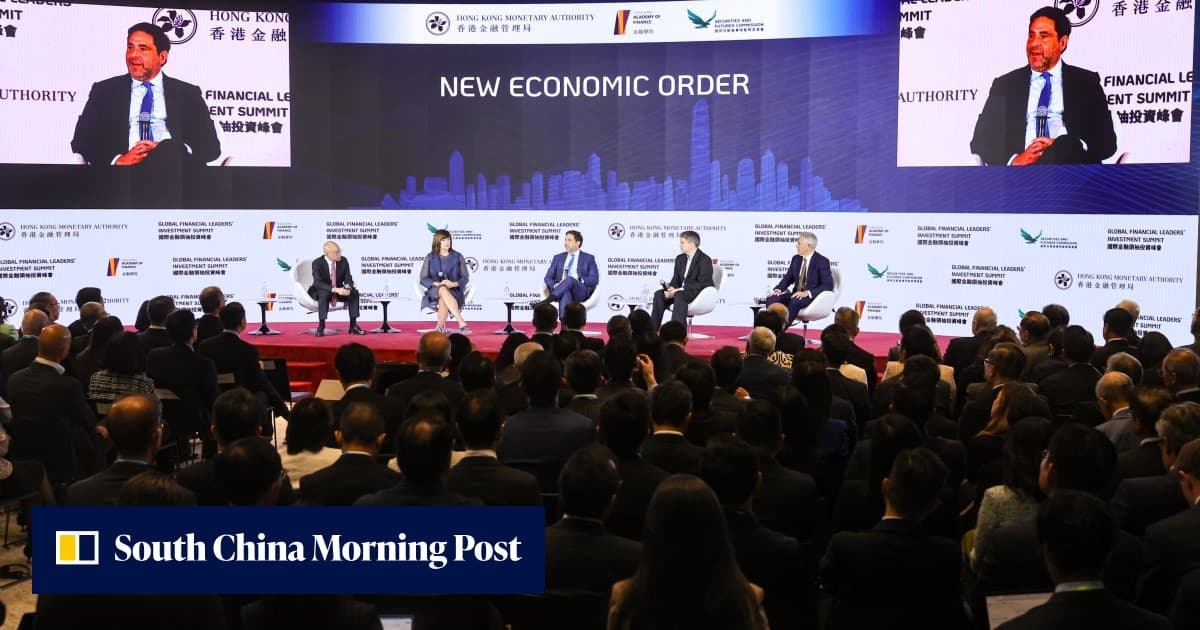
Harvard University hosted a conference on Pakistan themed "From Potential to Performance" to discuss the nation's economic trajectory.
Nobel laureate Professor Acemoglu described the Pakistani economy as "comatose" for the last three decades, citing weak institutions, low tax collection, and insufficient investment in education. Professor Atif Mian argued that the country lacks the strategic vision required to address fundamental issues such as elite capture, the failure of inclusive growth, and inadequate efforts to establish peace.
Mian also noted that Pakistan has been unable to confront powerful pressure groups to address the energy crisis by electrifying the transport sector. Finance Minister Muhammad Aurangzeb acknowledged these challenges but stated that political economy constraints had repeatedly delayed difficult decisions and their implementation.
Aurangzeb maintained that the situation is changing for the better as decisions that were previously postponed are now being taken and implemented. The government has embarked on a radical programme of trade liberalisation with the launch of a five-year National Tariff Policy. The tax-to-GDP ratio increased to 10.3% in FY2025, up from 8.8% in FY2024.
Officials have begun breaking a longstanding stalemate by selling Pakistan International Airlines and closing the Utility Stores Corporation. A broader programme involving 27 state-owned enterprises is currently proceeding. Pakistan approved its National AI Policy in 2025.
IT exports have reached $4.6 billion and are growing at approximately 20% annually. Installed solar capacity is estimated at around 8,000 MW. Renewable energy has now overtaken fossil fuels in electricity generation in Pakistan.