Key Takeaways
- Audacity 4 introduces a non-destructive editing workflow.
- The new version significantly enhances the user experience.
- Developers aim to make Audacity a more powerful audio editing tool.
Audacity 4, the latest update to the popular audio editing software, has been released, bringing with it a host of improvements that aim to make the application more user-friendly and powerful.
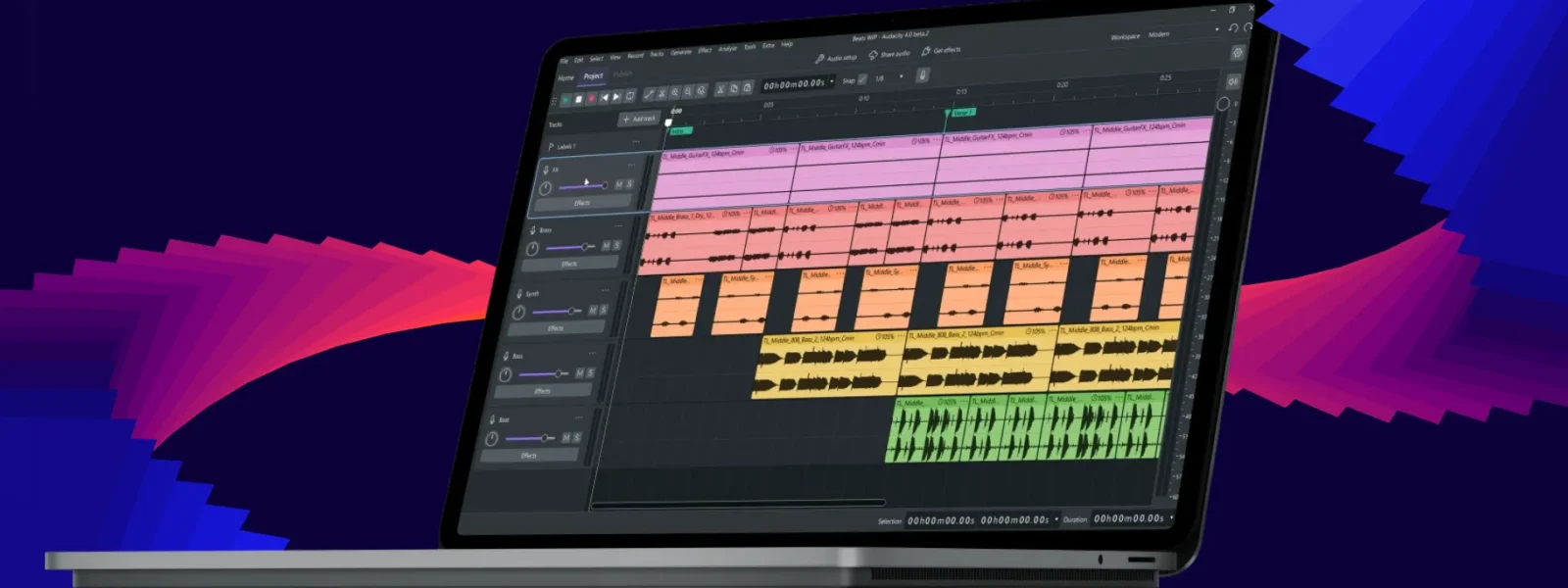
One of the most significant changes in Audacity 4 is the adoption of a non-destructive editing workflow. This means that users can make changes to their audio clips without permanently altering the original files, allowing for greater flexibility and ease of use.
According to the developers, this update marks a major step forward in the evolution of Audacity, transforming it from a free and capable but somewhat clunky tool into a more modern and robust audio editing platform.
The new version of Audacity is described as a complete revamp of the 'world's most popular' audio editor, with developers emphasizing the improvements in functionality and user interface.
While the initial redesign of the logo for Audacity 4 faced some controversy, the final version is much more refined and user-friendly, addressing the issues that arose with the earlier versions.
The developers of Audacity have been working on this update for some time, and the final release is expected to appeal to both new and existing users looking for a more efficient and powerful audio editing tool.
With these enhancements, Audacity 4 is poised to become an even more essential tool for audio professionals and enthusiasts, offering a more seamless and intuitive editing experience.
The move to a non-destructive workflow is particularly significant, as it allows users to experiment with their audio without the risk of permanent changes, making the editing process more flexible and creative.