
Key Takeaways
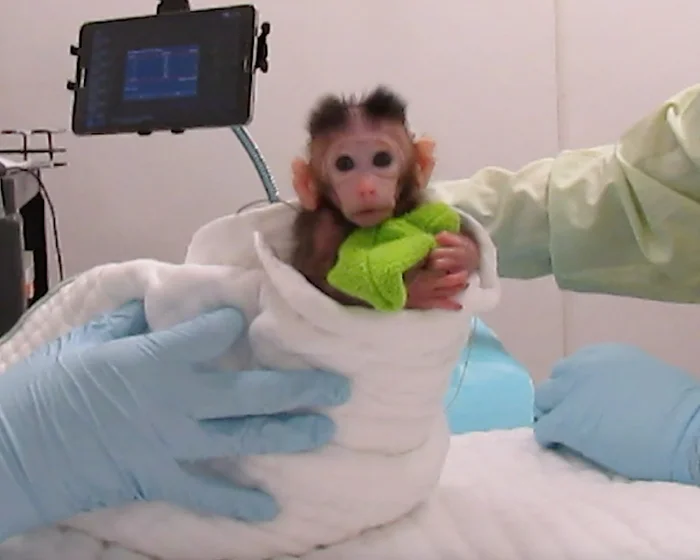
- Peta footage shows newborn monkeys subjected to neurological tests.
- Experiments involved separation from mothers and exposure to a neurotoxin.
- Research was conducted at the University of Washington’s National Primate Research Center.
An animal-rights group, Peta, has released video footage that reveals the distressing conditions under which infant monkeys were subjected to experiments at the University of Washington’s National Primate Research Center (WaNPRC).
The footage, which has been described as the first of its kind, shows newborn macaques, some just two days old, being separated from their mothers and undergoing neurological tests after being exposed to domoic acid, a neurotoxin produced by marine algae.
According to records, the experiments were part of a six-year project that ran until 2020, focusing on the effects of domoic acid on the developing brains of the monkeys.
The video footage, obtained by Peta, highlights the distress of the infant monkeys, who are seen being handled roughly and subjected to what appears to be painful and invasive procedures.
Peta has called for an immediate halt to the experiments and for a thorough investigation into the ethical standards of the research conducted at the WaNPRC.
The group has also criticized the University of Washington for its handling of the footage, stating that the institution should have taken more proactive steps to address the welfare of the animals involved in the research.
University officials have not yet commented on the release of the video or the specific experiments depicted in the footage.
The footage has sparked outrage among animal welfare advocates and has raised questions about the ethical boundaries of scientific research involving primates.