Key Takeaways
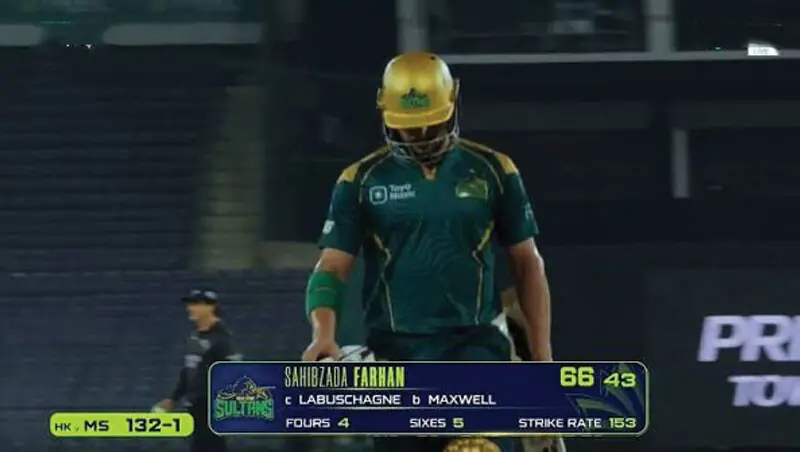
- Sahibzada Farhan scored 66 runs off 43 balls for Multan Sultans against Hyderabad Kingsmen.
- Contextual Batting Intelligence (CBI) seeks to address the limitations of traditional strike rate metrics.
- The framework aims to evaluate whether batsmen made the right decisions in specific game situations.
Sahibzada Farhan's performance in the PSL 2026 season, scoring 66 runs off 43 balls, has sparked discussions on cricket analytics.
Traditional metrics like strike rate, which measures runs scored per hundred balls faced, often fail to capture the context of a player's performance.
Cricket fans and analysts have long recognized that the same strike rate can represent vastly different scenarios, from high-pressure chases to more relaxed innings.
The new framework, Contextual Batting Intelligence (CBI), aims to provide a more nuanced understanding of a batsman's decision-making during a match.
CBI challenges the reliance on strike rate alone, arguing that it does not fully account for the specific conditions under which runs are scored.
A recent example of this debate emerged during the Indian Premier League (IPL) 2025, where Sanjay Manjrekar, a former India batter and commentator, controversially dropped Virat Kohli from his top-10 list of IPL batters.
Manjrekar's decision was based on the idea that T20 cricket is as much about strike rate as it is about runs, leading to a backlash from those who believe that context is crucial.
CBI seeks to recontextualize strike rate by evaluating whether a batsman's tempo matched the team's requirements at a specific moment in the game.
This approach would validate a 'slower' knock that was contextually the ideal one, something a single number like strike rate or final score cannot fully explain.