Key Takeaways
- Hundreds of security personnel deployed in New Delhi ahead of an opposition march.
- The protest aims to demand the resignation of Chief Election Commissioner Gyanesh Kumar.
- The march is set to start from parliament to the Election Commission office at 11 a.m.
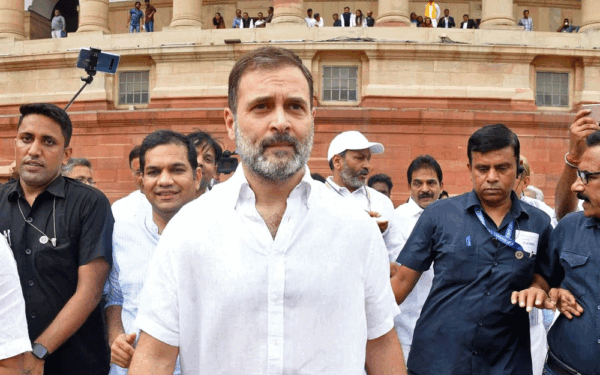
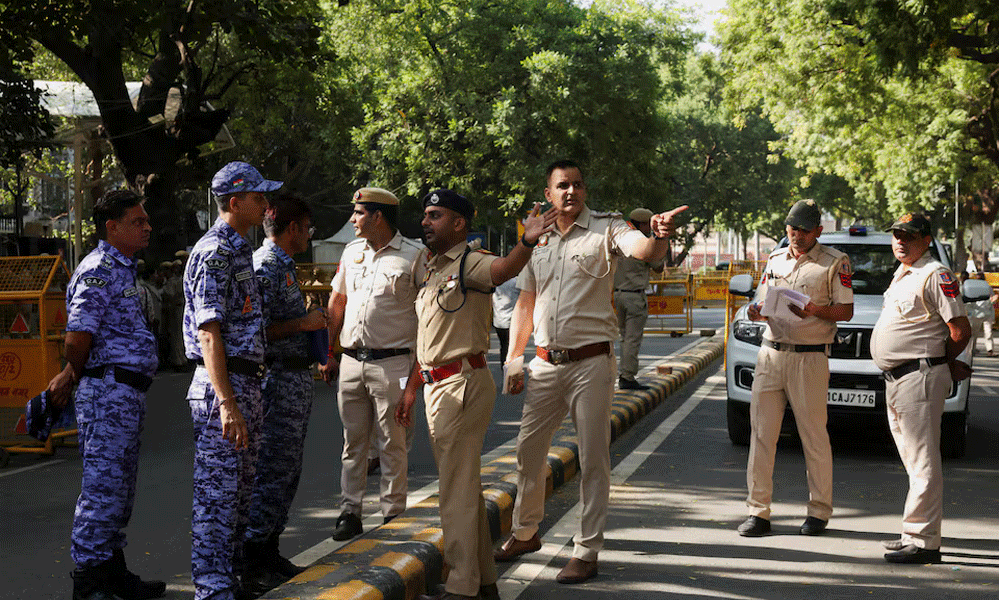
Hundreds of security personnel, including those armed with batons, have been deployed in the heart of New Delhi, with barricades set up in anticipation of an opposition protest. The move comes as lawmakers from parties opposing Prime Minister Narendra Modi and his Bharatiya Janata Party (BJP) prepare to march to the Election Commission office to demand the resignation of Chief Election Commissioner Gyanesh Kumar.
The protest, scheduled to begin at 11 a.m., is set to start from parliament and proceed to the Election Commission office. The opposition parties allege that the revised voter lists benefit the BJP, leading to concerns about the commission's neutrality. Gyanesh Kumar has not commented on the issue, but the Election Commission and the BJP have denied the accusations.
The march is part of a series of almost daily demonstrations by student organisations, political parties, and the 'cockroach' movement, which began last week. These protests have been ongoing in response to reported divisions within the Election Commission and the alleged bias in the voter registration process.
In a related development, India’s Supreme Court agreed to hear legal arguments on Monday, seeking its intervention in the accusations against the Election Commission. The court stated, 'If there are decisions against the law … We will take care of it,' after the petitioners alleged bias by the poll body.
Authorities have advised against travel in the planned protest areas and have shut off some routes to ensure the safety of the public and protesters. The heightened security measures reflect the sensitivity of the situation and the potential for unrest.
The opposition parties, including the main opposition party Congress, have alleged that the revised voter lists are biased in favor of the BJP. These allegations have stoked concerns among the public and political observers about the impartiality of the Election Commission.
The protest is expected to draw significant attention and could have implications for the ongoing political landscape in India. The Election Commission and the BJP have maintained their stance, denying any bias or impropriety in their operations.
The opposition march is set to take place in the backdrop of ongoing legal challenges and public scrutiny. The Supreme Court's involvement adds another layer of complexity to the situation, as it could potentially influence the outcome of the protests and the broader political discourse.