Key Takeaways
- Most Gulf markets closed higher on Monday.
- US jobs data and Fed rate hike expectations influenced market sentiment.
- Middle East crude exports surpassed pre-war levels, bolstering market confidence.
Most Gulf markets experienced gains on Monday, driven by easing energy concerns and reduced expectations of an immediate Federal Reserve rate hike.
The cooling of US jobs data and significant downward revisions in payroll figures slashed the probability of a Fed rate hike this month from 64% to under 20%, according to the CME FedWatch tool.
Despite ongoing geopolitical tensions, particularly in the Middle East, Gulf markets remained resilient, with strong domestic fundamentals supporting their performance.
Dubai’s main share index added 0.1%, with utility firm Dubai Electricity and Water Authority advancing 3.8%. Abu Dhabi’s index was up 0.4%, while the UAE’s non-oil private sector saw robust growth, marking the steepest increase in selling prices in over 15 years.
The Qatari index advanced 1.1%, led by a 1.2% increase in the Gulf’s largest lender, Qatar National Bank. Milad Azar, a market analyst at XTB MENA, noted that most GCC equity markets remained resilient despite ongoing geopolitical uncertainty and stalled US-Iran negotiations.
Saudi Arabia’s benchmark index fell 0.3%, hit by a 1.5% slide in Al Rajhi Bank. Yemen’s Saudi-backed government launched a major military campaign to retake territory held by the Houthis, while the Houthis claimed to have launched retaliatory attacks on Saudi Aramco sites, leading to a 0.6% rise in Aramco shares.
Outside the Gulf, Egypt’s blue-chip index dropped 0.7%, with Commercial International Bank losing 0.7%. Egypt’s non-oil private sector contracted more sharply in September, hit by inflation and geopolitical turmoil.
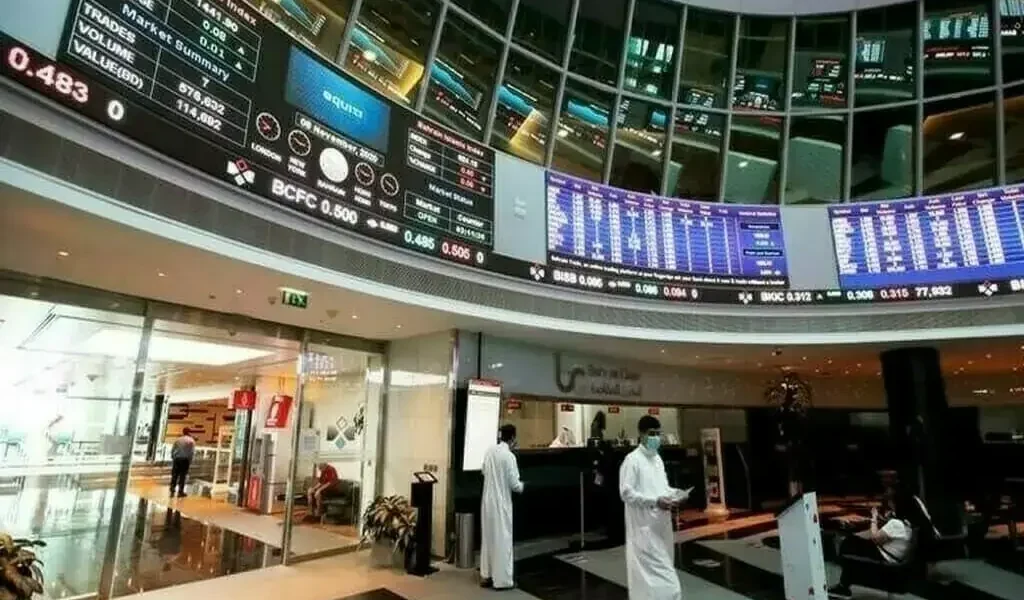
Key market indices in the Gulf region closed as follows: Saudi Arabia’s benchmark index at 10,480, Abu Dhabi at 10,011, Dubai at 5,908, Qatar at 9,285, Egypt at 53,553, Bahrain at 1,902, Oman at 7,730, and Kuwait at 9,034.