Key Takeaways
- Pakistan's LNG supply, mostly from Qatar and the UAE, has been severely impacted.
- The Strait of Hormuz closure has highlighted the geopolitical sensitivity of gas markets.
- Policymakers are considering diversifying energy sources, including renewables and coal.
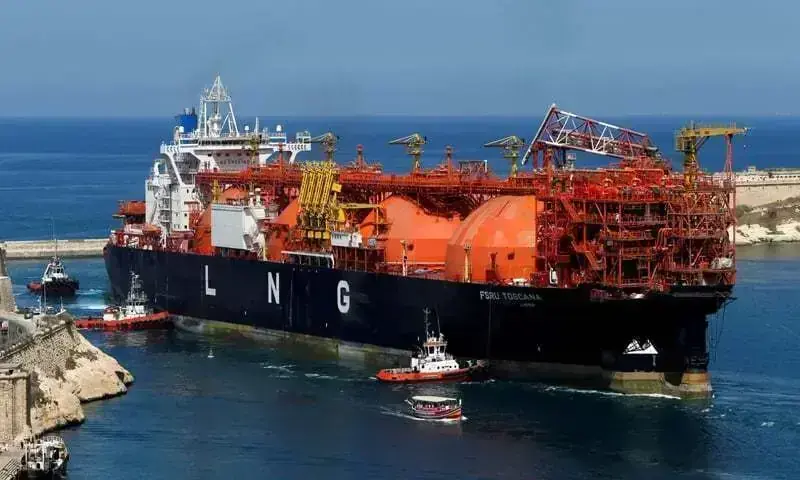
Pakistan is grappling with significant shortages in liquefied natural gas (LNG), with the country relying heavily on imports from Qatar and the UAE for power generation, fertiliser production, and industrial use. According to the Gastech report, these two nations supply about 99% of Pakistan’s LNG, accounting for approximately 30% of the total gas supply.
The closure of the Strait of Hormuz, a critical maritime passage, has exacerbated these shortages, as highlighted by the Gastech report. This event has redrawn global energy maps, underscoring the geopolitical sensitivity of gas and LNG markets.
In response to these challenges, Pakistan’s Universal Gas Distribution Company (UGDC) is exploring potential projects, including gas storage and long-term LNG supplies, with several international firms. UGDC’s CEO, Ghiyas Abdullah Paracha, stated that the company has received significant interest from companies willing to build gas storage facilities in Pakistan and enter into long-term LNG contracts.
The Gastech report suggests that beyond addressing immediate challenges, policymakers in Asia are reviewing how to future-proof domestic energy and power systems. This includes accelerating the deployment of renewables, such as solar and wind farms, and enhancing storage deployment. Additionally, there is a focus on speeding up investment in long-term infrastructure, including gas storage and updating power generation mixes to give gas plants better flexibility.
Pakistan’s government is also considering diversifying its energy sources, looking to coal, hydropower, and nuclear power as alternatives. The report notes that price volatility and shipping uncertainty are likely to sharply increase power costs, prompting a reevaluation of energy strategies.
UGDC’s participation at the Gastech conference was significant, as the company presented Pakistan’s gas-sector reforms and the opening of the country’s gas market to private-sector participation. Paracha highlighted that the company received a greater-than-anticipated response, with several companies showing interest in building gas storage facilities and entering into long-term LNG contracts.
The report also suggests that countries are examining options for expanding operating reserves to ensure grid agility for unexpected events and rethinking fuel stockpiles by expanding strategic stocks for transport fuels and power generation. There is also a focus on boosting cross-border power export/import options to share shortages.
Ghiyas Paracha emphasized the importance of these discussions, stating, 'We have got understanding with some companies that have shown interest in building gas storage facilities in Pakistan. Some companies have shown keen interest in long-term LNG contracts with UGDC.'
We have got understanding with some companies that have shown interest in building gas storage facilities in Pakistan. Some companies have shown keen interest in long-term LNG contracts with UGDC.
Ghiyas Abdullah Paracha, CEO, Universal Gas Distribution Company