Key Takeaways
- Top American commander warns US naval assets are stretched too thin.
- Pentagon may face a choice between protecting Israel and other interests.
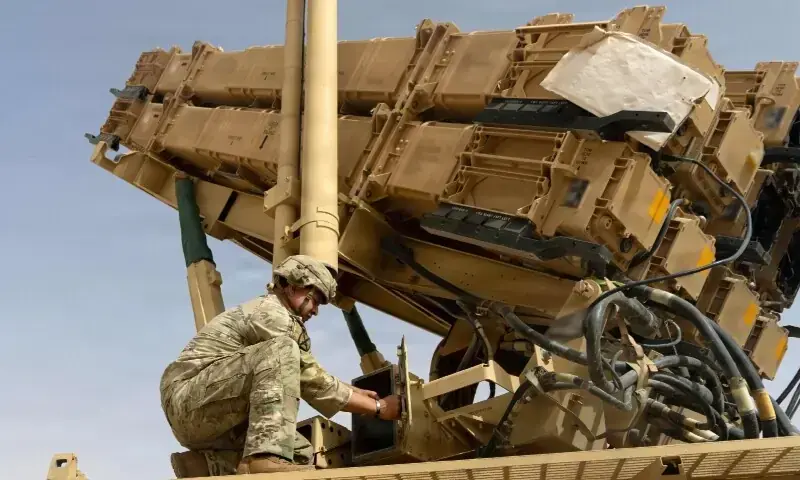
- THAAD interceptors used extensively, raising concerns about stockpiles.
A warning from one of America’s top military commanders has exposed a growing dilemma for the United States: The US may no longer have enough naval forces to simultaneously defend Israel against Iranian missile attacks and protect its own interests across the Middle East.
General Alexus Grynkewich, commander of US European Command, reportedly informed Pentagon officials that American naval assets are becoming stretched too thin as the conflict with Iran continues. His warning reflects an internal military concern that America’s global commitments are exceeding available resources.
Navy destroyers equipped with the Aegis combat system have become a central part of Israel’s missile defence. These ships can track incoming ballistic missiles and launch advanced interceptors such as SM-3 and SM-6 missiles, but they are also among America’s most valuable global military assets.
The warning highlights a difficult military calculation: Every ship sent to defend Israel is a ship unavailable for another potential crisis. This issue is not simply the number of missiles fired; advanced interceptors are expensive, complex weapons that take years to manufacture and replace.
Pentagon assessments indicate US forces have fired more than 200 THAAD interceptors during the Iran conflict — roughly half the Pentagon’s reported inventory — along with over 100 interceptors launched from Navy ships. Israel also used its own Arrow and David’s Sling systems but relied heavily on American support during intense missile exchanges.
The issue is not simply the number of missiles fired; advanced interceptors are expensive, complex weapons that take years to manufacture and replace. Recent assessments have warned that prolonged combat could place pressure on US stockpiles of critical air-defence weapons.
For decades, American military strategy has rested on the belief that Washington can respond to multiple crises simultaneously. The United States maintains alliances in Europe, commitments in the Middle East, and a growing military focus on the Indo-Pacific. The warning from US European Command suggests that this assumption is being tested.