Key Takeaways
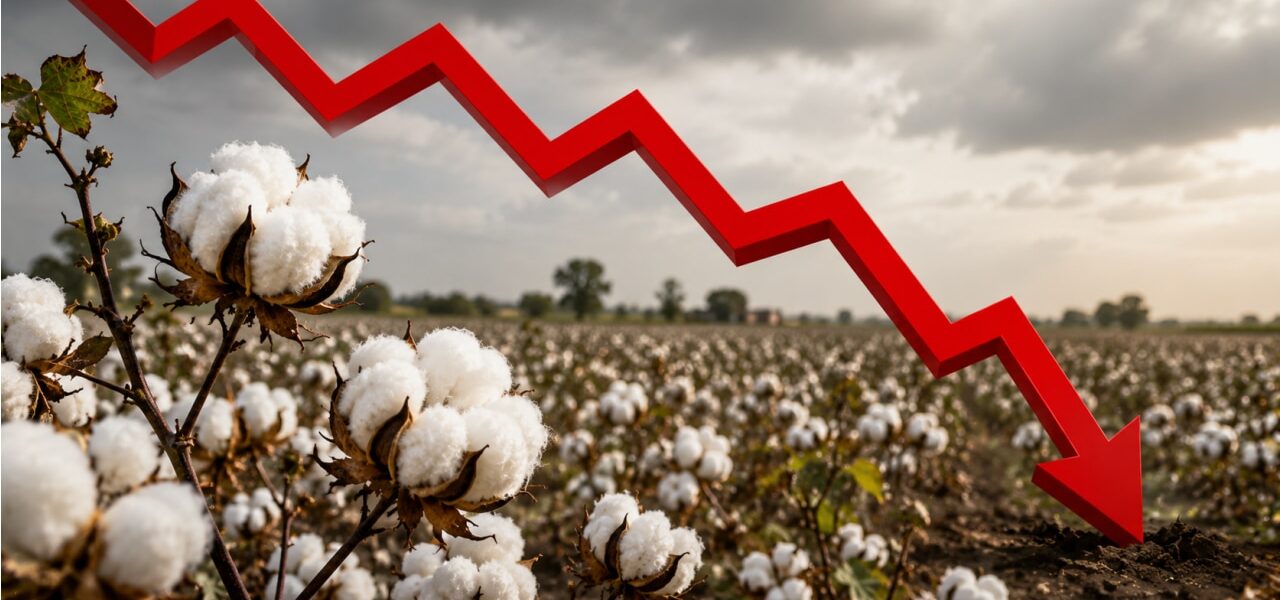
- Pakistan loses $2 billion to $3 billion annually due to falling cotton production.
- Cotton output has dropped from 14 million bales to an estimated 6.85 million bales in FY 2025-26.
- The textile industry, which accounts for 60% of export earnings, continues to rely on domestic cotton.
Pakistan is facing significant economic losses due to a decline in its cotton production. According to a report by the Overseas Investors Chamber of Commerce and Industry (OICCI), the country incurs an estimated $2 billion to $3 billion annually as a result of reduced domestic output, which has fallen from 14 million bales to around 6.85 million bales in fiscal year 2025-26.
The report, titled 'Seeds of Growth,' attributes the decline in cotton production to various factors including climate-related challenges, pest attacks, poor quality seeds, and regulatory restrictions on certain pesticide ingredients introduced without a science-based transition plan. These issues have contributed to a 34% shortfall from the government’s target of producing 10 million bales.
The textile industry, which generates approximately 60% of Pakistan's export earnings, remains heavily dependent on domestic cotton. OICCI suggests that increasing production to between 8 and 9 million bales could help reduce pressure on foreign exchange reserves and lower the country’s reliance on imported cotton. However, regulatory delays continue to hinder agricultural growth despite the sector contributing around 23% of Pakistan's GDP and employing 37% of its workforce.
The report also highlights that inconsistent policies are the primary obstacle to improving productivity in agriculture. Despite recent approval by the federal cabinet for the National Biotechnology Policy, implementation remains critical. OICCI Secretary General M. Abdul Aleem stated, 'The direction of government policy is encouraging, but slow implementation is costing the agriculture sector billions of dollars in lost economic potential.'
Other agricultural sectors also face challenges highlighted in the report. For instance, less than 5% of Pakistan's potato production uses certified processing grade seed, and dairy producers lose around 20% of milk output due to weak cold chain infrastructure despite being among the world’s five largest milk producers. In the tobacco sector, costs have more than doubled over the past three years, while a large undocumented market continues to operate outside the tax system.
The report further notes that fertilizer use remains heavily dependent on urea with limited adoption of potash needed for balanced soil nutrition. It warns that continued policy uncertainty could discourage foreign investment despite multinational companies introducing advanced seed technology, crop protection products, and precision farming solutions. OICCI urges the government to introduce time-bound approvals for new seed varieties and pesticides, strengthen action against counterfeit seeds, develop a national strategy to reduce post-harvest losses, and expand access to agricultural financing for smallholder farmers.
In conclusion, while there are encouraging policy directions, the slow implementation of these measures is causing substantial economic harm. The report calls for urgent action to address these issues and unlock the full potential of Pakistan's agriculture sector.
'The direction of government policy is encouraging, but slow implementation is costing the agriculture sector billions of dollars in lost economic potential.'
M. Abdul Aleem, OICCI Secretary General