Key Takeaways
- Archaeologists have found evidence that some ancient Egyptian princesses were active users of bows and daggers.
- Princess Ita, aged between 28 and 34, had strong connections in her forearm bones suggesting habitual weapon use.
- The study reveals that these royal women likely began training from a young age in archery and martial arts.
Recent archaeological findings have challenged the traditional view of ancient Egyptian princesses as purely decorative figures. A study by Zeinab Hashesh at the University of Beni-Suef, Egypt, has revealed that some royal women were active users of weapons such as bows and daggers.
The research focused on six mummies from the Middle Kingdom period (1850-1700 BC), including five females. These mummies, found at the Dahshur complex, were excavated in the 1890s but rediscovered during a curation project in 2020.

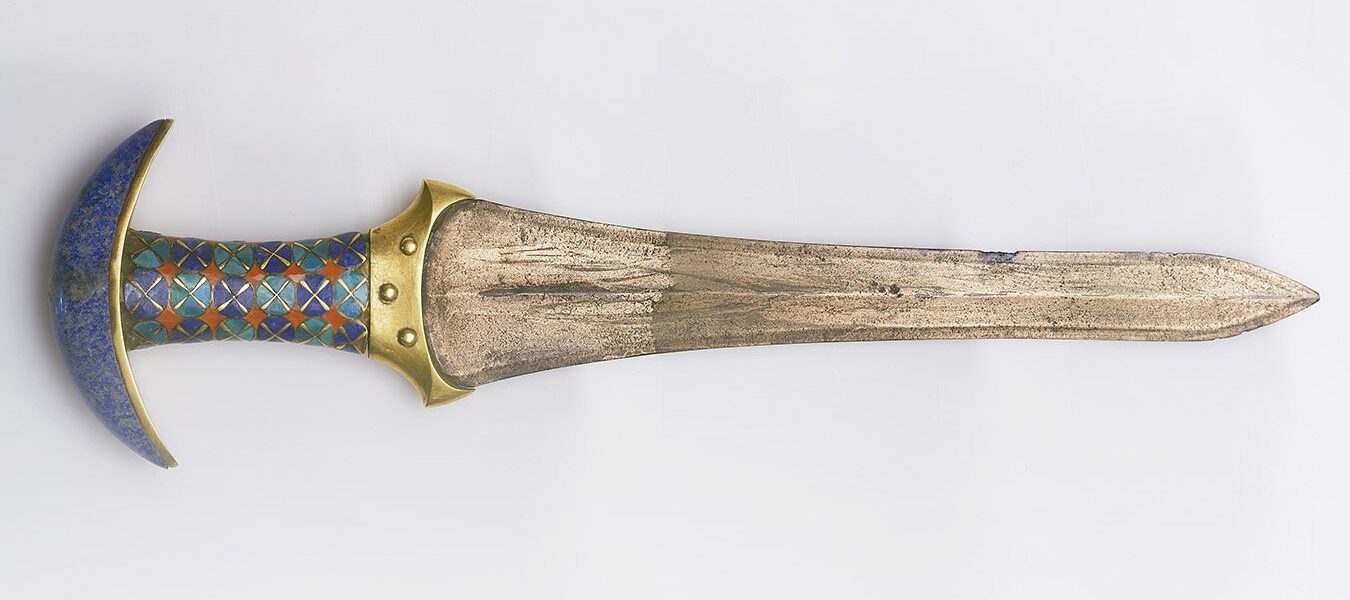
Key among these findings is that Princess Ita, who had an elaborate dagger buried with her, exhibited strong connections between her forearm bones and well-developed hand muscles. This suggests she was likely trained to use weapons like daggers or maces.
Similarly, Princess Noub-Hotep (aged 40-44) showed signs of repetitive stress from drawing a bow, including enlarged radius bone in the forearm and strengthened finger muscle attachments. These findings indicate that she had an archer's grip, indicative of sustained mechanical load required to hold a bow.
The study’s lead researcher, Zeinab Hashesh, commented: 'I imagine the lives of princesses like Noub-Hotep and Ita were far from the sedentary, purely decorative existence we often associate with ancient royalty. To develop the archer's grip and the structural bowing of the hand bones observed in Noub-Hotep, they must have begun training in archery and martial arts from a young age.'
Michelle Langley at Griffith University in Australia added: 'This study gives us real insight into these princesses' lives. Royal women were not simply sitting around a palace or following their menfolk around, but living active and skilled lives. They were trained in very practical martial and hunting arts, just as we imagine their male counterparts would have been.'
The findings challenge the notion that ancient Egyptian royalty was entirely focused on ceremonial roles. Instead, it suggests that these women played a more active role in society, engaging in combat training and other physical activities.
Further research is needed to understand the extent of this practice among royal women across different periods of ancient Egypt’s history.
I imagine the lives of princesses like Noub-Hotep and Ita were far from the sedentary, purely decorative existence we often associate with ancient royalty.
Zeinab Hashesh, University of Beni-Suef
Royal women were not simply sitting around a palace or following their menfolk around, but living active and skilled lives. They were trained in very practical martial and hunting arts.
Michelle Langley, Griffith University