Key Takeaways
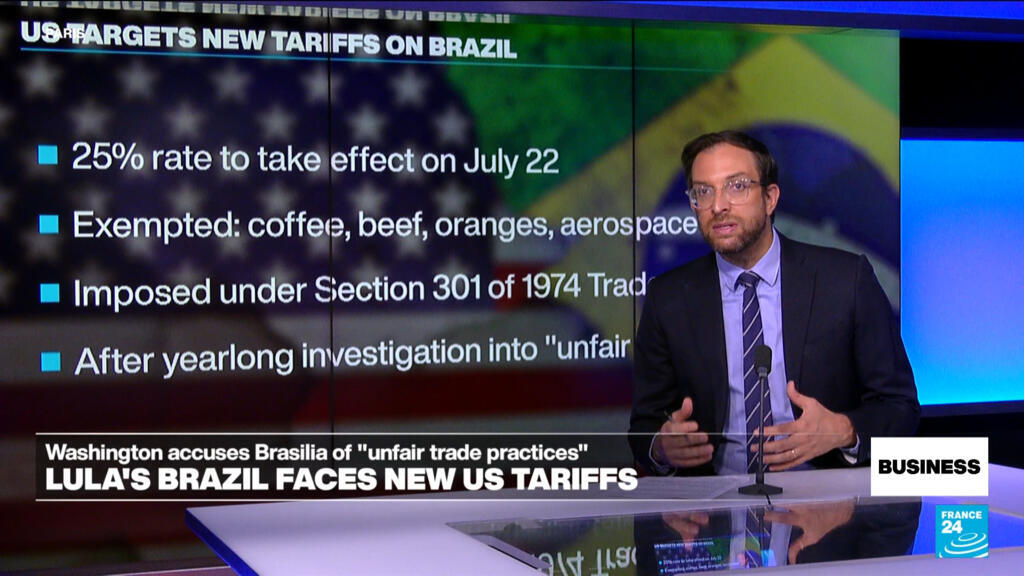
- The United States will impose a 25% tariff on certain Brazilian goods starting July 22.
- This move follows a year-long investigation under the Trade Act of 1974.
- Brazilian President Lula da Silva claims the tariffs are politically motivated.
The United States has announced that it will impose a 25% tariff on certain Brazilian imports starting July 22, following a year-long investigation under the Trade Act of 1974. This decision comes after an extensive probe into alleged unfair trade practices by Brazil.
According to US officials, the tariffs are aimed at addressing what they perceive as imbalances in trade relations with Brazil. The move is expected to affect specific goods, though details on which items will be subject to the tariff have not been disclosed yet.
Brazilian President Luiz Inácio Lula da Silva has strongly condemned the US decision, stating that it appears politically motivated and designed to benefit his rival, Flavio Bolsonaro. In a statement released by the Brazilian government, Lula emphasized that such actions undermine fair trade principles and could have negative economic implications for both countries.
The imposition of these tariffs is part of a broader strategy by the US to address what it deems as unfair trade practices in international markets. The Trade Act of 1974 provides the legal framework for such investigations, allowing the US to take action against countries engaging in practices that harm American industries and workers.
While the exact impact on Brazilian exports remains uncertain, businesses in both countries are likely to face challenges. Companies operating in Brazil may see increased costs due to higher import tariffs, potentially affecting their competitiveness in the global market. Conversely, US companies could benefit from reduced competition but might also face retaliatory measures from Brazil.
The announcement has sparked concerns among trade experts and business leaders who fear that such actions could escalate into a broader trade war between the two nations. They warn that increased tensions could disrupt supply chains and hinder economic growth for both countries.
In response to the US decision, Brazilian officials have vowed to take legal action against what they consider an unfair move. The country has already expressed its intention to challenge the tariffs in international courts, aiming to protect its interests and those of its businesses.