Key Takeaways
- Japan’s Nikkei share average closed lower due to rising oil prices.
- Chip-related stocks, including Advantest and Tokyo Electron, saw significant declines.
- Yaskawa Electric reported a 21.7% drop in first-quarter net profit.
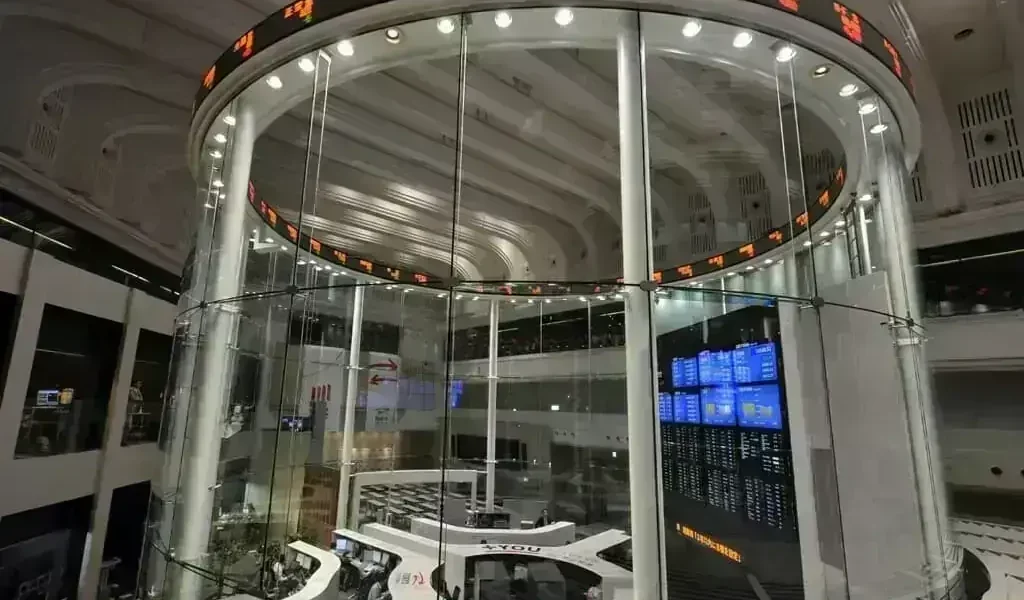
Japan’s Nikkei share average closed lower on Monday as investors reacted to the renewed Middle East conflict that led to an increase in oil prices, according to Daisuke Hashizume, a senior analyst at Daiwa Securities. The Nikkei fell 1.92% to close at 67,242.73 points, while the broader Topix lost 0.71% to end at 4,007.49.
The market was particularly concerned about increasing costs due to the rise in oil prices, which jumped more than 4% on Monday as energy shipments via the Strait of Hormuz remained under threat. The U.S. and Iran announced renewed military strikes, exacerbating tensions in the region.
Chip-related stocks dragged the Nikkei lower, with Advantest and Tokyo Electron falling by 3.39% and 2.25%, respectively. Memory maker Kioxia saw a significant drop of 12.86%. Daiwa’s Hashizume noted that as the market eyes memory prices, it is being influenced by South Korea’s benchmark index, which is heavily weighted toward memory makers such as SK Hynix.
The Nikkei extended its losses later in the session after South Korea’s benchmark KOSPI tumbled, triggering circuit breakers to suspend trading temporarily. Shares in SK Hynix fell more than 15% on Monday as investors booked profits following a high-profile U.S. listing that saw the world’s leading AI memory chipmaker surge 12.8% in its Nasdaq debut.
In Japan, Yaskawa Electric tanked 14.34% to a daily limit low of 5,972 yen after reporting a first-quarter net profit fall of 21.7%. However, gains in bank shares, which came as investors shifted their focus to value stocks from AI-related shares, capped the Topix’s decline. Mitsubishi UFJ Financial Group and Sumitomo Mitsui Financial Group rose by 2.31% and 1.63%, respectively.
Of more than 1,500 stocks trading on the Tokyo Stock Exchange’s prime market, 36% rose, 60% fell, and 2% traded flat. The overall sentiment was cautious as investors awaited further developments in the Middle East conflict and its impact on global oil prices.
The market was concerned about increasing costs due to the rise in oil prices, and this came as the earnings season for Japanese firms kicked off.
Daisuke Hashizume, Senior analyst at Daiwa Securities