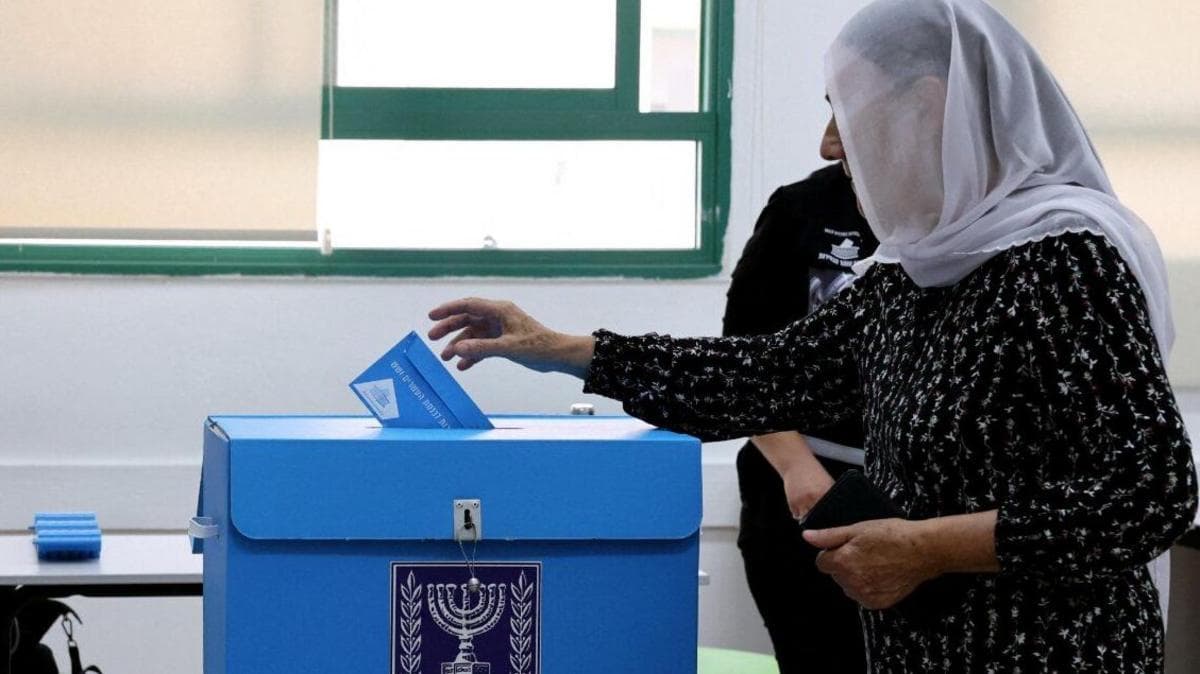
Benjamin Netanyahu's Likud party emerged as the largest single party in the Israeli election. The existing bloc led by Netanyahu, which includes ultra-nationalist and ultra-Orthodox Jewish parties, appeared to fall just short of a 61-seat majority in the 120-seat parliament.
More than 77% of Israeli voters participated in the election. Arab-led parties maintained or increased their previous record number of seats, despite Arab Israelis representing one-fifth of the population.
Netanyahu stated, "The right-wing bloc has a clear, decisive majority among the Zionist public, among the Jewish public and all those who support the Jewish state. That is what has become clear. A decisive majority." The Prime Minister added, "We must form a strong, national, right-wing government. That is what must be done."
Gadi Eisenkot claimed, "The public has chosen change." Eisenkot further asserted, "The coalition of failure has lost the people's trust. The Israeli public voted against Benjamin Netanyahu continuing as prime minister."
He said, "I will work with my partners to ensure that the people's decision is translated into a Zionist government: stable and good for all of Israeli's citizens. And quickly – because that is what this moment demands, and because the country needs to be brought back together." Professor Tamar Hermann noted that polls show the relative weight of the pro-Netanyahu and anti-Netanyahu sides is approximately equal.
Avigdor Lieberman declared he would refuse to join a minority government that depended on the support of Arab parties. Isaac Herzog plans to consult with all elected party leaders next week.
The candidate most likely to form a coalition has a maximum of six weeks to secure a majority. Netanyahu's government remains in a caretaker role without the power to implement major policy changes.
Netanyahu currently faces a corruption trial on charges he denies, following Hamas-led attacks on 7 October 2023.