
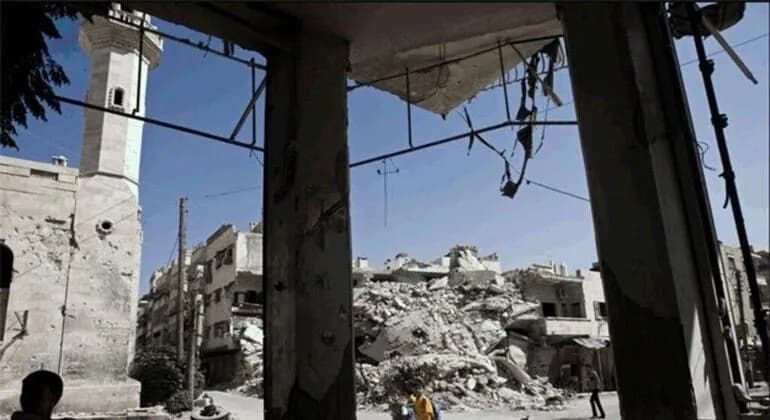
Assistant Secretary-General for Humanitarian Affairs Mohamed Yahya told the Security Council on Monday that Syria is showing “undeniable signs of progress” nearly two years after the fall of the Assad regime. However, Yahya warned that these gains remain fragile due to explosive ordnance, the approaching winter, and severe funding shortfalls.
Briefing on behalf of UN relief chief Tom Fletcher, Yahya stated that the situation is not improving in terms of safety. Since the Council last met for an update last month, at least 30 people have been killed by explosive ordnance, 19 of whom were children. More than 80 people were injured, including 35 children.
Yahya noted that nearly four million Syrians have voluntarily returned home since December 2024. Since October alone, a further 60,000 internally displaced people and 18,000 refugees have returned. Nevertheless, Yahya stressed that “returns do not mean humanitarian needs have ended,” noting that more than 730,000 people still live in camps.
The UN reported that partners cleared more than 700,000 square metres of contaminated land in the first half of this year. However, Yahya said much more is needed as families return, especially as recent flash floods have displaced explosive ordnance into areas previously considered safer.
Yahya warned that “Time is running out,” stating that an estimated 2.4 million people will need additional assistance this winter. The winter response plan, which targets more than 970,000 of those most at risk, is only 40 per cent funded. Additionally, nearly 200,000 displaced people and returnees are living in damaged shelters.
Other humanitarian concerns include the detection of poliovirus in two children in Deir Ez Zor. Because the country’s humanitarian appeal is only a third funded, the World Food Programme (WFP) is halving its food assistance programme, and the UN sexual and reproductive health agency (UNFPA) has closed 28 health facilities.
Deputy Special Envoy for Syria Claudio Cordone addressed justice and accountability, welcoming the formal submission of the draft Law on Transitional Justice to the interim People’s Assembly last week. Cordone stressed that justice must not be selective and that accountability must apply to crimes “regardless of the perpetrators or the victims”. He noted that preparations for a permanent constitution and inclusive elections require clarity on timelines, stating there is no time to waste.
Regarding the cost of reconstruction, Cordone noted that the World Bank estimates rebuilding damaged physical assets alone will cost $216 billion, and he called for sustained international support.
On security matters, Cordone reported that more than 100 Kurdish families trying to return to Tel Abyad in late October reportedly faced violence and intimidation. He described Sweida as remaining in a “tense security and political stalemate”.
Cordone also reported that Israeli military activities have continued “relentlessly in violation of Syria’s sovereignty and territorial integrity”. He deplored the killing of a man with a disability during an Israeli operation in Jamla, western Dara’a, on 21 October. He also noted that Jordanian airstrikes in Dara’a on 27 October, which Jordan said targeted Da’esh (or ISIL) militants and a weapons depot, caused civilian casualties, including three children.
Syrian feminist and human rights defender Hayma Alyousfi told the Council that women who speak publicly face online abuse, including sexualised threats and coordinated campaigns to discredit them. She urged authorities to suspend restrictive Assad-era laws on expression and assembly, stating, “Stability built on silence is not peace,” and adding, “And a transition that excludes women cannot deliver the future that Syrians deserve.”
Closing his briefing, Yahya urged the Council to sustain humanitarian funding and support mine action and the winter response. “The progress in Syria is real. The opportunity is real. We must lean in, invest more and act now.”


