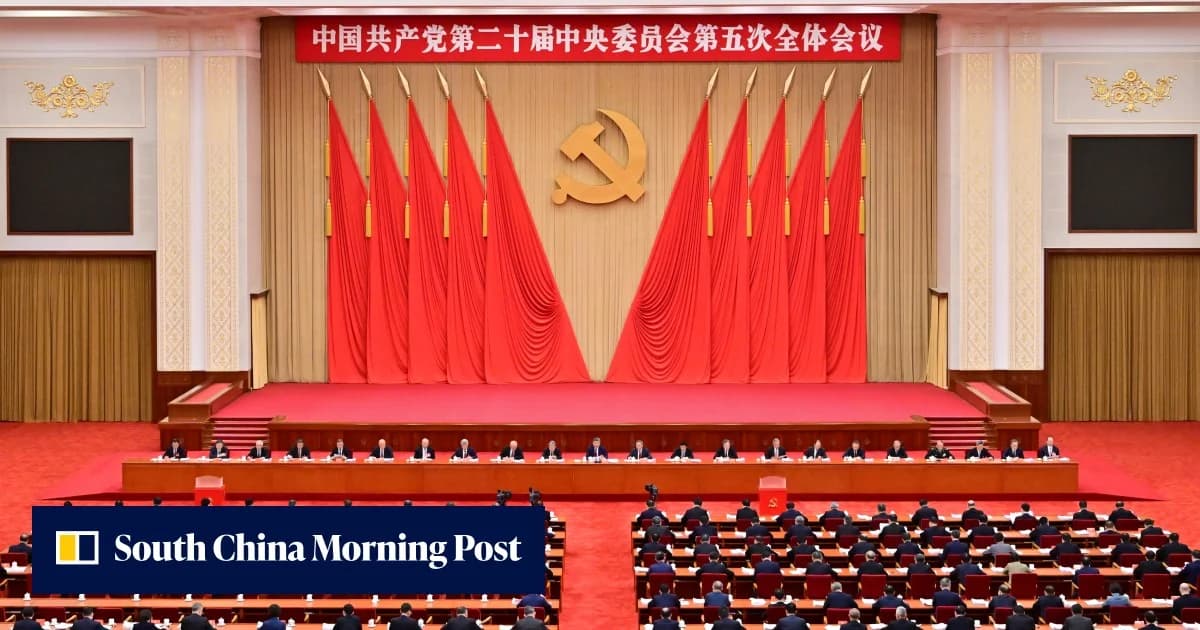
China’s ruling Communist Party pledged to target “old nice persons” (lao hao ren) within its ranks as it intensifies its anti-corruption campaign.
The party resolution stated that members would “sharpen the weapon” of criticism and self-criticism during periodic “democratic life meetings”. President Xi Jinping revived the mechanism of these democratic life meetings in 2013 to strengthen ideological discipline and mutual monitoring through peer confessions. The key four-day plenary session concluded on Thursday.
Thursday’s resolution urged cadres to “be courageous in exposing and correcting shortcomings and errors, and dare to fight against all undesirable phenomena”.
The publication Qiushi described the attitude as a “source of pollution” within the party’s political ecosystem, allowing a mindset of “self-preservation and avoiding ruffling feathers” to crowd out the space for criticism. By 2015, these meetings had become an annual routine for elite Politburo members.
The China Discipline Inspection and Supervision Magazine stated, “Tong Mingqian’s case and the related Hengyang election fraud case are a warning that the ‘nice guy’ style of shirking responsibility and inaction is no less harmful than corruption itself.” The scandal involved 518 out of 527 delegates to the city legislature.
Authorities stripped 56 provincial legislators of their posts for paying a total of 110 million yuan (US$16.5 million) in bribes to the 518 city lawmakers. Tong was officially fired and expelled from the party in January 2014. Tong was released from prison in 2018.