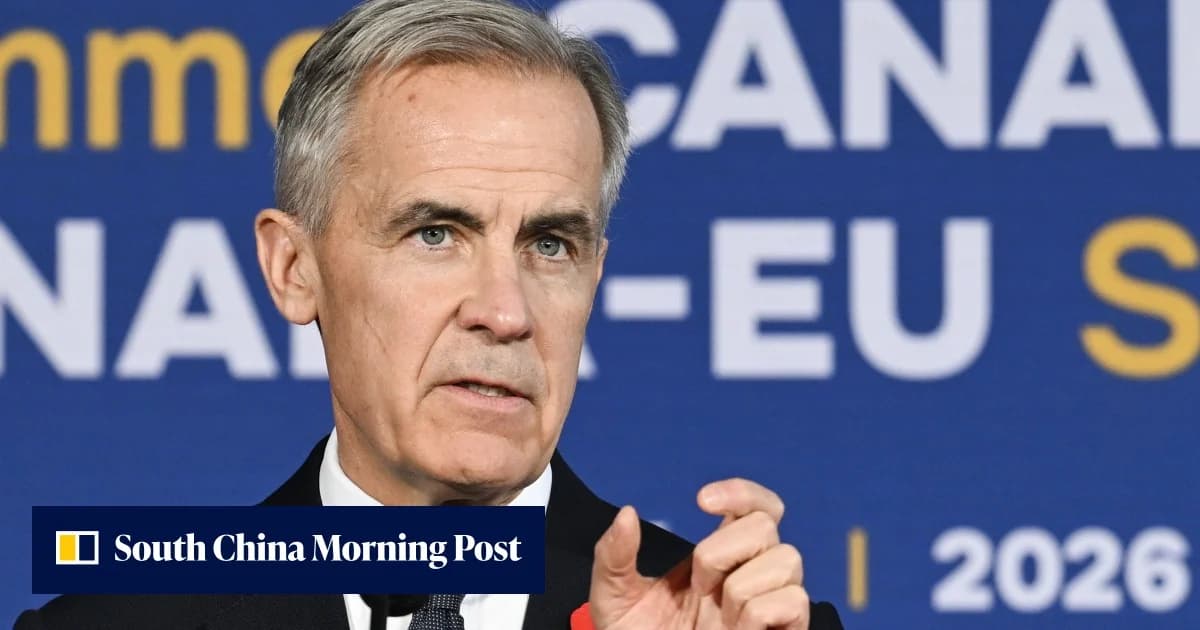
Canadian Prime Minister Mark Carney expects to finalise negotiations with the European Union in June 2026 to establish Canada as the bloc’s first associate member.
Carney stated that Canadian cabinet ministers and European commissioners would meet in March to move the negotiations forward. Mark Carney, Ursula von der Leyen, and Antonio Costa launched the Alliance for the Future to facilitate this cooperation. The two sides finished substantive talks on a digital trade agreement and a competition agreement.
Canada and the European Investment Bank reached an agreement to promote European investment in Canadian critical minerals.
Antonio Costa said, "Canada is by far the most European of non-European countries," and noted that the alliance would be the closest relationship the EU has ever established with a country outside the bloc.
Ursula von der Leyen remarked, "It is not so important where the countries are on the map," and added, "We want Canada as close a partner as possible to the European Union."
Von der Leyen further explained, "We know that Canada cannot be a full-fledged member of the European Union, but to have a relationship as close as possible, this is our goal."
Mark Carney said, "Above all, this is about sovereignty. Our ability to live our lives as we wish." The nations will explore linking their instant-payment systems and studying the feasibility of exporting Canadian liquefied natural gas to Europe. The agreement includes exploring new undersea cables connecting Canada, Europe, and Asia, alongside a new border security arrangement.
Negotiations will also begin on expanding Canadian participation in Erasmus+.
Donald Trump suggested that Canada’s proposed arrangement with the EU could be a "hostile act." Mark Carney seeks to double exports to other countries over the next decade.