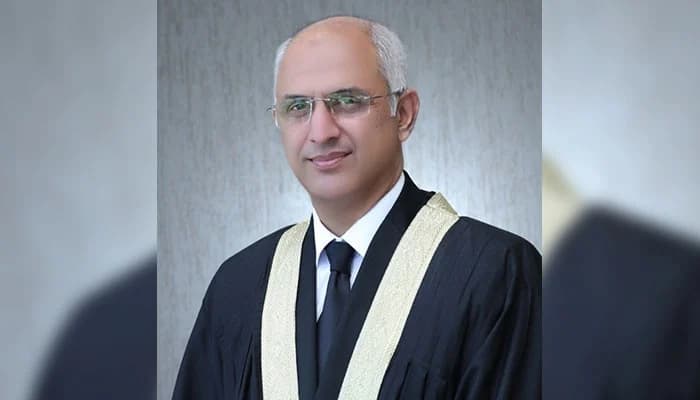
The Federal Chief Court of Pakistan (FCCP) allowed an appeal filed by the Employees’ Old-Age Benefits Institution (EOBI) and subsequently set aside certain judgments. Chief Justice Aminuddin Khan authored the written order detailing the court's findings.
The court confirmed that the EOBI pension cannot be granted to any individual who fails to meet mandatory legal requirements. Furthermore, the FCCP stated that a dispute concerning legal entitlement cannot be brought before the Federal Ombudsman by merely labelling it as maladministration.
The court clarified that the Federal Ombudsman could not bypass specific statutory procedures when determining pension eligibility. The written order established that a mere rejection of a pension claim does not, in itself, constitute maladministration.
Maladministration, the court explained, necessitates elements such as negligence, discrimination, arbitrariness, or unjustified delay. The court also ruled that causing a loss to an applicant simply by adhering to mandatory legal requirements does not equate to maladministration.
Moreover, the court determined that mandatory conditions for legal eligibility cannot be waived based on general notions of justice or compassion. The EOBI law generally mandates a minimum of fifteen years of contributions for pension entitlement.
The court noted that the special five-year concession does not apply to insured employees covered on or after 1 July 2008. Regarding a specific case, the court found that Javed Iqbal Bhatti possessed fewer than six years of insured employment and thus lacked pension entitlement.
The Old-Age Grant of Rs48,000 already paid to Javed Iqbal Bhatti did not establish a right to a pension. The determination of benefit amount, duration, and eligibility must follow Section 33 of the EOBI law.
Finally, the court asserted that an order issued without jurisdiction cannot gain legal validity through endorsement by a court or the President.