Key Takeaways
- US President Donald Trump's recent diplomatic efforts have failed to address domestic and international challenges.
- Trump's speech to the UN and summit with Chinese leader Xi Jinping did not significantly improve his foreign policy agenda.
- Analysts view Trump as facing pushback from world leaders and constrained by political and economic issues.
US President Donald Trump's recent diplomatic week, marked by his address to the UN General Assembly and summit with Chinese leader Xi Jinping, has done little to dispel the view among many analysts that his power is limited by domestic and international challenges.
The Iran conflict, which has driven up US gasoline prices and lowered his approval ratings, and worsening relations with allies, particularly in the Middle East and Ukraine, have constrained Trump's foreign policy.

During his UN speech, Trump issued a fresh threat to 'annihilate' Iran, defended his approach to Venezuela, and signaled potential military deployments, reflecting his assertive stance.
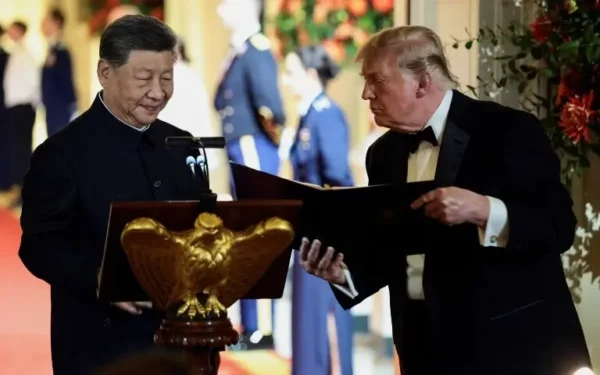
However, his summit with Xi Jinping, despite its pomp and ceremony, yielded limited tangible results, with only a two-month extension of a trade truce between the world's two largest economies.
Trump's seemingly non-confrontational approach to China contrasts with his previously hawkish, tariffs-driven approach, which has been tempered by Beijing's control over rare earth minerals.
Analysts note that Trump's Republican Party faces midterm elections in November, which could further constrain his political agenda.
Trump's speech to the UN on Tuesday was a stark reminder of how, since returning to the White House last year, he has shaken up the rules-based global order that Washington helped to create from the ashes of World War Two.
The summit with Xi Jinping highlighted the economic fallout from the Iran conflict and the growing AI challenge from China, both of which have intensified the challenges facing Trump's foreign policy.
Despite his assertive stance, Trump's diplomatic efforts have not significantly improved his foreign policy agenda, leaving the impression of a stalled agenda.