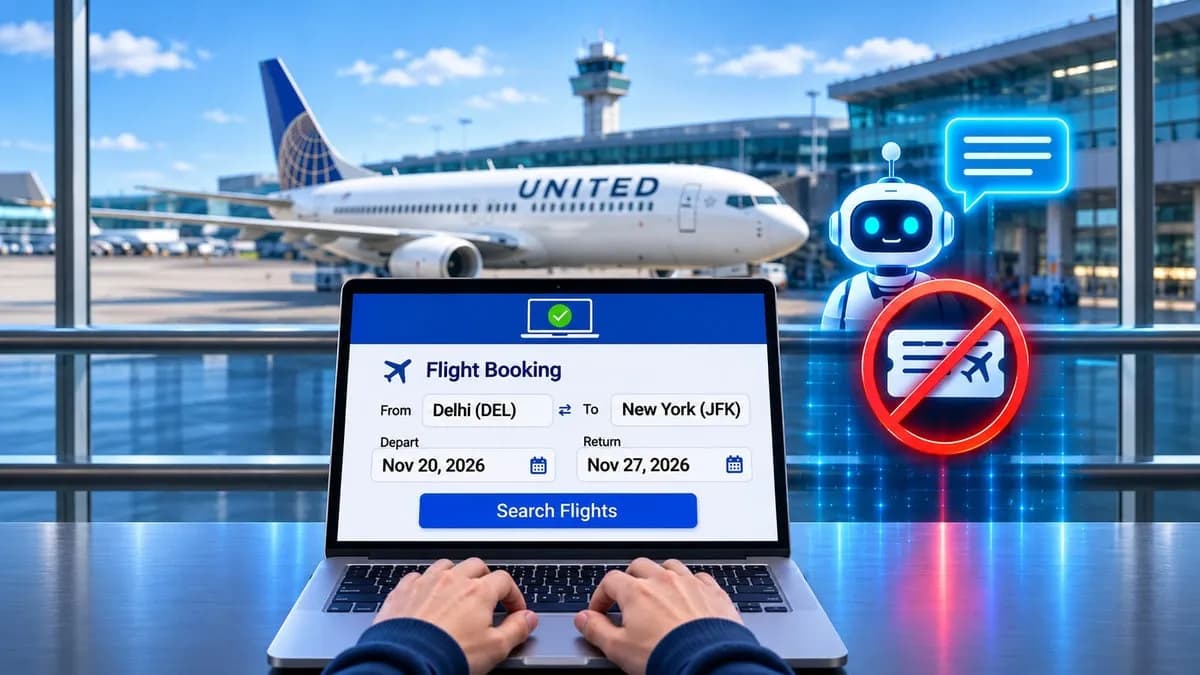
United Airlines announced on November 11 that it is placing restrictions on third-party AI assistants to prevent unauthorized agents from booking flights, checking in passengers, or modifying customer accounts. The airline stated that these measures are being taken due to concerns regarding passenger privacy, unauthorized purchases, and compliance with federal aviation regulations.
The policy applies to AI agents attempting to access United’s website and mobile app, as well as those operating through booking platforms and travel agencies. United Airlines said that allowing these assistants access to customer accounts could expose sensitive financial and personal information, such as account credentials and payment details. The airline warned that these tools might use MileagePlus loyalty miles or make purchases and reservation changes without the customer's intended authorization.
Regarding security, United Airlines raised concerns that automated check-ins performed by AI agents might violate federal regulations. Under US aviation security requirements, passengers are required to acknowledge that checked baggage does not contain prohibited materials, such as explosives. The airline stated that AI agents performing these actions automatically could bypass the necessary human acknowledgment. United also cited regulations enforced by the Department of Transportation (DOT) and the Federal Aviation Administration (FAA) as reasons for the restrictions.
The airline is updating its distribution and ticketing policies to block unauthorized AI agents from interacting with its services both directly on its digital platforms and indirectly through aggregators. However, the airline clarified that customers will not lose access to flights through established travel booking services. Aviation industry analyst Henry Harteveldt of Atmosphere Research Group told CBS News that travelers will still be able to book flights through platforms like Hopper, Kayak, and Google Flights.
Harteveldt suggested that the decision may also reflect concerns over the costs associated with AI. He noted that airlines already face costs from search engines and comparison websites, and a surge in automated searches by AI agents could increase expenses even if they do not result in bookings. Nevertheless, United’s official explanation focuses on security, privacy, and regulatory compliance.
United Airlines will update its Digital Trust Center to provide guidance on these restrictions and explain how customers can seek help if an AI agent performs an unintended action. The company noted that the banking and retail sectors have introduced similar restrictions and stated it will continue to evaluate how personal AI assistants interact with its services as the technology evolves.