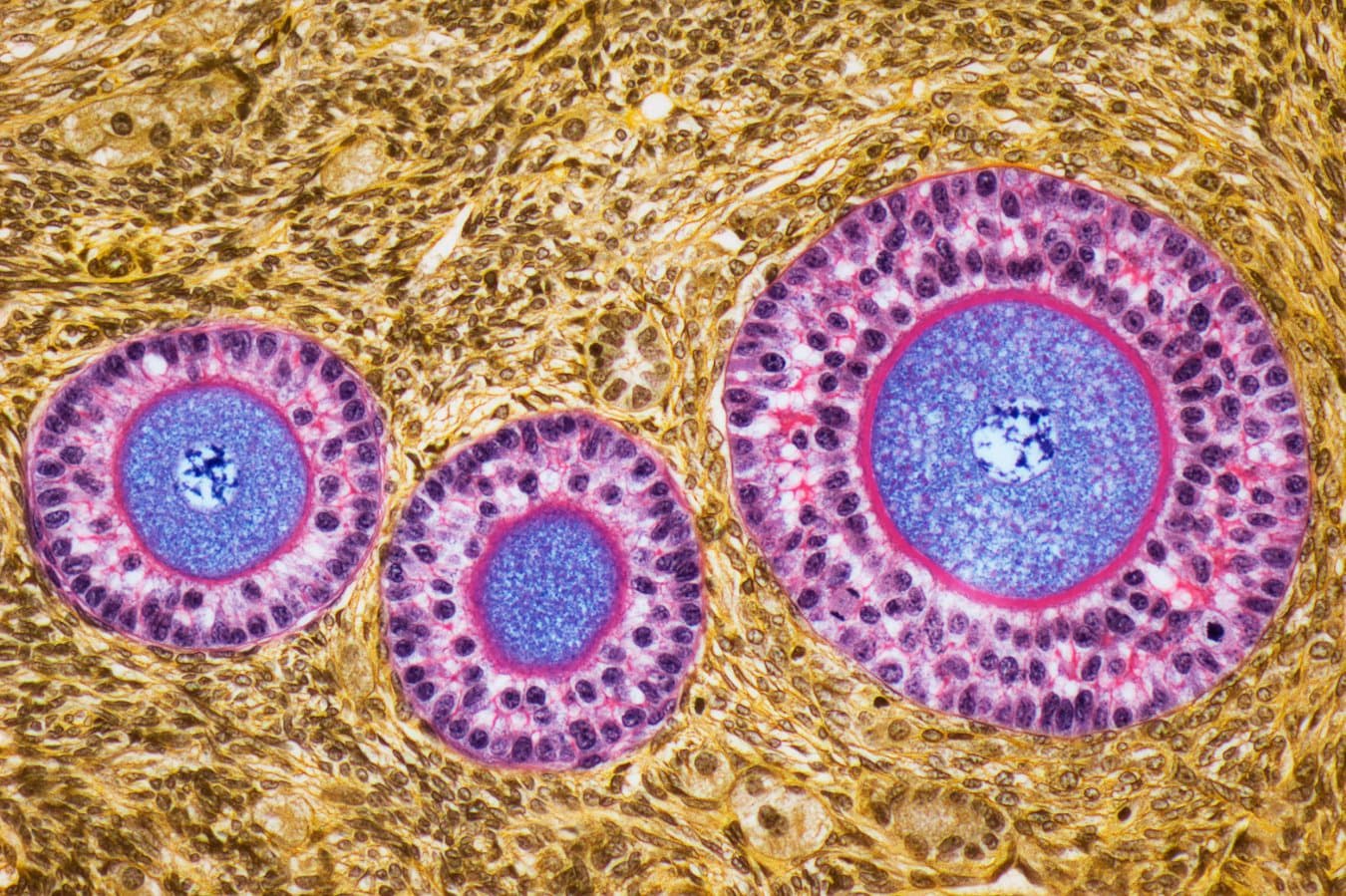
Transplanted ovaries appear to take on the age of their recipients' bodies, according to research involving mice of different ages. Sharif Iqbal at Harvard Medical School and his colleagues used mice of different ages to build an “ovarian clock” to study these changes.
Researchers surgically transplanted ovaries between young mice, aged about 4 months, and older mice, aged about 13 months. Older ovaries placed in younger mice became molecularly younger 4 to 5 months later.
Conversely, younger ovaries in older mice became older over a period of 4 to 5 months. A younger body reduced inflammation in the older ovaries, while being in an older body increased inflammation in the younger ovaries.
Transplanting younger ovaries into older mice boosted the animals' overall health. Iqbal said, "Young ovaries lowered the biological age of the brain, liver and uterus in old recipient mice."
The study found that younger mice with older ovaries gave birth to healthy offspring four to five months after the transplant. Iqbal noted that older ovaries transplanted into different older mice produced no births.
Iqbal stated, "In a younger body, aged ovaries showed gene and pathway level changes that resemble those caused by treatments known to extend lifespan in mice, such as calorie restriction and the drug rapamycin." The researcher explained, "The ovary is not just a passive reproductive organ. It can influence how other organs age."
Francesca Duncan at Northwestern University in Chicago said, "Older ovaries [are] influenced by a young environment and vice versa." Duncan further remarked, "These results provide important support for therapeutic interventions to extend ovarian longevity."
Younger bodies lowered the molecular age of the older ovaries.