Artificial intelligence is emerging as an unlikely ally for Pakistani farmers facing erratic weather, dwindling water reserves, degraded soil, and soaring input costs. However, whether this high-tech innovation can reach the smallholders who form the backbone of the nation’s food security remains a pressing question.
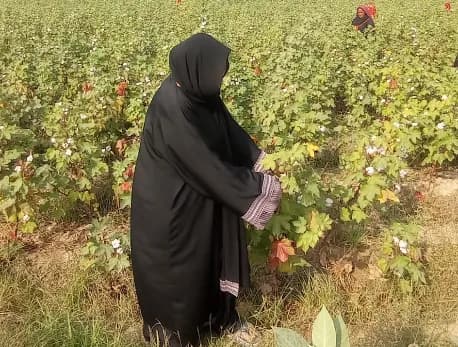
For Anila Usmani, who independently manages roughly 50 acres in Mauza Paka, Bahalwalpur, technology is already offering a quiet helping hand. While cultivating cotton, wheat, onions, and seasonal vegetables, Usmani has nearly a decade of experience. She uses digital tools to diagnose crop diseases, though she notes the technology has not yet impacted her finances. “I haven’t seen an increase in income through AI so far, but I use it to seek guidance on crop diseases, and it has proved helpful,” Usmani told APP.
Usmani faces structural hurdles including a lack of labor during cotton-picking and high costs for diesel and DAP fertiliser. While she has switched to solar-powered irrigation to ease energy bills, she insists that algorithms alone cannot fix farm economics without government intervention to curb input prices and improve access to modern harvesting machinery.
At the University of Agriculture Faisalabad (UAF), researchers are attempting to bridge the gap between technology and soil. Prof Dr Saqib Ali, who leads the Precision Agriculture Lab, believes AI can shift Pakistani farming from guesswork to precision by analysing data to spot crop stress early, optimise water and fertiliser use, and advise on planting based on market demand. UAF has implemented this through Kisan360, a mobile app backed by the World Bank and the Asian Disaster Preparedness Center. The platform uses satellite imagery, remote sensing, and a localised chatbot to provide updates on soil moisture, nutrients, and weather.
Muhammad Khalid Jameel, a programme leader at the National Agricultural Research Centre (NARC) in Islamabad, told APP that merging drone imagery, soil tests, and meteorological forecasts allows farmers to treat only affected patches of a field rather than blanket-spraying entire crops. This targeted approach cuts chemical bills and protects the environment. Jameel noted that AI could also guide scientists in breeding climate-resilient seed varieties over the long term.
However, Jameel warned that algorithms are not infallible. Because soil and microclimates vary significantly between villages, he stated that human oversight from agricultural extension officers remains indispensable to verify digital predictions.
Significant roadblocks remain for widespread adoption. Pakistan’s agricultural landscape is dominated by small, fragmented plots, making uniform tech solutions difficult to deploy. Challenges include poor rural internet, unreliable electricity, high equipment costs, and limited digital literacy. Furthermore, there is a chronic lack of historical farm data, as most growers do not keep systematic logs of irrigation, fertiliser applications, or past yields, which are required to train accurate AI models.
The global Agri-AI market is projected to reach $30.3 billion by 2034, with AI-driven farming projected to cut input costs by up to 25% while elevating crop productivity by 30%. For a country where agriculture drives 23% of GDP and employs 40% of the workforce, the source suggests that transforming the sector requires pairing smart apps with dependable rural infrastructure, affordable machinery, and field demonstrations in local languages.