Key Takeaways
- The Taliban administration is experiencing internal fragmentation and external pressures.
- Factions within the regime, particularly Kandahar and Kabul, are in conflict over power and ideology.
- Regional opposition groups challenge the Taliban’s control and legitimacy.
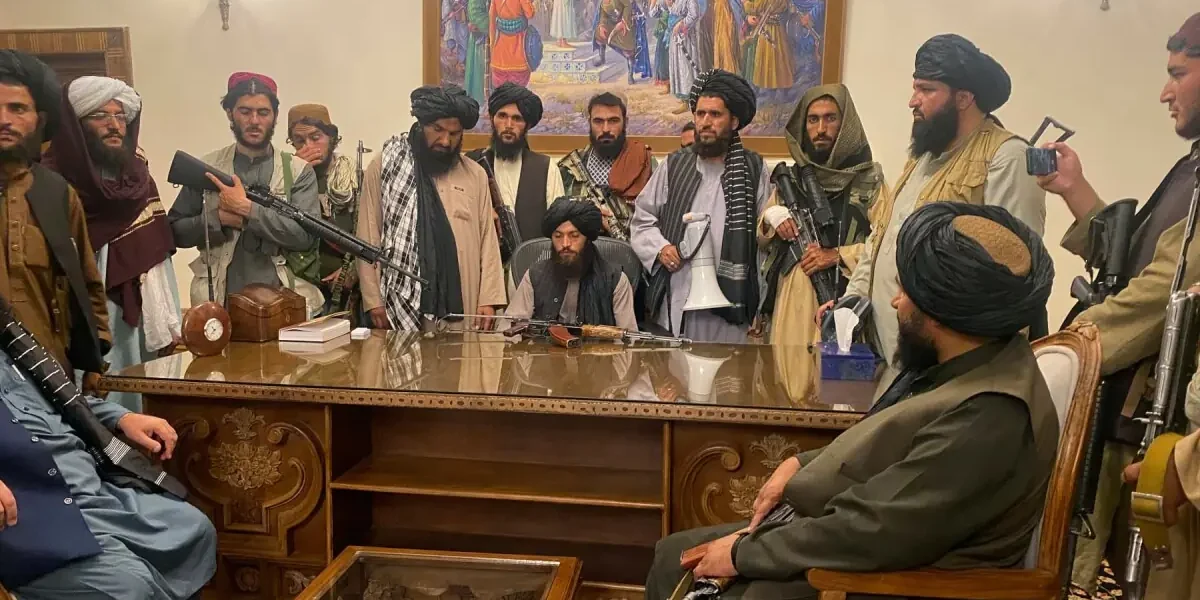
The Taliban regime's grip on Afghanistan appears increasingly precarious as internal divisions and external pressures mount. The administration, which has been in power for nearly five years since the fall of Kabul, is now facing a strategic impasse that could lead to localised civil conflict.
Domestically, the regime is fracturing along factional lines. The Kandahar faction, led by Supreme Leader Hibatullah Akhundzada and known for its radical clerical elite, is in direct opposition to the Kabul-based faction headed by figures like Sirajuddin Haqqani. This power struggle has resulted in a zero-sum game where each side seeks to centralise control over fiscal allocations and ideological conformity.
The Kandahar faction's insistence on absolute ideological uniformity has alienated field commanders, who are responsible for the insurgency. These commanders now see their roles as privatised and paralysed by the regime’s policies, leading to a state of artificial survival dependent on illicit trade and irregular humanitarian aid.
Adding to these internal pressures is Ahmad Massoud's National Resistance Front (NRF), which challenges the Taliban’s claims of absolute control. Massoud argues that true national unity can only be achieved through direct executive decision-making by the Afghan people, free from the imposed structural conformity of the Taliban regime.
The NRF represents a formal institutional wing of the resistance, maintaining a conventional military presence in northern valleys such as Panjshir, Takhar, and Badakhshan. However, decentralised groups like Pasiban-i-Watan (Guardians of the Homeland) and Sepahian-i-Mihan (Soldiers of the Homeland) operate as grassroots movements, further complicating the Taliban’s security apparatus.
On the regional front, the Taliban's foreign policy has suffered a significant blow with the collapse of its relationship with Pakistan. Islamabad had long served as a vital geopolitical corridor for Kabul, but the Taliban’s prioritisation of ideological solidarity over practical cooperation has led to this deterioration.
This foreign policy blunder exacerbates the regime's internal weaknesses and limits its ability to secure external support or economic aid. The failure to maintain a strong relationship with Pakistan exposes the Taliban’s vulnerability and underscores the need for a more pragmatic approach to regional diplomacy.
The combination of these internal and external pressures is creating an unstable environment that could lead to further fragmentation within the Taliban regime. As the administration struggles to maintain control, the prospects for long-term stability in Afghanistan remain uncertain.
Ahmad Massoud posits that true national unity cannot be built upon a foundation of silence, fear, or the forced structural conformity imposed by the Taliban.
Ahmad Massoud, Leader of the National Resistance Front (NRF)