
Key Takeaways
- The United States is Pakistan's largest export destination, accounting for 20% of total exports.
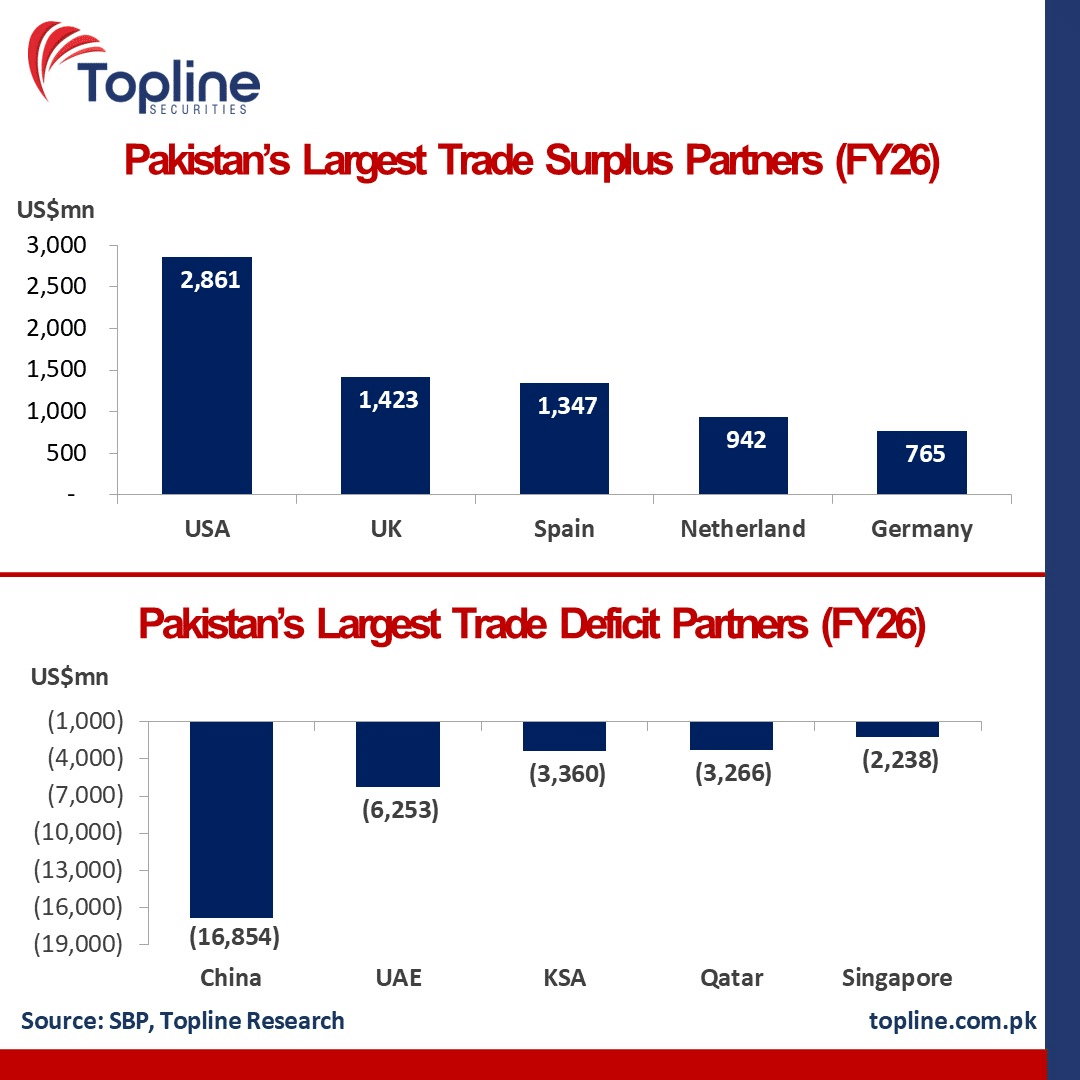
- Pakistan has a trade surplus with the US, while facing a significant deficit with China.
- Regional partners like Germany and Spain also contribute to Pakistan’s trade.
According to data compiled by Topline Securities using State Bank of Pakistan (SBP) figures, the United States remains Pakistan's top export destination, contributing 20% of the country's total exports during fiscal year 2026. This figure underscores the ongoing importance of the US market for Pakistani goods, particularly textiles and manufactured products.
In contrast, China continues to be a major source of imports for Pakistan, accounting for nearly one-fifth of its import bill and contributing significantly to the country's trade deficit. The trade deficit with China reached $16.85 billion during FY26, highlighting the economic challenges posed by this relationship.
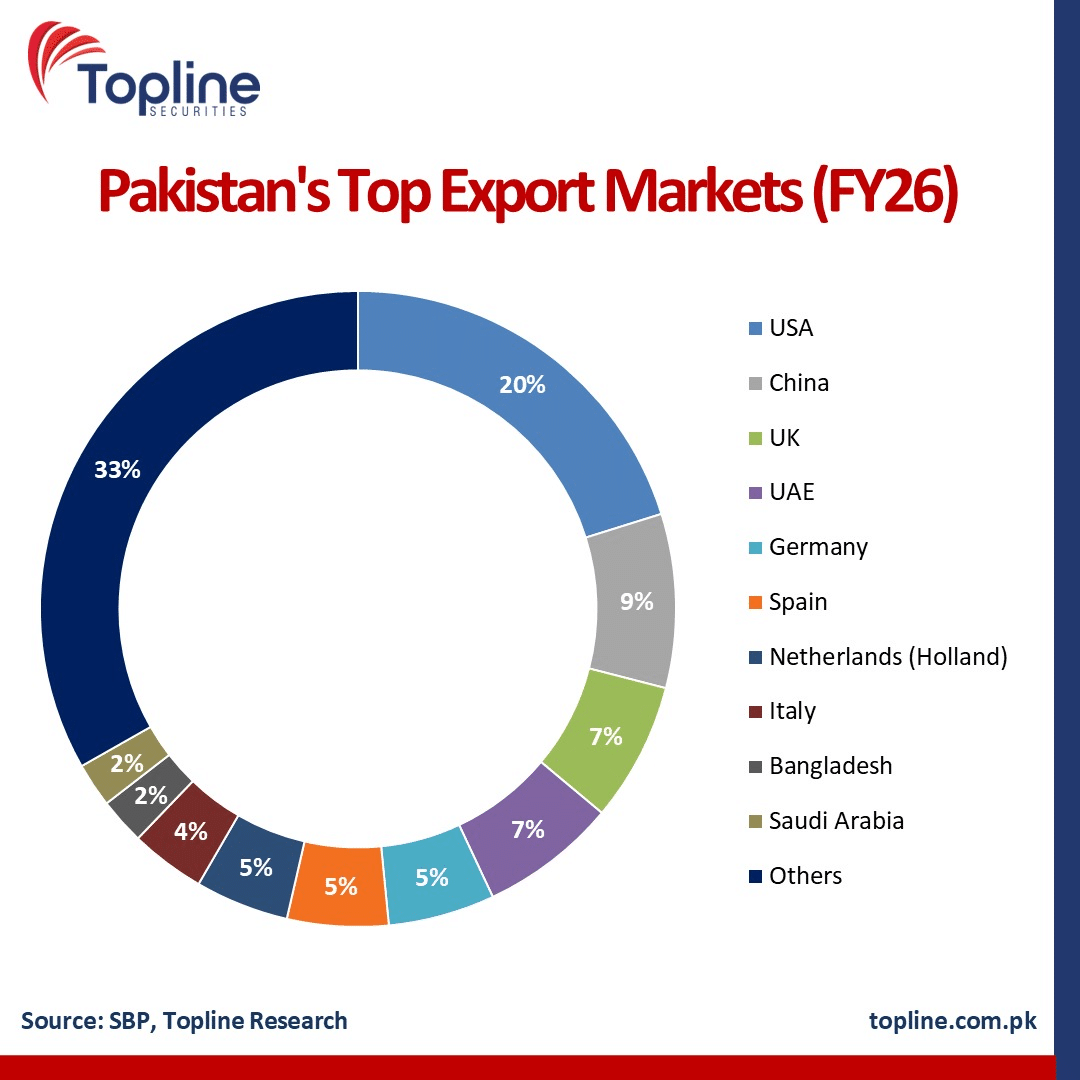
Other significant trading partners include Germany, Spain, and the Netherlands, each contributing 5% to Pakistan’s exports. Italy accounts for 4%, while Bangladesh and Saudi Arabia make up 2% each. Collectively, these countries represent a substantial portion of Pakistan's export market, with all other destinations accounting for an additional 33%. This diversification is crucial for balancing the country's trade portfolio.
Pakistan maintains its largest trade surplus with the United States, amounting to $2.86 billion during FY26. The UK ranks second with a surplus of $1.42 billion, followed by Spain at $1.35 billion, and Germany at $765 million. However, Pakistan faces significant deficits from other countries such as the UAE ($6.25 billion) and Saudi Arabia ($3.36 billion).
The data also reveal that Pakistan's trade with regional partners is dominated by imports of energy products, machinery, industrial raw materials, and electronics. These imports are essential for supporting various sectors of the economy, including manufacturing and infrastructure development. Conversely, exports to countries like the US and European markets continue to be driven by demand for textiles, apparel, leather products, and other manufactured goods.
The continued reliance on regional trading partners, particularly China, highlights Pakistan's economic dependence on these markets. While efforts are being made to diversify trade relationships, the significant trade deficit with China remains a concern for policymakers. The focus now is on balancing imports and exports while exploring new opportunities in global markets.