Key Takeaways
- Karachi ranked among the world’s least liveable cities due to decades of neglect.
- The K-IV water supply project, aimed at addressing water shortages, is now delayed until 2029.
- Karachi's underperformance has significant economic implications for Pakistan.
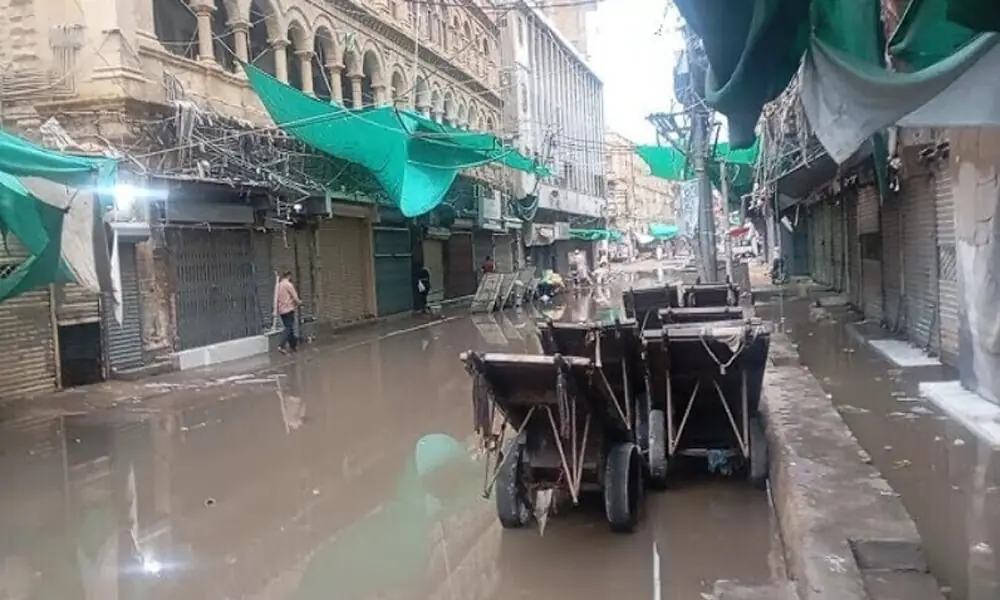
Karachi, Pakistan’s commercial capital and principal port, has been ranked among the world’s least liveable cities according to The Economist Intelligence Unit’s latest Global Liveability Index. This ranking reflects decades of administrative neglect, chronic water shortages, failing municipal services, and unchecked urban expansion.
The delay in the K-IV water supply project is a prime example of Karachi's ongoing challenges. Initially conceived to provide relief from years of water scarcity, the first phase of this project is now expected only by the end of 2029. This delay has been attributed to legal hurdles, coordination failures, and implementation challenges, further exacerbating the city’s already dire situation.
Karachi's decline is not just a local issue; it has significant economic implications for Pakistan as a whole. Congested roads increase transport costs, water shortages disrupt industry, poor municipal services discourage investment, and weak infrastructure reduces productivity. When Karachi underperforms, so does the broader national economy.
The recent parliamentary committee discussion highlighted another troubling dimension: inadequate federal allocations for critical development projects in Sindh province. Lawmakers from Sindh complained of repeated funding shortfalls, while officials acknowledged that fiscal constraints repeatedly interrupt ongoing schemes. Whether it is the K-IV project or the M-6 Motorway, these delays have become almost as predictable as the problems they aim to solve.
The economic costs of Karachi’s underperformance extend far beyond the city itself. For instance, water shortages disrupt industrial operations and increase operational costs for businesses. Poor municipal services deter potential investors, while weak infrastructure hampers productivity. The cumulative effect is a significant drag on Pakistan's overall economic performance.
Karachi’s decline has also been institutional. Layers of overlapping authorities, fragmented responsibilities, inconsistent planning, and weak accountability have steadily hollowed out metropolitan governance. Problems accumulate faster than institutions can resolve them, leading to long-term planning challenges that are difficult to overcome.
The continued neglect of Karachi is increasingly difficult to justify given its critical role in Pakistan’s economy. As the country's principal port, largest commercial centre, and financial capital, Karachi generates a substantial share of national economic activity. Every failure of urban governance in this city carries significant economic costs that extend far beyond Sindh.
Investment in Karachi is not merely a provincial favour; it is a national economic necessity. The city’s decline has profound implications for Pakistan's future growth and development. Addressing these challenges requires urgent and sustained efforts to improve governance, infrastructure, and overall urban management.