Key Takeaways
- South Korea’s central bank, the Bank of Korea (BOK), raised its benchmark interest rate by 25 basis points.
- The move comes as South Korea's economy is expected to grow more than previously forecasted, reaching an above-consensus 4.0% this year.
- Analysts predict at least one more rate hike before the end of the year.
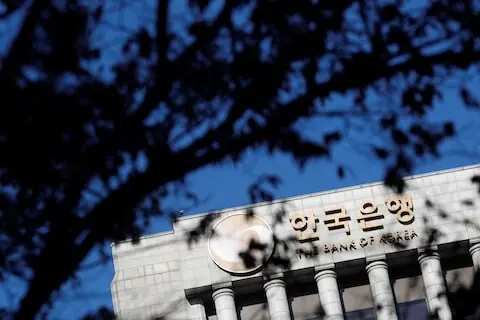
South Korea’s central bank, the Bank of Korea (BOK), has raised its benchmark interest rate for the first time in three-and-a-half years. The decision was made on Thursday and saw the seven-day repurchase rate increased by 25 basis points to 2.75%. This move is aimed at stabilizing a weakening won and addressing persistent inflationary pressures.
The BOK’s monetary policy board flagged further tightening measures in the coming months, citing robust economic growth that has exceeded expectations. According to Capital Economics economist Gareth Leather, there are good reasons to anticipate additional rate hikes over the next few months despite concerns about weak private consumption, which is currently experiencing a decline in real terms.
The economy of South Korea has rebounded faster than anticipated this year, largely due to strong semiconductor exports and investment. Despite these positive indicators, the local currency remains under pressure, having weakened 3.4% against the US dollar. The first quarter’s gross domestic product (GDP) expanded by 1.8%, marking the fastest pace in nearly six years.
The BOK’s decision to raise interest rates aligns with other regional central banks that have recently tightened their monetary policies, including the Bank of Japan, which raised its benchmark rate to a 31-year high. Other countries such as Australia, New Zealand, Indonesia, and the Philippines have also implemented similar measures.
With headline inflation at a 2-1/2-year high in South Korea, most analysts predict that the BOK will deliver at least one more rate hike before the end of this year to bring the policy rate to 3.00%. Median forecasts suggest the BOK could raise its key rate to 3.25% by the first quarter of 2027 and maintain it until at least the end of next year.
The Bank of Korea’s board member has raised concerns about rising house prices and leveraged stock investments, indicating that these factors are contributing to the need for tighter monetary policy. Governor Shin Hyun Song will hold a press conference at 0210 GMT on Thursday, which will be livestreamed via YouTube.
The decision to raise interest rates is expected to have an impact on various sectors of the South Korean economy. The benchmark KOSPI index fell by 7%, with renewed selling in chipmakers’ stocks being a significant factor. This move reflects the central bank’s commitment to managing inflation and maintaining economic stability, even as growth remains strong.