Key Takeaways
- Disruptions in the Strait of Hormuz and Bab el-Mandeb have forced Saudi oil tankers to take longer routes.
- The detour adds approximately one month to shipping times and increases costs by $2.5 million per tanker.
- Asian buyers are facing significant impacts due to these changes.
Disruptions in the Strait of Hormuz and Bab el-Mandeb have compelled Saudi oil tankers to take longer routes, significantly impacting shipping times and costs for Asian buyers. According to Reuters calculations, the detour adds approximately one month to voyages from Saudi Arabia’s Red Sea port of Yanbu to destinations such as Taiwan.
The alternative route involves traveling through Egypt's Suez Canal, then via the Mediterranean, Strait of Gibraltar, and around Africa’s Cape of Good Hope. This journey is estimated to take 48 days compared to the usual 19-day voyage through Bab el-Mandeb. The longer route dramatically increases operating costs, with fuel expenses rising from about $1.26 million to $2.87 million.
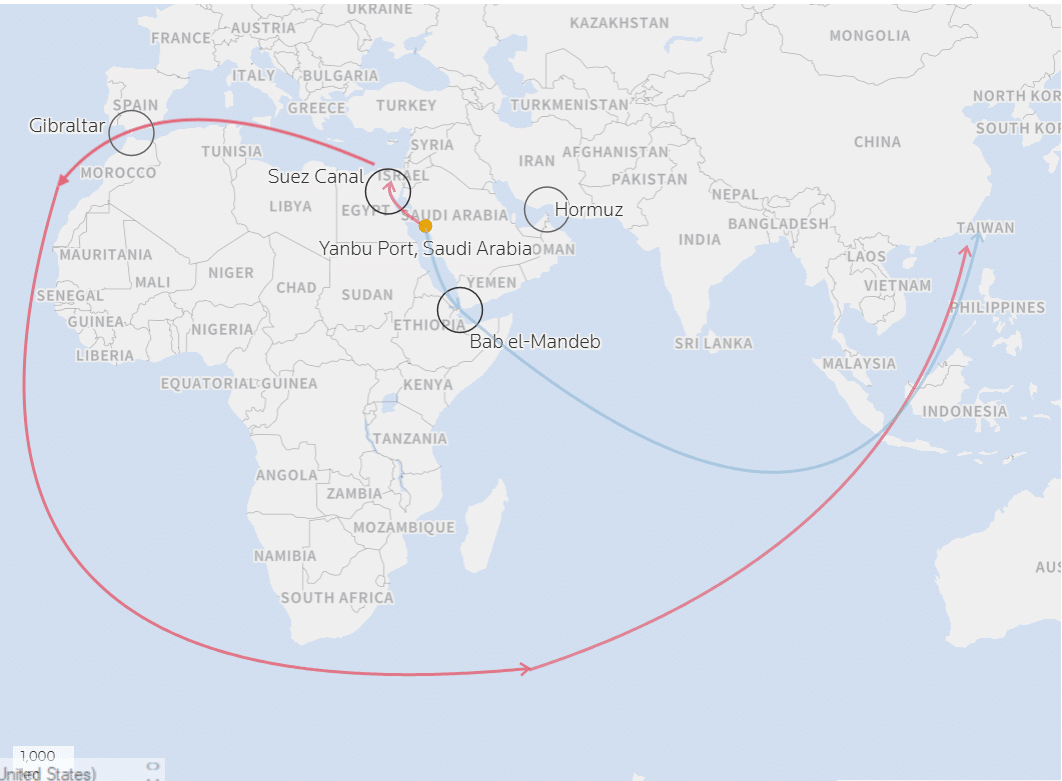
Transiting the Suez Canal also incurs additional fees of around $1 million per tanker, pushing the total extra cost to approximately $2.5 million per voyage. Large crude tankers face further restrictions when passing through the Suez Canal and may have to sail partially loaded before topping up cargo via Egypt’s SUMED pipeline, which can transport up to 2.5 million barrels per day.
Saudi Arabia has increasingly relied on the Suez Canal after tensions involving Iran disrupted traffic through the Strait of Hormuz earlier this year. However, recent attacks by Iran-backed Houthi militants in the Red Sea have made the Bab el-Mandeb route increasingly risky, leaving exporters with fewer safe options.
For Asian buyers, these changes are significant. A tanker sailing from Saudi Arabia’s Red Sea port to Taiwan normally takes about 19 days through the Bab el-Mandeb Strait. The detour adds a substantial amount of time and cost, impacting both shipping schedules and financial planning for importers.
The impact extends beyond just fuel costs; the longer journey also affects overall logistics and supply chain management. Tankers must navigate additional risks associated with the Suez Canal, including potential delays and operational constraints when using the SUMED pipeline.
These disruptions highlight the vulnerability of global oil trade routes to geopolitical tensions and military actions in key maritime corridors. As a result, Saudi Arabia is exploring alternative shipping strategies to mitigate these challenges.