Key Takeaways
- Miami-based City Labs has launched a small satellite named BOHR for commercial nuclear power in space.
- The launch marks a significant step towards powering future lunar bases and spacecraft with nuclear technology.
- BOHR, short for Betavoltaic Orbital High-Reliability, was sent into orbit by SpaceX's Falcon 9 rocket.
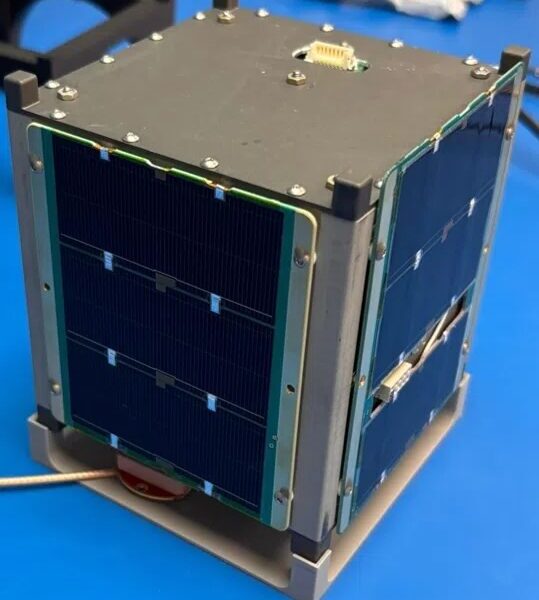
Miami-based City Labs has achieved a milestone in the commercialization of nuclear power for space applications. The company launched its satellite named BOHR (Betavoltaic Orbital High-Reliability) on Tuesday, marking an important step towards harnessing nuclear energy beyond Earth’s atmosphere.
BOHR is part of a broader effort to develop sustainable and reliable power sources for long-term missions in space. According to City Labs, the satellite will help pave the way for future lunar bases and efficient propulsion systems for interplanetary travel.
The launch took place as part of SpaceX's Falcon 9 rocket’s rideshare mission, which carried a total of 80 payloads into orbit. The BOHR satellite was deployed at an altitude between 350 and 400 miles (approximately 600 km), ensuring it operates in the desired orbital range for its intended purposes.
City Labs specializes in nuclear micro-power technology, making this launch a significant achievement in their mission to make space exploration more sustainable. The company’s CEO, Dr. Sarah Patel, stated: 'This is just the beginning of what we hope will be a new era of commercial nuclear power in space.'
The satellite's name, BOHR, reflects its technological focus on betavoltaic cells, which convert beta radiation into electrical energy. This innovative approach could provide a reliable and long-lasting power source for spacecraft and other space-based operations.
While the launch is seen as a breakthrough, it’s important to note that this is not a full-fledged nuclear reactor. Instead, BOHR represents a step towards more advanced applications of nuclear technology in space exploration. The company plans to continue developing its technology with an eye on future missions and long-duration space travel.
City Labs’ achievement has garnered attention from the scientific community and industry experts alike. Dr. Rajesh Kumar, a space technology expert at the University of Miami, commented: 'This launch is significant because it demonstrates that commercial entities can now play a crucial role in advancing nuclear power technologies for space.'
The success of BOHR could have far-reaching implications for future space missions and the sustainability of long-term space operations. As City Labs continues to develop its technology, the potential for more advanced applications of nuclear power in space remains promising.
'This is just the beginning of what we hope will be a new era of commercial nuclear power in space.'
Dr. Sarah Patel, CEO, City Labs
'This launch is significant because it demonstrates that commercial entities can now play a crucial role in advancing nuclear power technologies for space.'
Dr. Rajesh Kumar, Space technology expert at the University of Miami