Key Takeaways
- Deputy Prime Minister and Foreign Minister Ishaq Dar urged de-escalation during a call with Seyyed Abbas Araghchi.
- Both ministers discussed recent regional developments, emphasizing the need for dialogue and diplomacy.
- Pakistan reaffirmed its commitment to promoting peace and stability in the region.
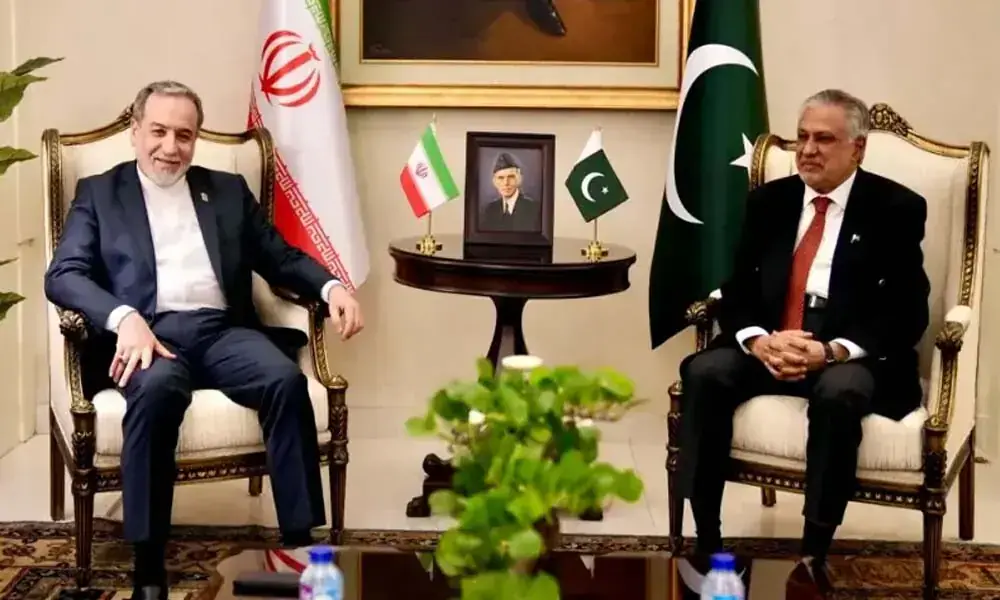
Deputy Prime Minister and Foreign Minister Ishaq Dar has called for de-escalation during a telephone conversation with his Iranian counterpart, Seyyed Abbas Araghchi. The call came as regional tensions continue to simmer, with both ministers exchanging views on recent developments.
According to the Foreign Office statement, the two foreign ministers discussed various aspects of the evolving situation in the region, highlighting the importance of dialogue and diplomacy in resolving disputes. Dar stressed that all parties should follow the path of de-escalation and restraint as outlined in the Islamabad Memorandum of Understanding (MoU) signed in June 2026.
In his remarks, Dar reiterated Pakistan’s commitment to playing a constructive role in maintaining regional peace and stability. He emphasized that dialogue remains the only viable means for resolving conflicts and ensuring long-term peace in the region. The Foreign Office noted that both leaders agreed to remain in close contact as regional developments continue to unfold.
The call between the two foreign ministers underscores Pakistan’s ongoing efforts to foster a peaceful environment in the region, particularly with its neighbor Iran. Both countries have been navigating complex geopolitical challenges, including issues related to trade, security, and energy cooperation.
Pakistan has consistently advocated for a diplomatic approach to regional disputes, viewing dialogue as essential for addressing mutual concerns. The statement from the Foreign Office highlights Pakistan’s willingness to engage in constructive discussions and collaborate with other nations to achieve stability.
While tensions persist, the call between Dar and Araghchi signals a commitment to maintaining open lines of communication. This is crucial given the interconnected nature of regional affairs, where cooperation can lead to significant positive outcomes for all parties involved.