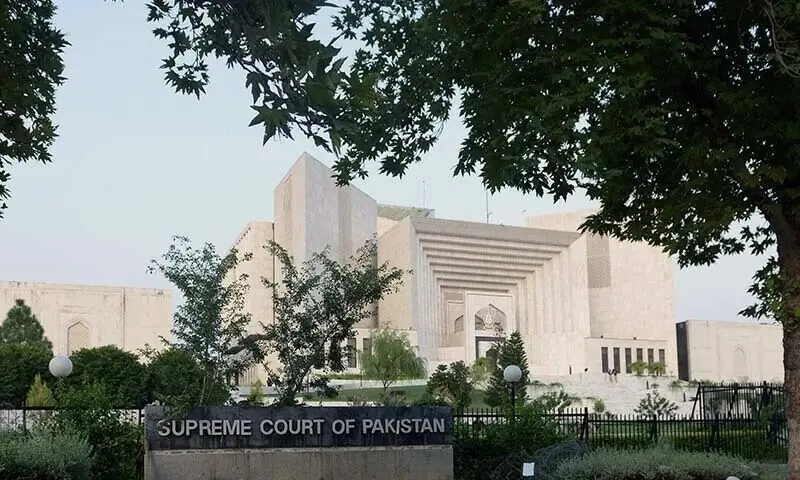
Key Takeaways
- The Supreme Court (SC) has reserved its ruling on whether it retains authority to hear bail applications in pending National Accountability Bureau (NAB) appeals.
- A three-judge bench, including Justice Muhammad Ali Mazhar, is considering the dispute over jurisdiction with the Federal Constitutional Court (FCC).
- Senior counsel Ibadur Rehman Lodhi argued that bail applications fall under Section 497 of the Criminal Procedure Code.
The Supreme Court (SC) has reserved its ruling on a contentious jurisdictional dispute over whether it retains authority to hear bail applications in pending National Accountability Bureau (NAB) appeals, or if such pleas must be transferred to the newly established Federal Constitutional Court (FCC) under the 27th Amendment of the Constitution. The case is being heard by a three-judge bench, including Justice Muhammad Ali Mazhar, who hinted that the court’s determination would be announced in a day or two.
The federal government has taken the position before the SC that both appeals and bail applications in pending NAB cases will now be heard by the FCC. However, senior counsel Ibadur Rehman Lodhi, representing under-trial prisoner Aamir Mahmood, argued that bail applications of under-trial prisoners fall within Section 497 of the Criminal Procedure Code (CrPC), which deals with the grant of bail.
Lodhi emphasized that in NAB cases, only appeals against the high court’s final decision are to go to the FCC; in case the bail is not granted by the high court, the case would remain under the SC. He argued that the court should have 'some semblance of authority' and warned against any 'clandestine' motives behind the government's stance.
Justice Muhammad Ali Mazhar observed during the hearing that the court was not examining Parliament’s intention behind amending the NAB law but noted that the SC had not surrendered its authority. He added that the 27th Amendment stated that appeals would go to the FCC, and the court asked counsel to suggest a legal way for it to hear bail applications in NAB cases.
The case highlights the ongoing tension between the Supreme Court and the Federal Constitutional Court over jurisdictional boundaries set by constitutional amendments. The bench is seized with the dispute over whether bail applications in pending NAB appeals fall within the category requiring transfer to the FCC, as mandated under Section 32-A of the NAB Amendment Act.
The court’s determination on this issue could have significant implications for the legal process and the authority of both courts. The bench is expected to deliver its ruling soon, which will clarify whether the Supreme Court retains jurisdiction over bail applications in pending NAB cases or if such matters must be transferred to the Federal Constitutional Court.
Advocate Lodhi’s arguments underscore the importance of maintaining a balance between judicial oversight and constitutional amendments that aim to streamline legal processes. The outcome of this case could set a precedent for future disputes over jurisdictional boundaries in Pakistan's legal system.
For God’s sake, the Supreme Court should not surrender its authority for some ‘clandestine’ motives of the government.
Ibadur Rehman Lodhi, Senior counsel