Key Takeaways
- Climate change poses a significant threat to traditional handicrafts in South Punjab.
- Craftsmen are witnessing changes in weather patterns affecting their work and livelihoods.
- Efforts are needed to preserve these centuries-old traditions before they disappear.
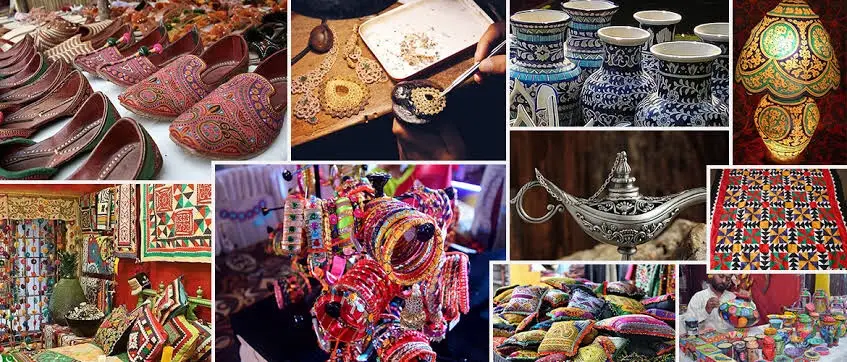
Climate change is silently undermining the centuries-old craft traditions of South Punjab, according to a recent report by Associated Press Of Pakistan. The traditional crafts, which have been passed down through generations, are facing unprecedented challenges due to shifting weather patterns and environmental changes.
Craftsmen in the region are reporting irregularities in temperature and rainfall, directly impacting their ability to work with natural materials such as wool, cotton, and leather. For instance, a local artisan, Muhammad Ali, stated: 'The unpredictable weather has made it difficult to maintain consistent quality in our handwoven textiles.'
The report highlights that these traditional crafts are not only an economic asset but also a cultural heritage of the region. Many artisans rely on their skills for income and support their families. However, the changing climate is making it increasingly challenging to sustain these practices.
Experts warn that without intervention, these ancient crafts could vanish within a few decades. Dr. Fatima Razaq, an environmental scientist at the University of Punjab, explained: 'The gradual degradation of natural resources due to climate change is leading to a decline in raw materials essential for traditional crafts.'
Efforts are being made by local communities and government bodies to address this issue. The Punjab Handicrafts Board has initiated programs aimed at preserving these traditions through training workshops and financial support. However, more comprehensive measures are needed to ensure the survival of these crafts.
The impact of climate change on traditional crafts is not limited to South Punjab; it is a global concern. According to Dr. Razaq: 'This issue highlights the interconnectedness between environmental sustainability and cultural preservation.'
Local communities are also taking steps to adapt to changing conditions. For example, some artisans have started experimenting with synthetic materials as alternatives to traditional natural fibers. While this provides a temporary solution, it does not address the root cause of the problem.
The preservation of these crafts is crucial for maintaining the cultural identity and economic stability of South Punjab. As Dr. Razaq emphasized: 'We must act now to protect our heritage before it's too late.'
Efforts are needed from all stakeholders, including government bodies, non-governmental organizations, and local communities, to develop sustainable solutions that can help preserve these ancient crafts in the face of climate change.
'The unpredictable weather has made it difficult to maintain consistent quality in our handwoven textiles.'
Muhammad Ali, Local artisan
'This issue highlights the interconnectedness between environmental sustainability and cultural preservation.'
Dr. Fatima Razaq, Environmental scientist at the University of Punjab