Key Takeaways
- SpaceX's Starship rocket achieved orbital velocity during its 14th test flight.
- The mission deployed 26 of the company's latest Starlink satellites.
- This marks a significant milestone for SpaceX's space exploration and satellite deployment capabilities.
SpaceX's Starship rocket successfully completed its first orbital flight, marking a significant advancement in the company's space exploration and satellite deployment capabilities.
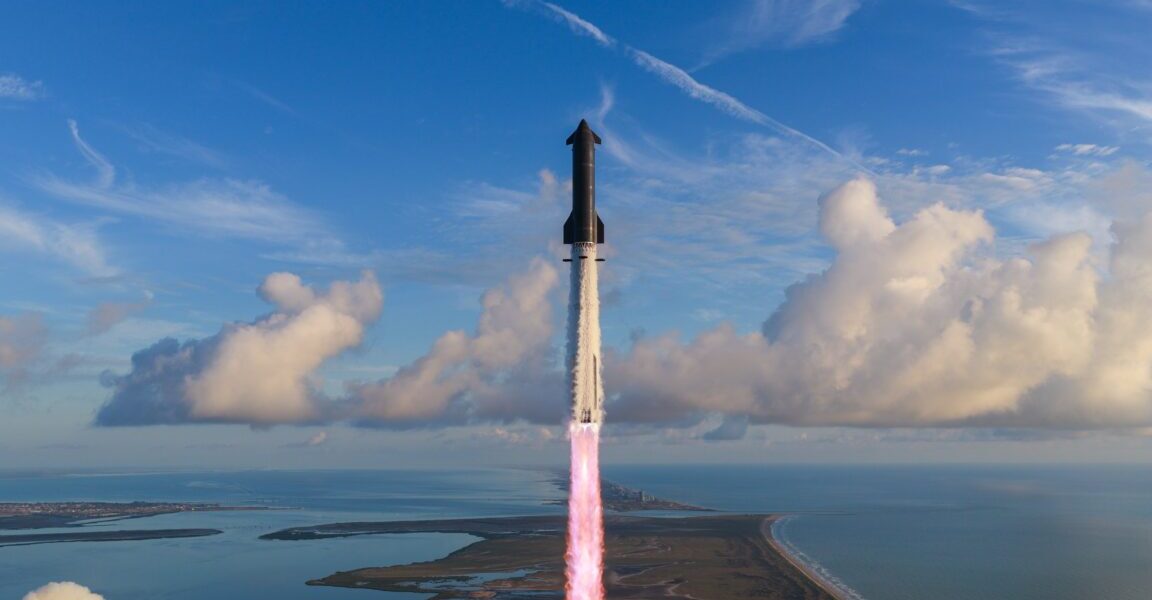
The 14th test flight of the world's most powerful launch vehicle took place early Monday over South Texas, with the rocket's upper stage achieving orbital velocity for the first time.
Previous suborbital flights had intentionally limited the rocket's full potential to ensure safe return to Earth, but this time, SpaceX pushed the boundaries, aiming for a full orbital journey.
The payload for this mission was 26 of SpaceX's newest generation of Starlink satellites, designed to provide broadband internet services. These satellites are too large to fit inside the company's Falcon 9 rocket and required a specialized deployment system.
Using a system of pulleys and cables, the satellites were released from Starship's payload deployer, one by one, much like a Pez dispenser ejects candy.
This deployment method is crucial for ensuring the satellites are properly oriented and ready to begin their mission once they reach their designated orbits.
The successful launch and deployment of these next-generation Starlink satellites represent a significant step forward in SpaceX's efforts to expand global internet access through its satellite constellation.
SpaceX's Starship is now poised to play a key role in the company's future missions, including potential crewed flights to the moon and Mars, as well as continued expansion of its Starlink network.